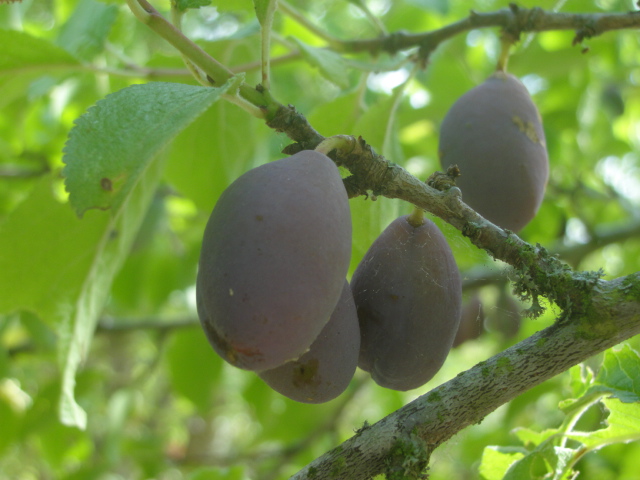
We’re back from an intense session of learning how to prune hard-stoned fruit trees (plum, damson, cherry and gage) with Dr Anna Baldwin leading a group of students in a theoretical and practical course in the local community orchard.
It was different from the January course on pruning apple and pear trees. For a start, warmer – much warmer – and the course wasn’t cut short by dusk falling. Anna filled in time after the January course by bringing the group to our tiny orchard to illustrate some teaching points and they found themselves squelching through ground soaked by five months of unrelenting rain. This time, we finished at four with a need to drink a lot of water and sit in the sun.
The major difference between apple and plum trees in terms of pruning is that we were aiming to create space in the centre of apple trees to ward off the spread of canker – whereas plum and gage trees don’t mind crowded centres. The second important difference is that apple has resilient wood, while plum wood is brittle and relatively fragile. Our own plum trees have had branches cracked and brought down by too-heavy crops, and one of the trees split into three down the entire length of the main trunk when the three major branches decided to go their own ways just after we moved here. Open wounds on plum trees from cuts to the bark, pruning or cracked branches are open to disease, so branches that cross each other and rub bark away should be cut out; apart from that, the trees tolerate crowded centres.
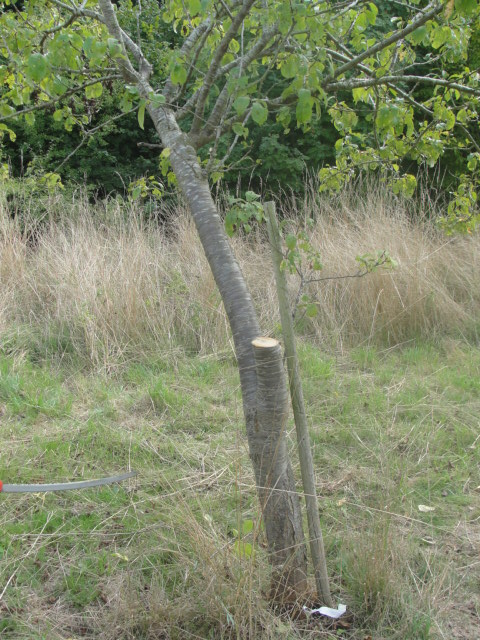
After a session of theory, we set off to the orchard to assess and prune the trees. Straight off, the course was different from January’s. This time, I led the way to the orchard and gave Anna a map of where the plum and cherry trees were, the result of hours of walking the orchard with a notebook. When the group moved on from the easier decisions to the drastic ones, I was called on to give the go-ahead for the most severe cuts. One tree had grown two equal branches at a low level, giving the tree a Y-shape and leaving it in danger of being split in two down the main trunk.

Anna suggested cutting off one branch, leaving the tree halved in width. Easy decision – having seen our own plum tree split in three to the roots and die by inches, I agreed to the cut straight away. I’d hesitated over a big decision on an apple tree in January, deferring to the senior committee members. But they’ve left me to look after the orchard without leaning over my shoulder, so anything I can do that means happy trees in future I will do.
One of the trees I wanted Anna to look at was in the farthest downhill corner, on the other side of the path that forms the western boundary of the orchard. It’s much taller and broader than the 2011 trees, laden with dark blue-purple plums and with two thick trunks welded together at the base. I suspected it had been there for at least twenty years. Seventy, was Anna’s assessment. She snipped off two small branches that were causing trouble for their neighbours and declared the tree to be settled and content without drastic pruning. We sat in a circle discussing the tree and its history and I watched a lizard the colour of the tree’s bark creep jerkily down from the branches to the root.
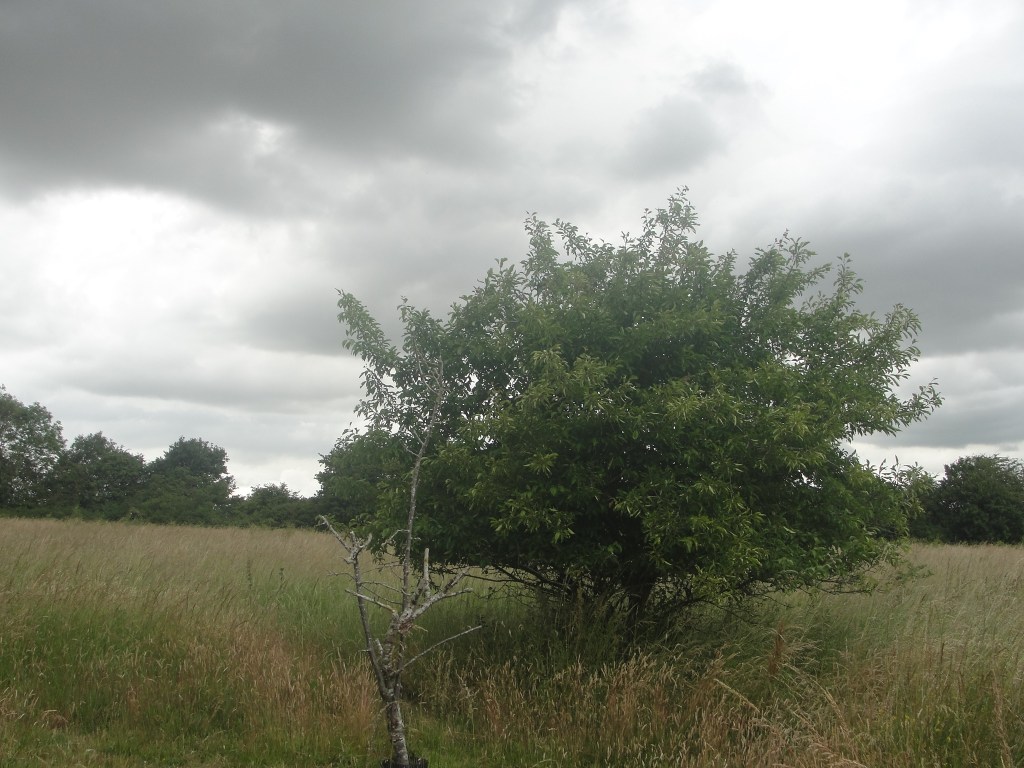
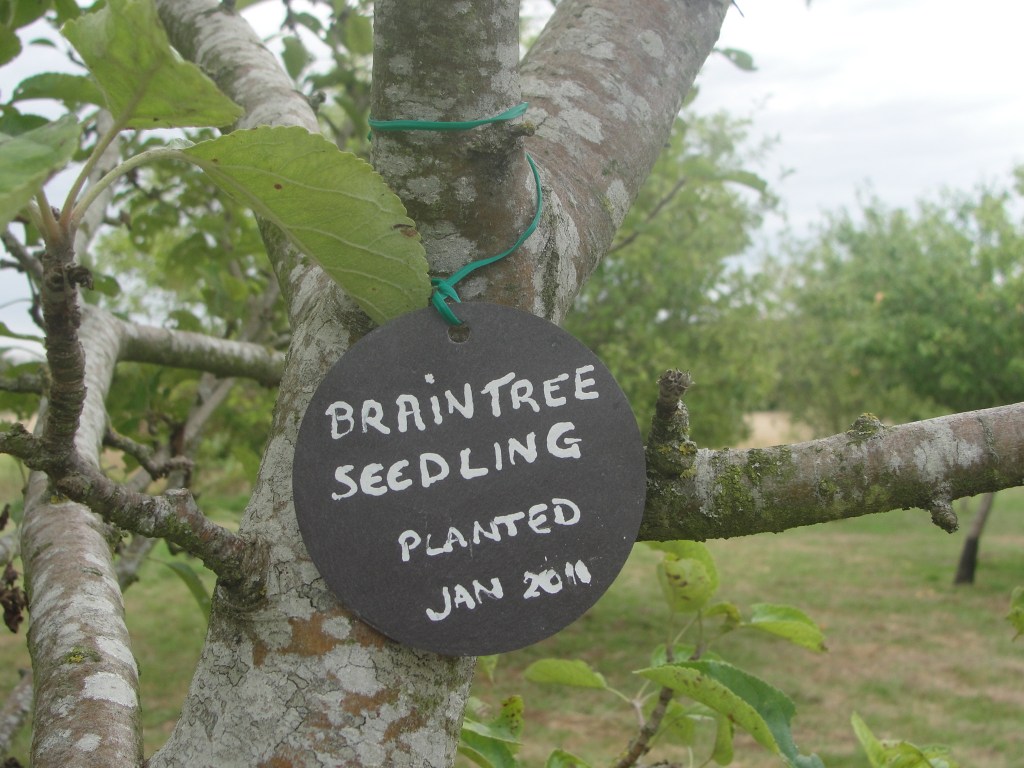
On our way out of the orchard, I asked Anna for her assessment of the orchard now. Nine out of ten? More? ‘I don’t do numbers,’ she replied. A politician’s answer. But even without a rating, I’m proud of what we’ve achieved so far, and the work goes on. We’ve found another three labels buried in soil at the foot of their trees since Friday morning and deciphered two others. That’s 24 identified varieties out of 62 surviving trees. I’ll be taking some of the mystery apples to the Apple Day at Dunmow later this month for identification, and who knows, we may start 2023 with half the trees labelled up and their histories on show for the community to read.
One branch was too large for the tree it grew, making the whole tree lopsided. Anna wasn’t insured for ladder work (more dangerous than staging a fight with pruning saws, apparently) and we all ran out of puff before we could get stuck in with a polesaw.
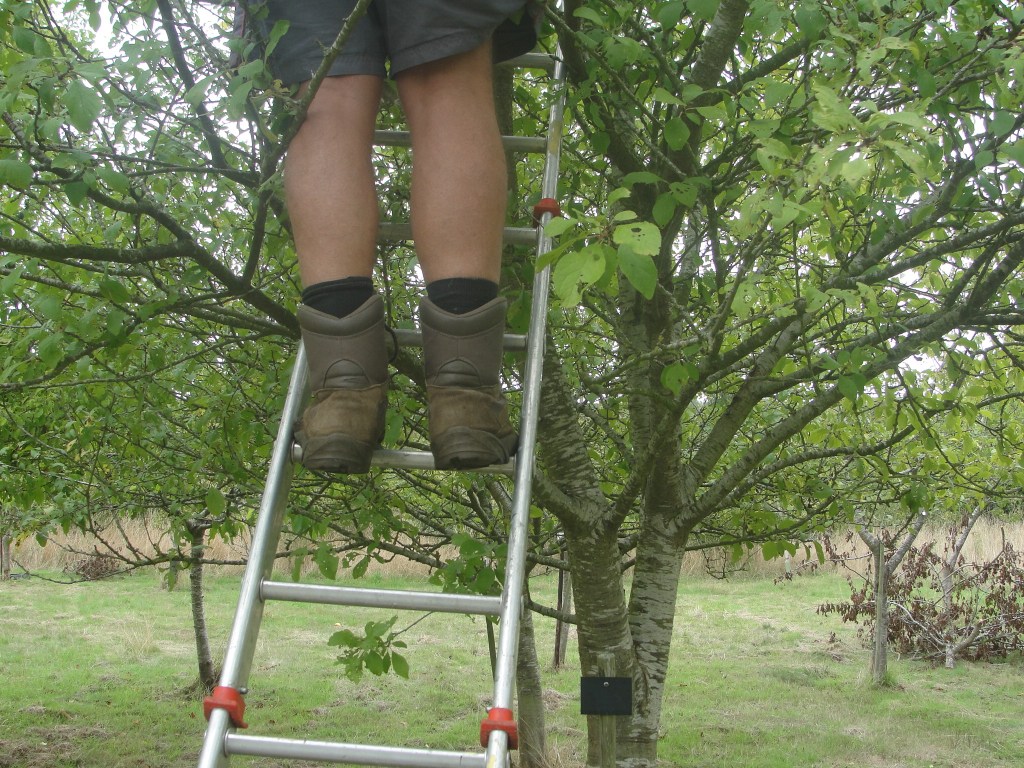
Well, we weren’t going to leave it there. We grew up before risk assessment was a formal thing (we always did risk-assess, but it meant having someone hold the ladder and be ready to call the ambulance if we went splat). So Monday morning we were taking turns up the ladder taking down the errant branch. Sorry, Anna. This risk wasn’t on you, and we got away with it. Let’s hope the tree does too.
The story of the community orchard goes on, with 24 of the 62 surviving trees now identified down to variety level and all but seven identified at ‘type’ level.
 Julia Chalkley