I’ve been part of an OU graduates’ writing group since 2010, contributing to their anthologies of short stories and poetry in 2014 and 2015.
I didn’t take writing too seriously while I was in paid employment – holiday diaries, OU courses, small competitions. As other members of the group began to succeed in their writing careers, they suggested that I might join them in the blog race.
I have a few publishing credits – a dozen short stories in various anthologies, a couple of competition wins and shortlisted places. I’m hoping to publish my first novel early in 2026; the first two chapters took third place in the Scottish Association of Writers’ Constable Stag competition, and I have been working to improve the whole work ever since.
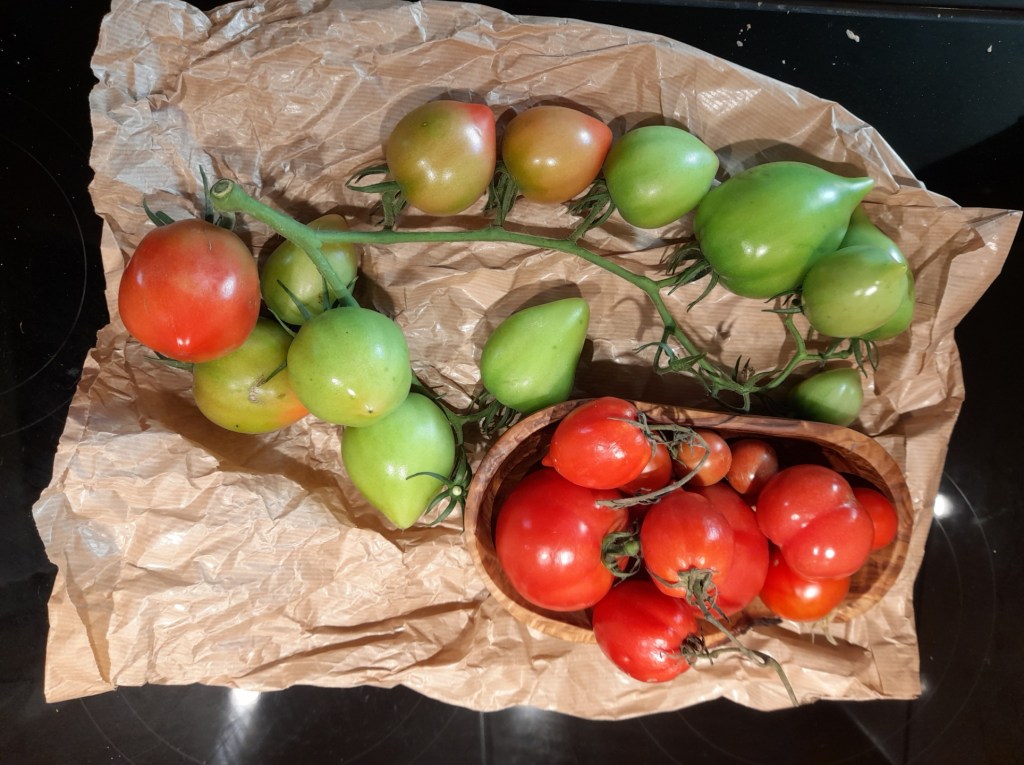
It’s been a good year for tomatoes (but not much else)
We’re still under the hosepipe ban, still watering every night to keep the vegetable plants alive. But the pressure is off, more or less, because it has rained. Three weeks after the rest of the country had its downpours, we had a full day of rain that brought the pond level up by an inch and then ten dry days before another couple of drizzly and rainy days. It’s been a relief. The veg plot doesn’t need to be watered. The fish are swimming around in the pond rather than hiding under the lily pads, looking like their old lazy selves. And the grass is back to its old green self.
The change has been startling. Back in May, everywhere in the garden was a vivid green, the leaves were out and we were itching to clip back hedges and shrubs. Then the heat descended and every grassy area faded to the colour of pale straw. The weeds stayed green, but were easily pulled from the dusty soil. Moles came for a holiday in our veg plot, drawn by the promise of worms still alive, and half our veg plants had their roots dangling in empty mole tunnels. Now the grass is green again, and the leek row is full of chickweed.
Last year, almost nothing grew. 2022, we had no veg except for more carrots than any reasonable person could eat in twelve months. This year? Enough peas for one meal. No edible runner bean pods, and a few dried broad beans. No cucumbers, potatoes like marbles and a dozen carrots and parsnips. But the tomatoes have made up for it all. As soon as it was cool enough to run the oven, we roasted the tomatoes up in batches and froze them for future lasagnes and curries. The trombocini, peppers and chillies are volunteering to join them, and there’s even one solitary melon for dessert, sulking in the middle of a huge vine and a lot of leaves.
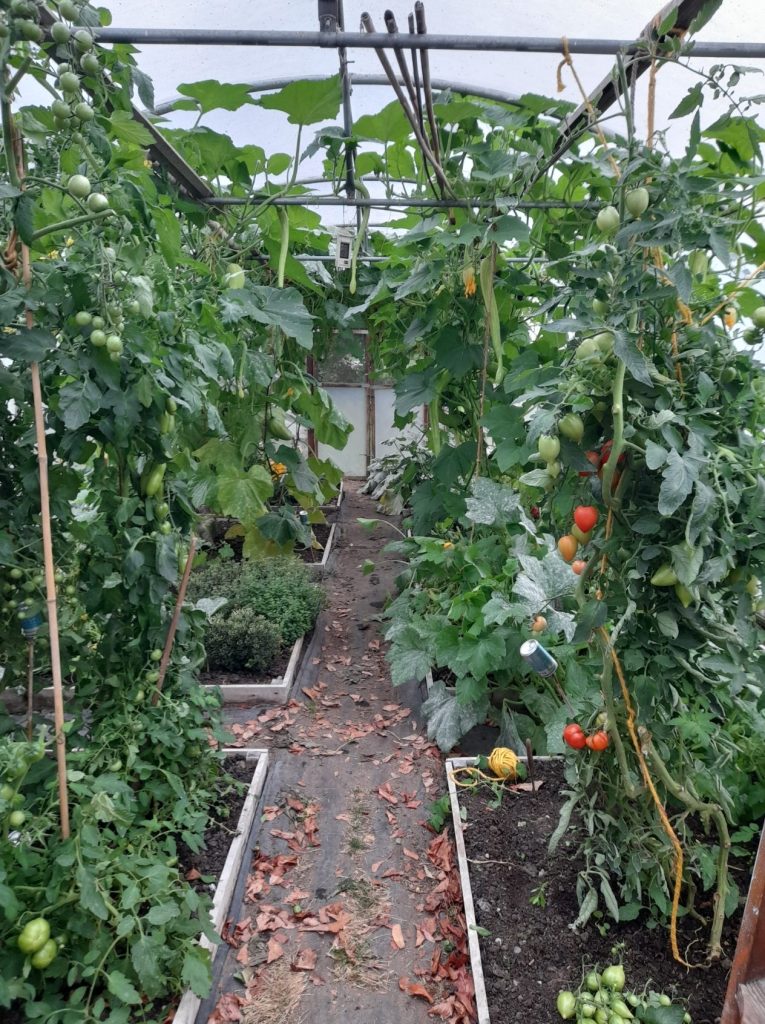
This is after a severe haircut… the pale green snakes are trombocini. Young trombocini.
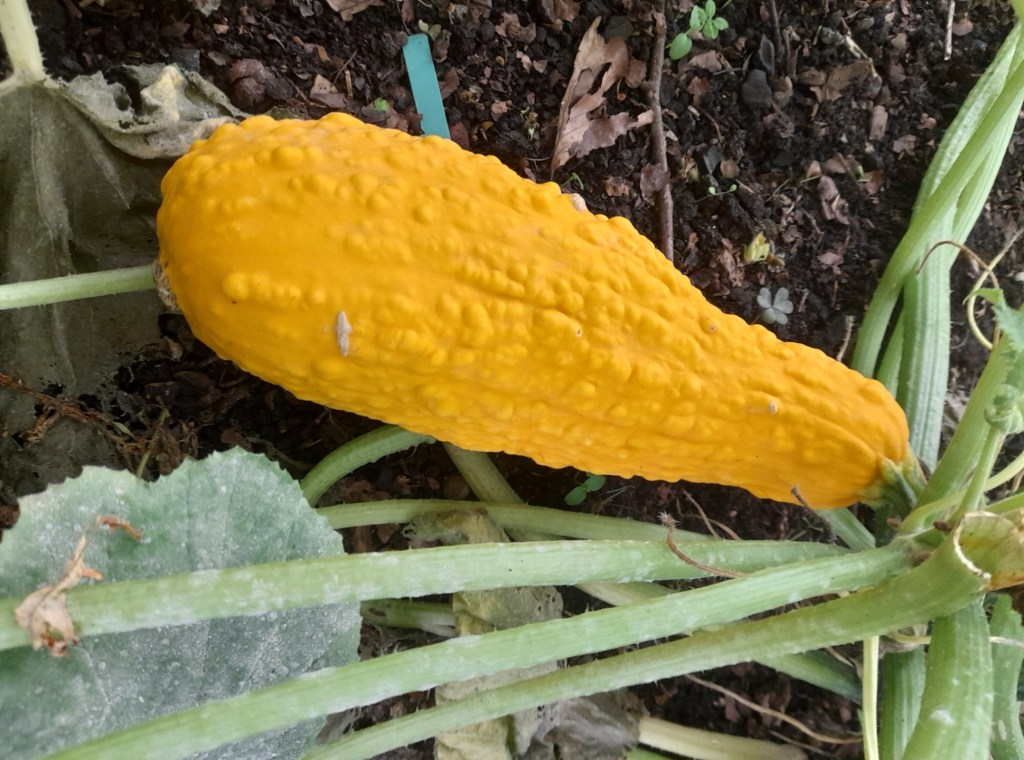
It’s been a relief to get into the polytunnel and enjoy the jungle it’s become. The straight-necked squash is a joy, as good as courgettes when young and a bright yellow colour with bumps in its skin like a measles rash as it grows larger. The trombocini vines need to be cut back hard every few days or they’ll take over. We grow most of the food we need for the vegetarian parts of the meals we eat and for the salads we usually enjoy. But as Eric Morecambe might have said; “Listen sunshine. We’re growing all the food we need… just not all in the same year.”
Blanched trombocini in tomato sauce, anyone?
Straight-necked squash. More taste than courgettes when young, treat them as squash when they’re this large.
The other good news is that my old routine is returning, and I am back to writing again. Just like crime, I’ve discovered that writing doesn’t pay the bills (actually, crime probably does pay the bills; better than a professional job and a lot better than writing). I suppose the difference is that I’ve always written for fun and to get knotty stuff out of my head and onto paper and to amuse people. Never thought it would pay, so I’m still writing and still having fun.
Currently in the works are three short stories, one submitted to Gladfest, one to Writers Online and the third to the Scottish Association of Writers’ summer competition. If I got my backside into any gear other than reverse, I could submit a fourth to a local competition, but I suspect I’m just putting off the mountain of research involved in ‘Unstable and Dangerous’. So far I have fifteen chapters; one has enough material for a short novel, the others are more like one-line jokes. Ah, well. An exercise in character building.
I was in my early twenties when I heard that song, “Age of Aquarius”. Back then it sounded cheerful and optimistic, a group of people in tune with the needs of the Earth telling the rest of us how a great age of peace was on its way.
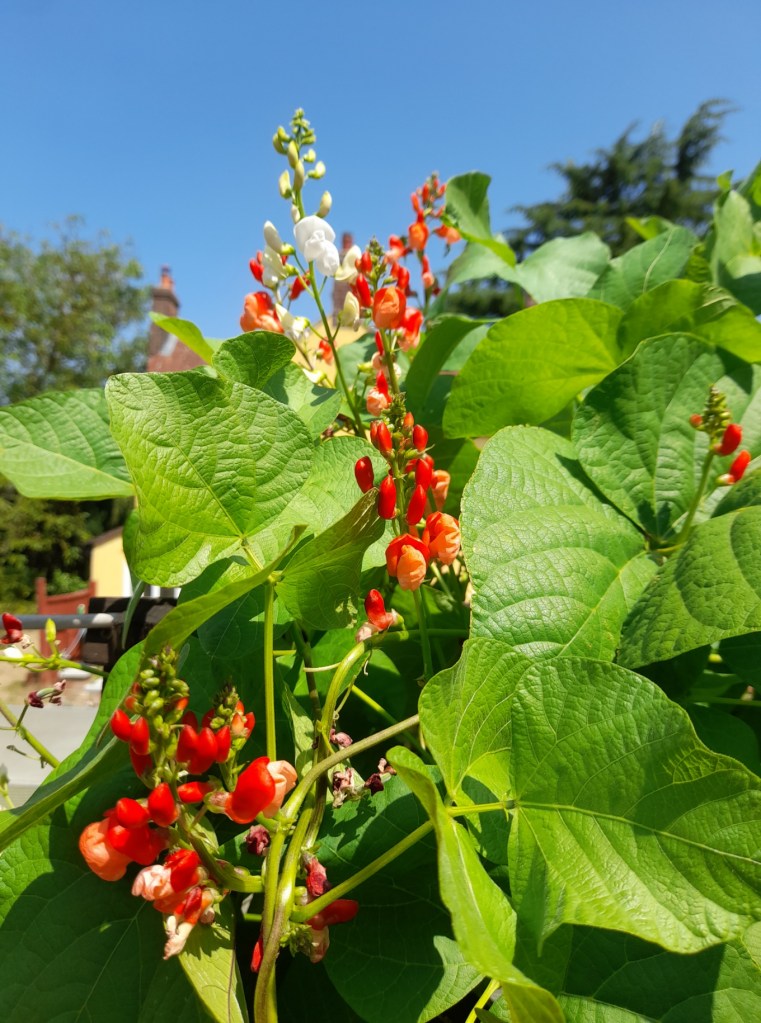
I’m all for getting in tune with the earth. The veg plot is full at the moment; the peas are doing okay and the runner beans are making up for the reluctance of the peas. The onions suffered in the first heatwave and ten of them bolted – by the time the second heatwave came around, we’d got wise and hosed them down once a day to keep them cooler. The potatoes are doing nicely, the carrots and parsnips have taken, there’s black kale and leeks waiting their turn for a space in the beds, trombocini and squashes curling up the canes. Not giant squash. I learned my lesson from the twenty kilo monster squash that took over an entire bed a few years ago. Though I might give away packs of its seeds at seed swaps. There’s always some fool somewhere willing to join the Biggest Squash in the World race.
In the middle of all this green loveliness, our water authority announced a hosepipe ban. I can’t complain, much; we’ve had very little rain since March and the temperature hits thirty degrees and more too often. I am considering driving down the burst watermain that’s making a stream out of one of the streets in our village and collecting some free litres. It was reported five days before the ban took hold and again at least once days later (only to find that there was no record of the first report). The repair was set to begin yesterday, only to be cancelled and re-scheduled for July 31st. In the meantime, the residents of the street are told that their water company ‘loves every drop’.
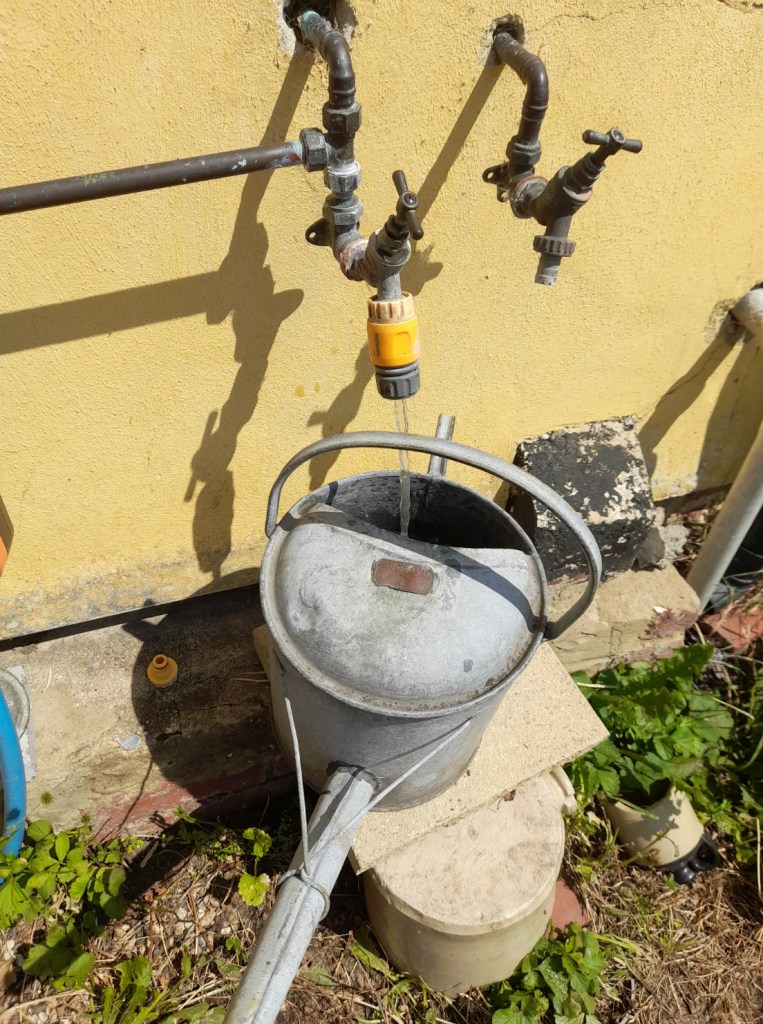
We have a new routine. If we wake up early, we get out into the garden for a couple of hours of weeding or watering before the sun comes up. Then we have breakfast outside in the shade, feeling the air heating up and the breeze slackening to nothing. If we miss that early morning slot, we spent thirty or forty minutes in the evening watering before settling outside with a beer or wine to enjoy the cool. My garden slopes uphill from the tap, unfortunately, so we’re slogging up with full watering cans. A lot of full watering cans.
It’s been great, and we’re thinking of keeping the system after the ban is lifted. It’s great exercise and (like walking a dog) it’s exercise you can’t miss without feeling guilty. Plants can’t howl like a dog, but we’ve raised most of these from seed and the sight of them drooping would be offensive. Plus, having switched off the sprinkler a fortnight before the ban, we’re seeing the difference in how the plants react to individual doses.
The squashes and cucumbers get feed in their water every three days. The peas and beans get floods of water and will do until they stop flowering (a week or two for the peas). Potatoes get a little every day. The carrots and parsnips get just enough to keep them going, but they’re drought tolerant; the onions are almost all matured, harvested and tied up in bunches in the shade. I remember going outside this March to clip the last few of last year’s onions from their bunches, fleece on and getting soaked by the rain. I was grumbling that I needed the rain to bloody stop for a few days and look how that turned out.
The plants are thriving. They seem to be growing a little each day, and we’re looking after them better than when we left the sprinkler to keep them going. We’re seeing where the weeds are growing, and making sure they get taken out. We’ve formed shallow pits around each plant to keep the water near the roots and stop it from dribbling away onto the path. Slugs and snails will be getting a swift eviction as soon as they appear.
Sitting outside with a beer has disadvantages too. It meant we spotted what we thought was a small muntjac enjoying the straw off our lawn. By all means give me the sermon about loving nature – when they start a belching contest yards from our open bedroom window I shoo them off. Still not prepared for Tuesday’s invaders… one goat and one sheep, taking a holiday from the people who will feast on them this autumn, ambling around our freshly watered veg plot and taking great rips out of the plants.
I don’t want to hear about ‘harmony and understanding’. We’ve worked harder than ever this year to keep those plants producing food for us, and there’s a quarter-mile of varied hedge for them to sample. It was a ‘Shoo!’ and a trek up the garden to mend the fence they broke through to get here (and since then, regular patrols back to re-mend the fence they’re stubbornly trying to re-bust).
If it doesn’t rain soon, we may be asked to scale back even watering cans on food plants. Until then, I’m spending my evenings watering the polytunnel and the veg plot with cans full of cold water and returning to write a novel set in a world where water is rationed all year. I’m wondering whether that will happen in my own lifetime. Given how this year has gone so far – it’s entirely possible.
Don’t get excited… it’s only available in paperback (and e-book)
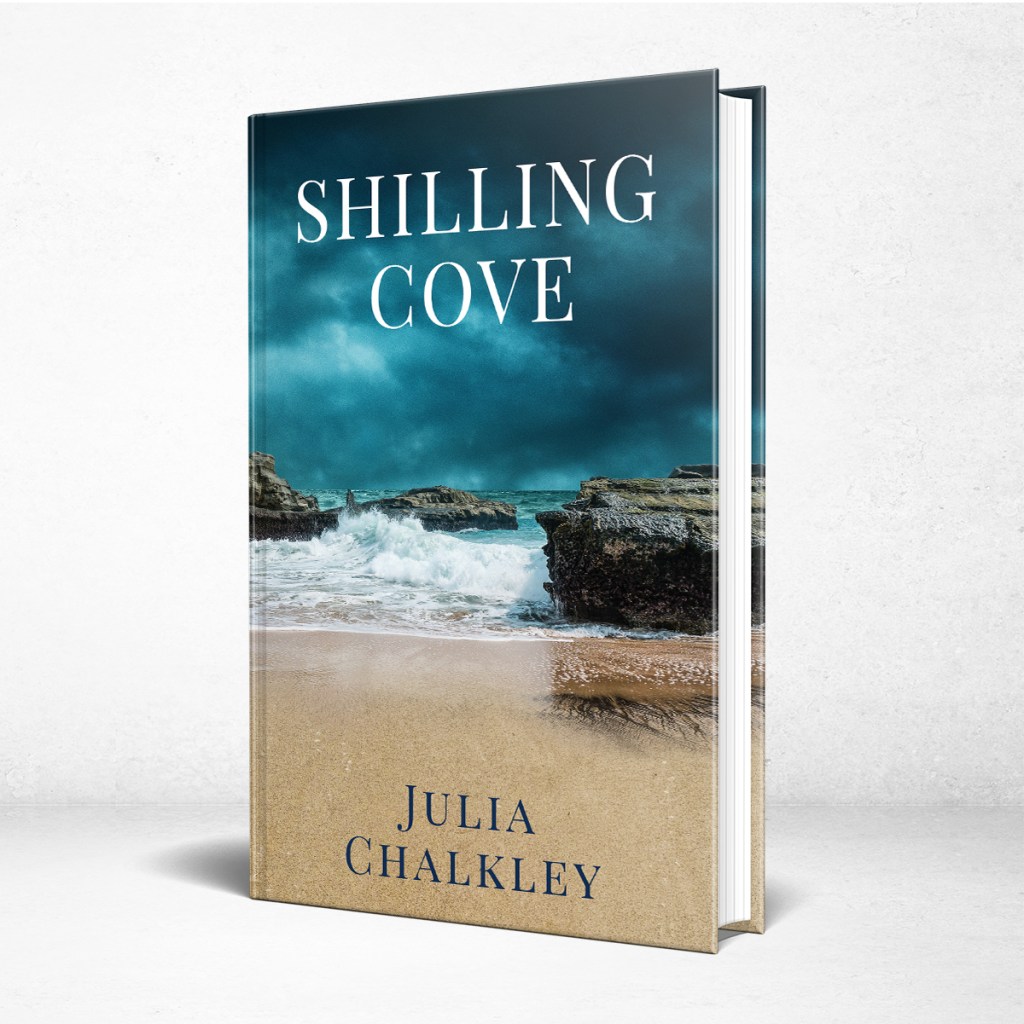
I’ve been working on the Part 2 of getting published – getting ‘Shilling Cove’ out in paperback. Not as easy as I thought.
I really didn’t want to put the book up on Amazon, but as someone said to me recently – everyone uses Amazon because it works. Having had a look at the alternative printers, I have to concede that it does. And of course, most book buyers still go to Amazon for their books, in whatever format.
This is the part that I didn’t know before I set out on this lark. Amazon offer the option to pay royalties to authors at the rate of 70% of the e-book price and 60% of the print price. They do charge 5p delivery on every e-book on top of their 30% cut, just to be awkward. They offer print on demand services at a cost composed of a standing amount plus a cost per page. For the 380 pages of ‘Shilling Cove’, that amounts to £4.65. So I have to charge at least £7.99 for Amazon to even list the book, in order that they can take their 40% cut out of their profit over the cost of printing. I went contrary and set the price at £8.00, meaning I get the royal sum of 15p for every copy sold; though Amazon won’t pay up until I earn at least £20. Hold that champagne.
The other major printers are Ingram Spark, but they would charge more per copy (depending on how copies are ordered) and if I ask them to put the book on their distribution list I have to specify how much discount I will allow the retailers to take. They prefer 55%, to the extent that it’s unlikely it would be ordered if I cut that figure any further. No chance of setting the price as low as £8.00 through Ingram Spark. By the way, I’m not complaining that the retailers insist on a discount that large; they need to cover their costs from that small profit and every cost they have is only ever going to rise.
So what’s next? I’ve ordered a proof copy of the paperback from Amazon to check it for any problems before I advertise the book. I have checked and re-checked the manuscript so many times, and I’m still spotting tiny things that make me wince, but I’m going to check anyway, just one last time.
If you’re willing to take a chance that there’s no major problem with the print copies – put May 21st into your diary. That’s the date Amazon have assured me they will put the paperback version up for sale. Fingers crossed, by May 22nd I will finally be able to hold an actual printed book I have written. It’s only taken sixty years for that dream to come true.
It was just seven weeks ago, but it feels like a year.
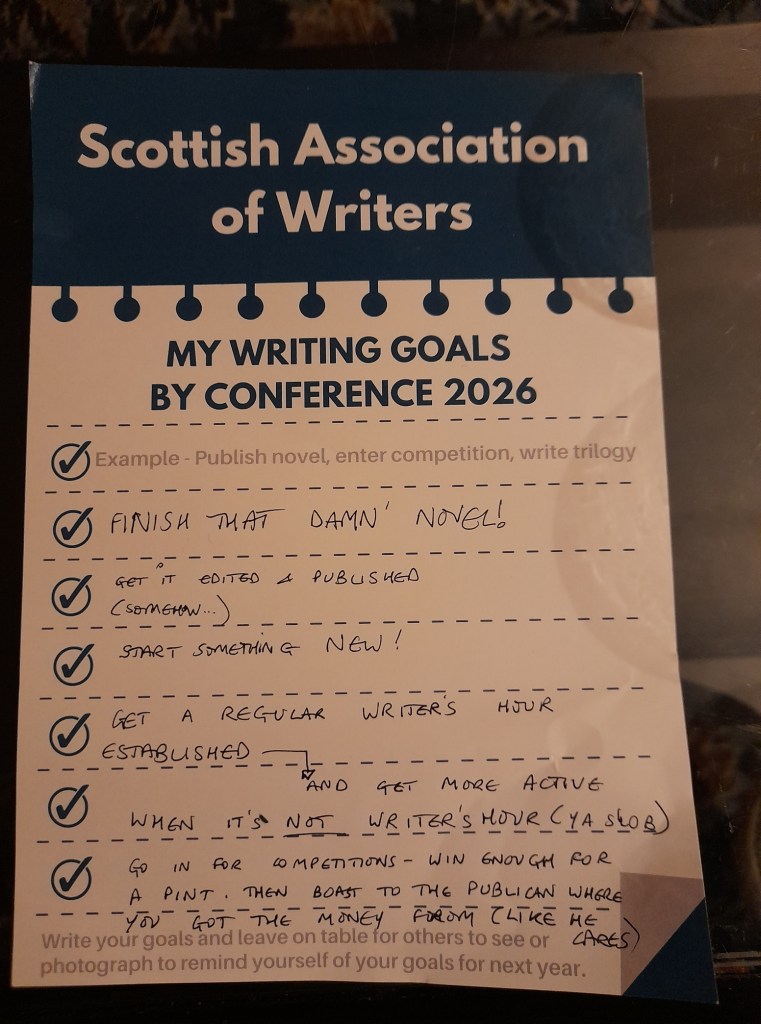
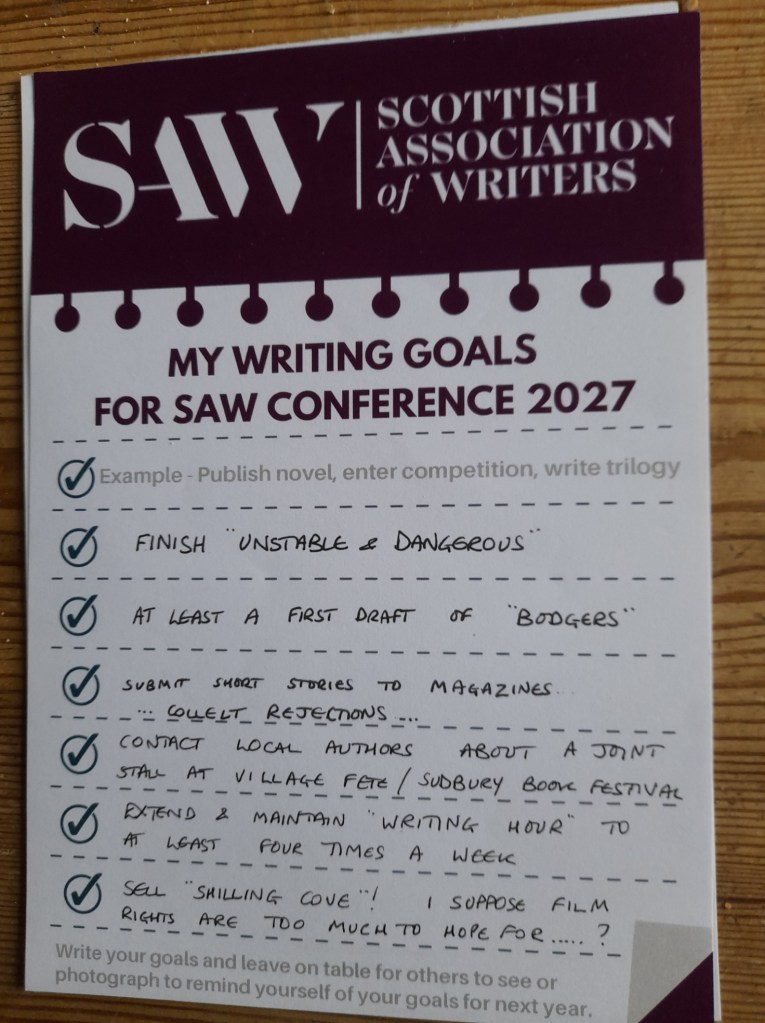
On the last weekend of March, we went to the Scottish Association of Writers’ Conference 2026. Every welcome bag contains a Goals sheet like the one above for delegates to fill in and remind themselves what they mean to do by the time the next conference rolls around, and like every exam I ever went in for, I left it till the last few days before I checked the sheet from last year to check what I had (hadn’t) managed to achieve. Official verdict is… Not Bad.
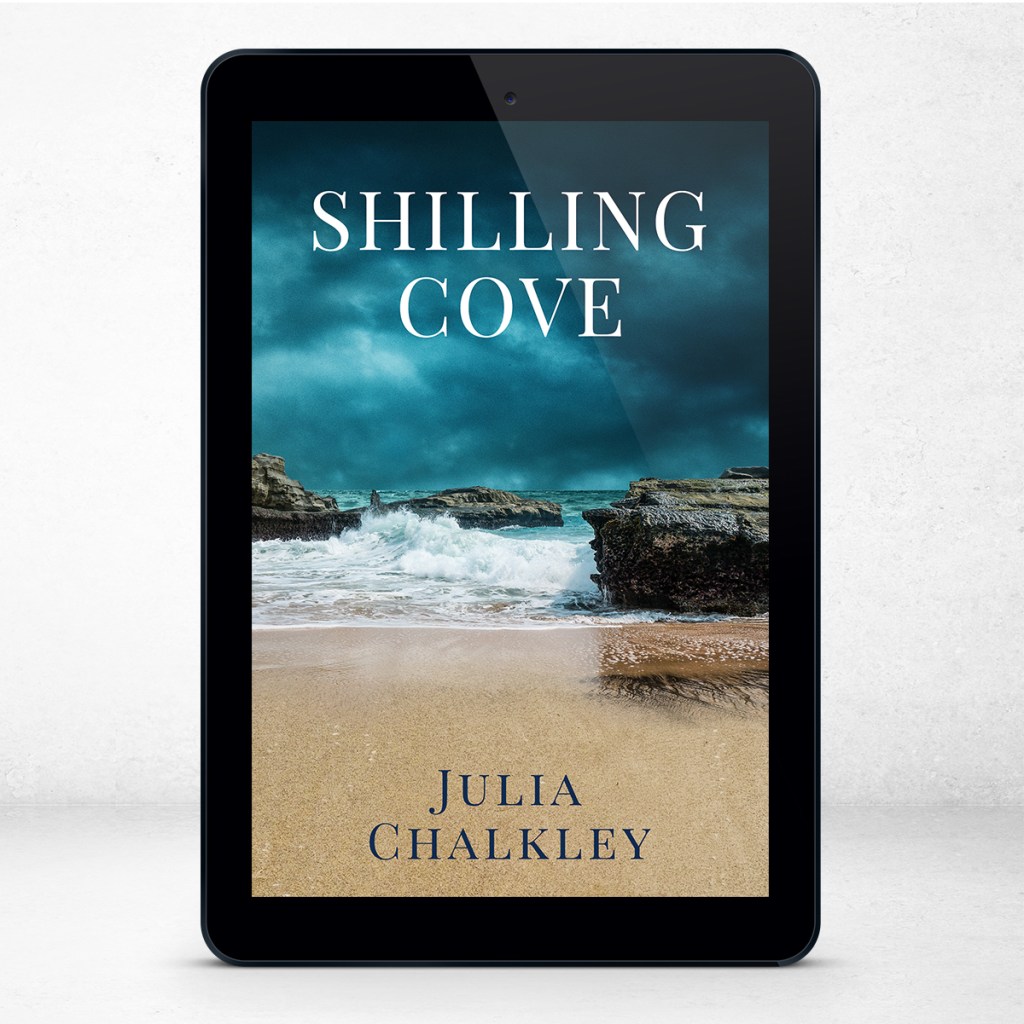
I finished Shilling Cove, got it edited and got a cover for it. Published it on Kobo and Amazon as an e-book. I have even managed to sell a few copies – thanks, friends – and hope to do better with the paperback.
I started a new novel and completed several short stories and two short plays. One of the shorts and the plays went in to SAW competitions, as did the first 14,985 words of the novel. The entire advice aimed at authors is to find your genre so that readers know what to expect from one of your novels. I might need to set up a different author name for this one, as those who adore tense family dramas with a quaint seaside setting are unlikely to appreciate a tale of high-tech space flight.
Yes, I set myself regular writing hours, and it’s now accepted that I get three hours a week that is not open to any activity apart from writing. I write this with my feet firmly planted in one of my writing hours. I get active outside when it isn’t raining too hard – and it rained almost every day this winter. We’re on clay soil, so grassy areas have been shallow lakes while the one attempt at digging up weeds in February turned into a free mudbath with extra foliage.
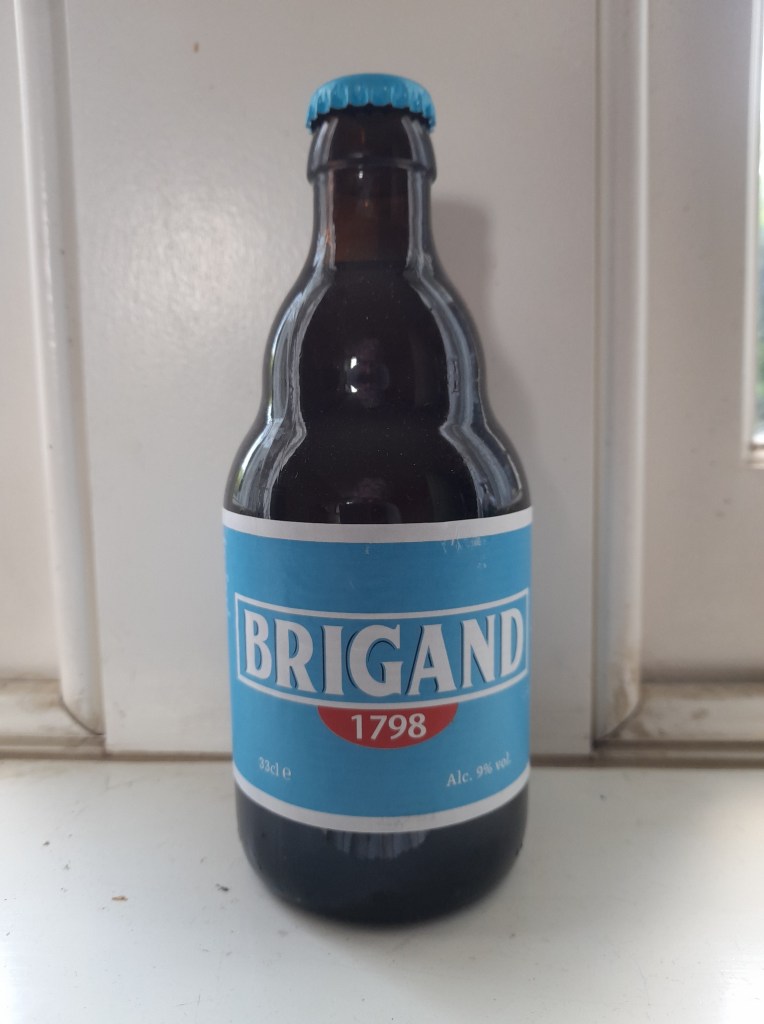
The final commitment – to win enough to buy a pint of beer- was one I failed on right up to the day after I returned from SAW; when I got a royalty payment from the anthology I’d contributed to last November. £3.59. The price, exactly, of a 330ml bottle of Brigand, a Belgian beer of 9% proof. I laughed so hard, then I bought myself a bottle of Brigand.
Don’t gulp it down. This is meant to be a long evening’s drink.
I took a long time to decide on this year’s goals, but at least I wasn’t writing something along the lines of “Well, okay, doing what I failed to do last year”. Some of it came from the publication of Shilling Cove and the current struggle to get a paperback version out – no, I’m won’t get film rights, but there was a local authors’ fair last year that I’m hoping to add my name to this year. For an area that has precisely one bookshop within a ten mile radius, that’s about the best I could hope for.
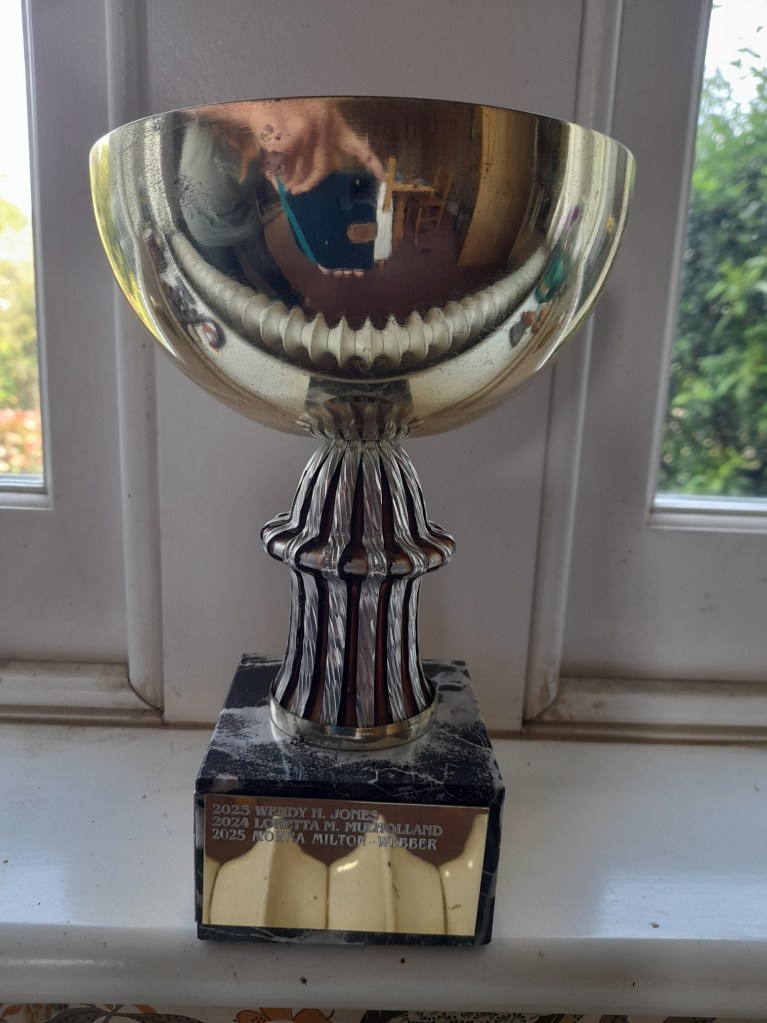
The first two goals are new ones. ‘Bodgers’ was the novel that completely failed to impress the judge this year, but I like it and I think it deserves another go. ‘Unstable and Dangerous’ was a last minute effort aimed at the Janetta Bowen Chalice for best non-fiction book, based around my memories of riding a motorcycle.
Well, the judge liked ‘Unstable and Dangerous’.
Add to my goals for this year; to get my name engraved on the plaque, polish and cherish the trophy and train myself in advance not to stand up and do a small pagan dance if my name gets a mention next year. Yelling and dancing because I got second or third place is simply not… dignified. But fun. And hey, winning the non-fiction book award is something to yell about.
I started this blog back in November 2020 on the prompting of a fellow writer. She had been on an author branding course and passed on her knowledge to the rest of us. One of her key points was ‘Start a blog’. So I did.
At the same time, the group we were both part of had a virtual meeting (think back… remember, Covid? The first time Zoom came to public attention?). We were all asked to provide a prompt of some kind, whether a quote, a first line or a photo, to spark a piece of creative writing. One of our number posted a photo of a narrow rocky cove near her home and it reminded me of a tiny hidden inlet near the place where my parents took me for holidays in the sixties and seventies. My father drove us down after he’d finished a full day’s work on Friday so that we could enjoy the full Saturday on holiday, and he’d retreat to sleep for a few hours. I was allowed to go off on my own on that Saturday morning, and would often go straight to that cove. On every visit over the years (except for one) there would be nobody there apart from me.
I wrote a short story about a child going to play in that secret place on one precious day every year, and the short story kept going. It included his sister, and then it took in his whole family and what happened to him afterwards, and in its final form it caught up with him in this century – in his sixties, not having lived the life he’d dreamed of (like all of us) but still haunted by that small and secret place that could be deadly if you didn’t scramble out before the sea came roaring in.
I put the first twelve thousand words into the Constable Stag competition. I didn’t tell anyone at the time. My writing group had nine members. Five of them had published novels, a sixth was part of a small group running a literary magazine and a seventh had won the Constable Stag trophy the year before. I’d done none of this. Only first place would do to impress this crowd, and I wasn’t confident of even getting a mention. I got third place, which was a win as far as I was concerned. I had only started to pull the story together seriously a week before the deadline, and writing the synopsis is a bit of a challenge when you aren’t really sure how to finish a runaway story.
This is where the magic of the Scottish Association of Writers took over. I’d won competitions before and been shortlisted too, and I knew that what you get for being selected is a brief email or text and (in one spectacular case later that year) a Zoom call with a direct descendant of Jane Austen’s brother. What you get from SAW is much nicer. You get the judges walking around with everyone else and they are happy to talk. At that year’s conference I got talking to a man who borrowed my SAW program and lost it, and we introduced ourselves on the basis of “You twit!” and “Yeah, sorry!” It was only after I read his name badge that I realised he was that year’s judge for the Constable Stag. I joked that I wasn’t talking to him because he’d put my literary masterpiece into third place, and he said; “The one about the inheritance? Wow. Stay there, I want to talk to you!”
And he did. For the next hour, he told me what had knocked it down to third, and what had lodged it in his memory enough that he was ready to give up an hour in the bar on a Saturday night to cheer me on. He finished by giving me his email address and telling me to write the bloody thing, get it published and tell him when it hit the book shops.
So. I finished the first draft fourteen months ago, having worked out all the plot holes and wrinkles and inconsistencies and spelling errors and, all, of, the, surplus, commas,,, and that is where I hit the professional author stage. This is what you need to do, kids, if you want to make a living off your novels. A small hint, it isn’t easy these days. Making a living is a full time job, even for a writer.
First, find an editor. One who deals with your kind of work. Not someone who edits crime and psychological intrigue (“Thank you for your interest but…”). Not someone who is rooted in American literature, because they’ll want to ‘ize’ all your ‘ise’ and call your female parent ‘Mom’. I did contact an editor who shared a surname with my husband for a laugh, and although we did establish that he and she may well have ancestors in common she didn’t have any spaces for the next ten months. Eventually, a friend recommended Susan Cunningham of Perfect Prose, who she said was thorough and kind. I contacted Susan and we agreed a timetable.
That was last April. Three rounds of editing later, I can recite my novel to you from memory and pinpoint where each phrase was debated at length. She pointed out spelling errors, inconsistencies (‘She said that on page 54, so it shouldn’t be a surprise by now”) and the kind of trip-ups I should have spotted myself (‘You’ve used the word “just” 343 times in 328 pages’). After each round, I sent the revised novel back thinking I’d nailed it, only to get a response of ‘Lovely, but…’
I got the final round of edits back in late October and finished hacking through the work in mid November. In early November, I went to the Gladstone Library with Sisters in Crime and met someone who recommended DeeDee for book cover design. And yes, I did have a good go at designing my own and you really don’t want to see those (unless your life is short on pmsl right now). Cover design has been a saga too, with me taking a look at each new suggestion and saying well, maybe, but… for months on end. DeeDee finally sent me a design that I said yes to, enthusiastically. When I thanked her for having the patience of a saint, I meant it.
Running alongside the final edits and the cover was a crash course in how to format a work written in Word into something the publishing world recognises. To be fair, an author friend of mine offered to format my work, but she warned that if I wanted to tweak a line or chapter heading she’d have to re-format the lot. It was better to have the whole process under my control.
After a shedload of emails to and fro, DeeDee came up with something similar to the cove that inspired the whole novel and I had the document formatted into an e-Pub file ready to upload. I had fought my way through Amazon’s registration process (name, address, tax identification number, height in cubits…) and in theory I was ready to hit the Publish button.
For a start… Amazon has not been any kind of friend to authors in the last few years. Its offshoot Goodreads allowed a one-star review of a novel that had not been released even to pre-publication reviewers, and Amazon responded to the author’s complaint by saying that people were allowed to give a stinking review based on whether they guessed a novel would be shit when it was finally released. They agreed to take down the review only after the trade magazine ‘The Bookseller’ called them to question their thinking. So I went to Kobo (and went through their lengthy registration process too).
I hit publish on both. Kobo delayed for the full 72 hours, but published late on Friday 17th. Amazon whipped into action and put up the novel for pre-order on Thursday 16th, with a publication date of the 22nd. Then I took it back down because I caught some serious errors on my umpteenth run through and the only option Amazon offered was to de-list and go through the whole damn process all over again.
But here goes. If you go onto Kobo or Amazon right now, you can finally shell out £4.00 and buy a copy of ‘Shilling Cove’ as I want people to read it.
It’s about the strangest legal verdicts I heard during my accountancy training, and it’s about the difference between the worst dangers of a sixties childhood versus the nastiest aspects of growing up today. It’s about what can happen if you don’t hurt yourself a little by telling the truth right now against what kind of car-crash your life can become if you let the truth slip and build on a lie. Most of all, it’s about the Cornwall I loved in the 1960s, a place that no longer exists. You can go to the same places where we stayed on those holidays and get no sense at all of how shabby and relaxed and free the place was back then.
As with everything, ‘The End’ doesn’t mean the end. I spotted an error in the version currently up for sale on both platforms, but done is better than perfect and I am going to leave it right where it is. It must be working, because I’ve been contacted about my brilliant debut novel by Harper Collins. Well, by someone who claims to work for Harper Collins, through her gmail account. The scammers have started.
Okay, go. Kobo, Amazon… search for Julia Chalkley. I’m number one zillion in contemporary fiction right now, so buy the book and help me out. Don’t ask about a paperback version, I am still working on that, but it’s on it’s way.
Every year I go to the Scottish Association of Writers’ Conference in March for the last time, and every year I find a reason to go back. By the time I left the conference last year several people had come up to greet me and I’d stopped others to say hi. The number of people I knew and who knew me was growing. It was turning into a social event.
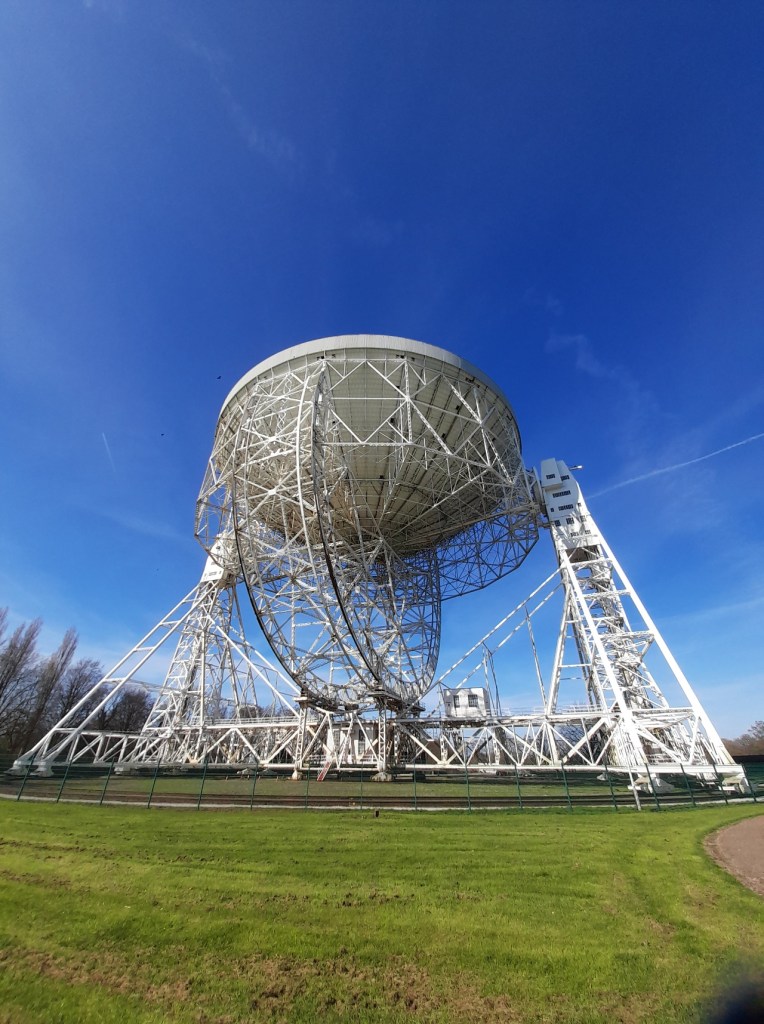
This year we both went to conference (Himself is not a writer, but he enjoys a whole long weekend of enforced not-working with added reading time) and we extended it to cover a few extra days away. This year, back to the Gladstone Library for a day and on to Jodrell Bank for a visit.
Jodrell Bank is amazing. Not just the dish itself, or the secondary dishes set up to monitor particular areas of research, but the history of it. I thought it went; the Government appointed Bernard Lovell to build the dish, he built it, lots of research and discovery. This is the true version…
Bernard Lovell worked on cosmic rays at Manchester University until 1939 before spending his war developing radar technology. At the end of the Second World War he bought a now-unwanted military radar unit to assist with his continued research into cosmic rays, but found that it picked up too much interference from the passing trams to be useful. He borrowed a remote area of land from the university’s botany department for two weeks, moved in his radar unit and never got around to giving the land back. It’s now the core of the Jodrell Bank site. Lovell used his results to persuade the university to let him build a more permanent radio telescope, but suffered from the usual problems of taking three times as long to build at ten times the original cost, even though he was using scrapped parts from retired battleships to build the steering mechanism.
There were increasing protests about the rising costs. Eventually Lovell was told that all support for the project was stopped and a committee was considering whether to prosecute him for misappropriating public funds on a crazy project. His children said years later that it was only then that they were told that their father was in serious trouble and might be sent to prison. Just before the decision was made, the Russians launched Sputnik and suddenly the British government wanted to throw money at the dish to get it built now, as in – NOW – so they could track that Russian rocket orbiting the Earth. The dish was finished in days and the debt was taken on by the Government.
It was so close, that line between a rusting half-built pile of junk in a Cheshire field and the first radio telescope in the world. All we could do was look up at it, all that white against a perfect blue sky, and wonder how many other brilliant ideas sank without being finished over the last century.
We spent a whole day there and it wasn’t enough. The First Light dome houses displays showing the whole project from empty field to the current set-up, plus the appearances the dish has made in music concerts, art installations and films over the decades. Parts of the original dish – removed during a recent refurbishment – are the bases for some of the displays. On our way back to the cafe for lunch, we passed through the room displaying information about our solar system, including a large orrery set into the ceiling. Turn a handle and the planets move around the Sun.
We agreed to stay on for the last lecture of the day, even though it meant we’d get caught in the rush hour traffic. I’m glad we did. The lecturer introduced himself as an explainer (he told us afterwards that he had no aptitude for scientific research as it existed today, but he certainly had a talent for getting complex ideas across in concise plain English).
And what ideas. Supernovae. Radio waves. The life cycle of stars (illustrated with an expandable ball). Gravity and the artificial version of it created by centrifugal force. For a finale, a practical demonstration of rocket power (not for the nervous, but I could see a classful of teenagers cheering him on. We piled out into the traffic just before Jodrell Bank boldly told everyone to go home and sat for 90 minutes in thick slow traffic. It was worth it.
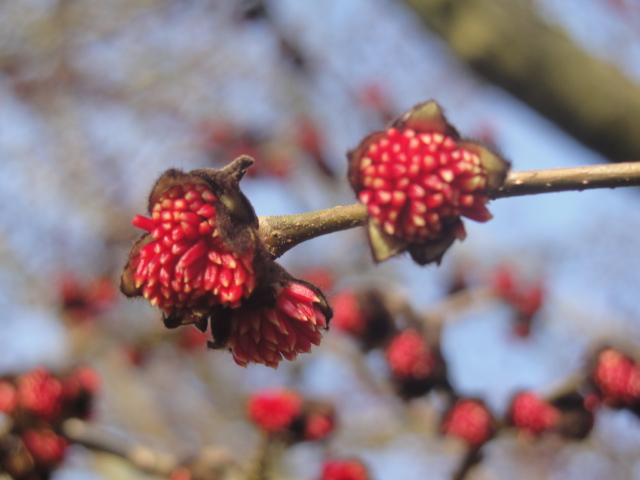
The photo above is my cack-handed attempt to capture the extraordinary sight I saw on February 18th last year. I was out in the garden on a sunny day and saw red dots on a beech tree. As I got closer, I could hear what sounded like hundreds of bees buzzing around, and actually yes, there were bees swarming over the tree, landing on one bright flower after another. I caught a few blurry shots of bees rushing away out of shot to get to the next blossom before I put the camera down and just enjoyed the sight and sound of an early spring.
What a difference a year makes. We’ve got off lightly here, but many areas of the country have had their entire average annual rainfall by now. The road past our house was closed for twelve hours while the authorities rescued cars and their occupants from a flooded stretch further down, and we gave up digging over the veg plot when the sleet started. Digging waterlogged clay soil is not so much digging as scraping the mud off your fork and spade every few minutes.
But the birds are hopeful. We have a blue-tit attacking his own reflection in our windows every few minutes for an hour every morning, a pair of ducks treating our pond as some kind of holiday retreat and the birds outside are singing that upbeat spring song, very different from the subdued chittering sound of winter.
The rain and cold has discouraged us from getting outside to get the garden prepared for this year’s growing season, but when it turns it will turn suddenly. I’ve been delaying planting those early seeds – peppers and tomatoes – as the last few years have been a case of plant in January, get seedlings that come up skinny and fall flat, plant again in March and get them coming up too late to crop. Sometime in the next week or two might be a better idea.
Right now, it’s blowing hard and cold and gusty outside (and inside, must check where it’s getting in) and I’m staying right here. The moment I get back out, I’ll be checking to see whether the beech has come out in those amazing red flowers again, or whether it is hiding from the weather like I am.
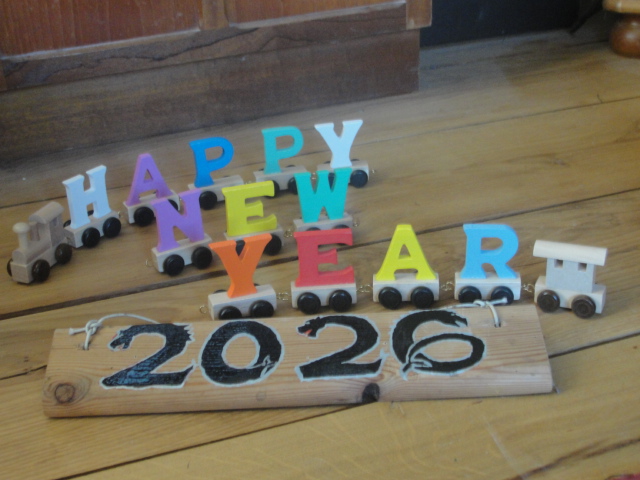
The sign is intended to mark the bay in the wood-shed where this year’s wood will be stored
Maybe a little late to wish a happy new year, but I will anyway. The year still has that hopeful feeling to it, a long time before we start to ask where the year went and what are we eating for Christmas dinner? Aubergine moussaka this year. Even the cat refused turkey scraps by the time Boxing Day dawned.
We cleared out the bay in the woodshed that housed wood from trees cut down during 2022 and swept it clear of leaves and bark and twigs. Tidiness that won’t last long. We’d already felled a dead elm along the hedge line during our Christmas garden work, and we still have a big pile of ash wood from the tree trimming a year ago. It will need to be cut to size before it can fit into the stove, but that’s a good job to do in the winter. As both sets of wood come from trees that have been dead for at least five years, they’ll need little drying in the woodshed before they can go onto the stove.
I paint the signs to mark the year the wood was cut, and this year for the first time, I needed to paint over a previous year. I’d painted the ‘2022’ sign as a pair of gold dragons with faces and red outlines; I overpainted the 202 and sanded off enough of the final ‘2’ to replace it with a ‘6’. This year’s choice is black and silver, but I’ve still given the figures dragon faces. It was easier than having to sand off half of the ‘2018’ on the other side of the block.
The Christmas task is a tradition we began while we were both at work. While he was able to take the whole of Christmas week as holiday, I had to negotiate with colleagues to get time off, and often they’d play their ‘Ah! But we have children’ card to get priority. Which I do understand when the child is still young enough to believe in Santa. When your child is nineteen and bringing his laundry home from university, pull the other one. My husband is my family, just as much as your adult kids are yours. Whatever time together we could spare, we got out into the garden (unless it was severely naff weather) and got on with one job. One year it was planting the final fifty trees in the hedge; another year, we finished building the compost bins. Our compost bays hold roughly five cubic metres of material each, so that was a serious job.
This year, we made a good start on our dead hedge. We saw a huge dead hedge at Sutton Hoo a few years ago and thought it was a good idea but too wide and sprawling for our garden; this year, we saw another at Beth Chatto’s garden and decided to follow their pattern. Progress so far – we’ve cleared the short stretch of fence where nothing grows except elm (briefly) and honeysuckle, repaired the neatly cut fence wire and hammered in the stakes we need to strengthen the fence posts that were installed over twenty years ago and to create the parallel line of posts to contain the cut branches. The wire fencing forms a retaining wall on the footpath side, while a series of very long cuttings from an overgrown section of beech hedging form a trellis to hold any shorter cuttings from spilling out onto the garden.
I’m on my way home from a week away with friends today and tomorrow (weather permitting) I hope to be back at work in the garden, filling in the rest of the dead hedge before the snowdrops are out in flower. I’m hoping this year will be happy and full of quiet achievements. It’s started well, at any rate.
Yeah, this one’s for all you scammers out there. I’ve had five or six posts over the last few years, but the pace is picking up; I’ve had four in the last two weeks and one of them was a prize winner.
Usually I get an email through the contact section of this page that tells me how much the person enjoyed reading my blog and then points out something that I have done wrong that could be improved in future. I took the first one at face value and went back to correct the spelling he’d pointed out. I looked for several minutes before realising that I had spelled that word correctly in the blog. The word was ‘inital’ according to the spammer. I wrote it off as a helpful person who couldn’t spell.
The next few had almost identical wording, all pointing out something ‘wrong’ in my blog that they could help me to correct. They can achieve stellar success in blog rankings and SEO scores, and I’m sure they charge reasonable prices for the service. But the easy way to get a 100% discount on a service is not to buy it.
This month’s crop of friendly ‘I can help you get more readers’ emails was followed by one that made me check the date. Not April 1st, not yet. The bot that wrote me the email really enjoyed my novel. You haven’t missed the publication date, by the way, I haven’t published a novel yet.
I mentioned this oddity to author friends (real, genuine, published author friends), only to find I was way down the rankings of targets. One author got a dozen of those emails a week. Block, delete, ignore is the standard response. That’s fine, even when a famous author contacts you to say how much they love your book. A little more spooky when a deceased author contacts you to say how your book has held them spellbound. Is it enough to block them, or do you need to call Ghostbusters?
As long as that’s all these bots do – offer to help – that’s fine. I may have seen the more sinister next step in this weird game and it’s a bit less amusing. A site that states that it will broadcast an author’s work for free (meaning no more book sales, no more royalties) unless said author pays the protection money to stop them.
Authors of the seventies, eighties and nineties – Jilly Cooper, Wilbur Smith, Dan Brown – wrote a book and earned money for it. These days? If you write a book, you’re an open target for people who do no work, can’t spell simple English words but are viciously determined to earn money on the back of your hard work.
If you don’t think writing is hard work, try it. Write a novel. Send it to friends and see how hard they laugh. Send your short story to a competition and see whether anyone hails you as the next big thing of literature or struggles for a polite response. It doesn’t work like that. My current novel is all but finished after years of drafting, re-writing, editing, editing again… and now? Almost afraid to put it out there, because I despise spammers and I value a quiet life. If I get novel spam before I publish, how much worse could it be?
Perhaps as bad as the two professional authors featured in an article in ‘The Bookseller’ magazine who reported that Goodreads published a one star review of their novel before anyone had read it. No author copies issued for review. In one case, the novel had just arrived back from the editor with a round of edits and was nowhere near being ready to publish. When the authors protested, Goodreads replied that the reviewer was entitled to post a review based on whether they imagined they’d enjoy the novel or not, and refused to take down the troll review. When The Bookseller contacted them for an interview, they changed their minds, but a new indie author is unlikely to have the chance of getting a big magazine to weigh in on their behalf.
Enter Amazon, who got their start as booksellers. Amazon, who are about to turn every Kindle publication into an e-pub and PDF version to sell alongside the Kindle-only format. That doesn’t sound drastic, till you think of a PDF as equivalent to a paperback. The paperback sold in a bookshop, that got passed to a friend, to a charity shop… one sale, one royalty payment, three readers. Multiply that. One paperback, one sale and an endless round of friends reading that one copy.
If that sounds okay, how chuffed would you have been if your employer paid you a tenth of the agreed salary? One read, one payment. If Jeff Bezos can’t afford that, I’m sure there’s food banks in America he can go to.
What can you do as a reader? Buy the damn book. Every author spent hours and months and sometimes years to get it readable. Paying them a pound to read it is fair. Borrow it from your library if you can; free to you, but the author gets an ALCS payment equivalent to a royalty. If you want something for nothing, ask yourself what you’d do for nothing. How many times did you work for free, wrote off overtime, told an employer to keep that final pay cheque to help them out? Commercial employers, never. Charities, maybe. Billionaires? Bugger off.
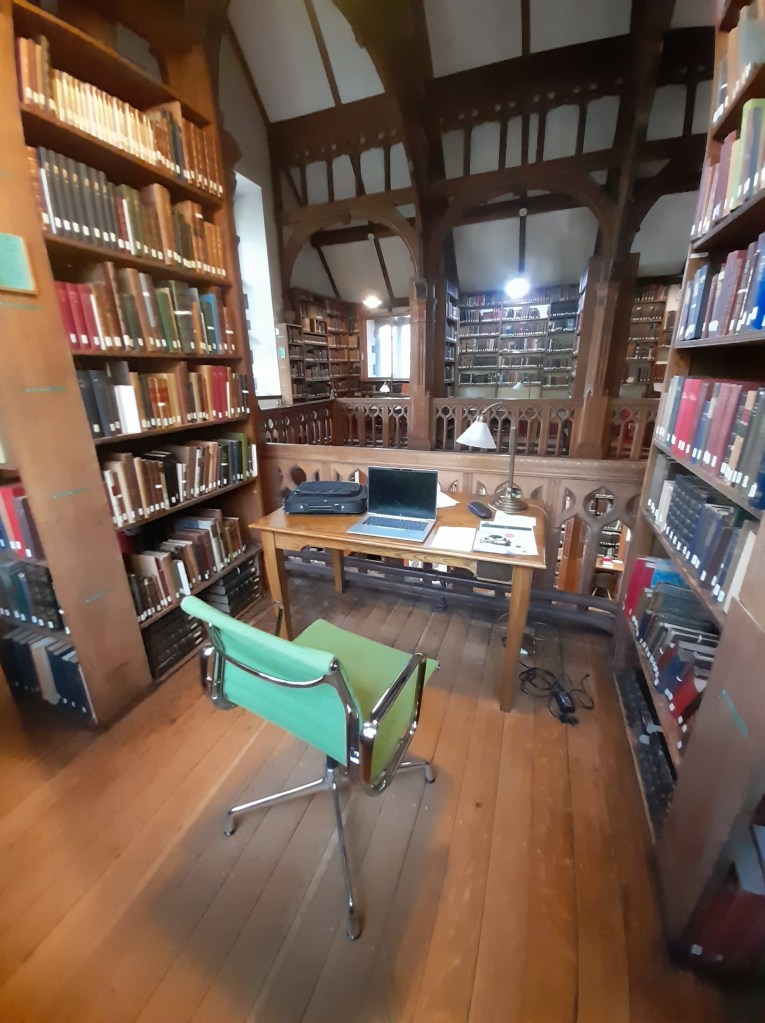
The desk in the History Room I chose for Saturday’s writing session
I have just returned from a writing holiday like no other. I’m trying to describe it, and there’s no sentence big enough. You’ll see the photo at the top of the page and understand it’s a library, but… this is Gladstone’s Library.
You can start with the fact that it is a library and move on to understand that it is the national monument to William Ewart Gladstone, politician for both major parties and Prime Minister for a large chunk of the 19th century. It’s a grand and sprawling building with acres of worked stone and dark wood which replaced Gladstone’s original structure of a ‘tin tabernacle’, put up to house his thousands of books towards the end of his life. It must be the only library in the country that insists on silence. I didn’t realise just how much I missed the traditional silent reading rooms until I walked in and heard nothing at all.
The Theology Room is about twice the size of the library in our nearest town, spread over two floors. Not just theology – though there are plenty of books on Christianity, Quaker faith and Judaism – it contains Celtic works, books about ley lines and witchcraft, ghosts and folklore. Next door is the History Room, and again, not just history. A small room just off the main History Room contains works concerning the Islamic faith. Many of the books on the ground floor are the original ones owned by Gladstone, rather than works donated by others or collected by the library. I don’t think the trustees mean to be funny when they ask readers to treat Gladstone’s own books with especial care – laying them on huge cushions to support their elderly spines, for example – to preserve these fragile items. The same books that Gladstone transported in wheelbarrows across the park and the street to the tin tabernacle.
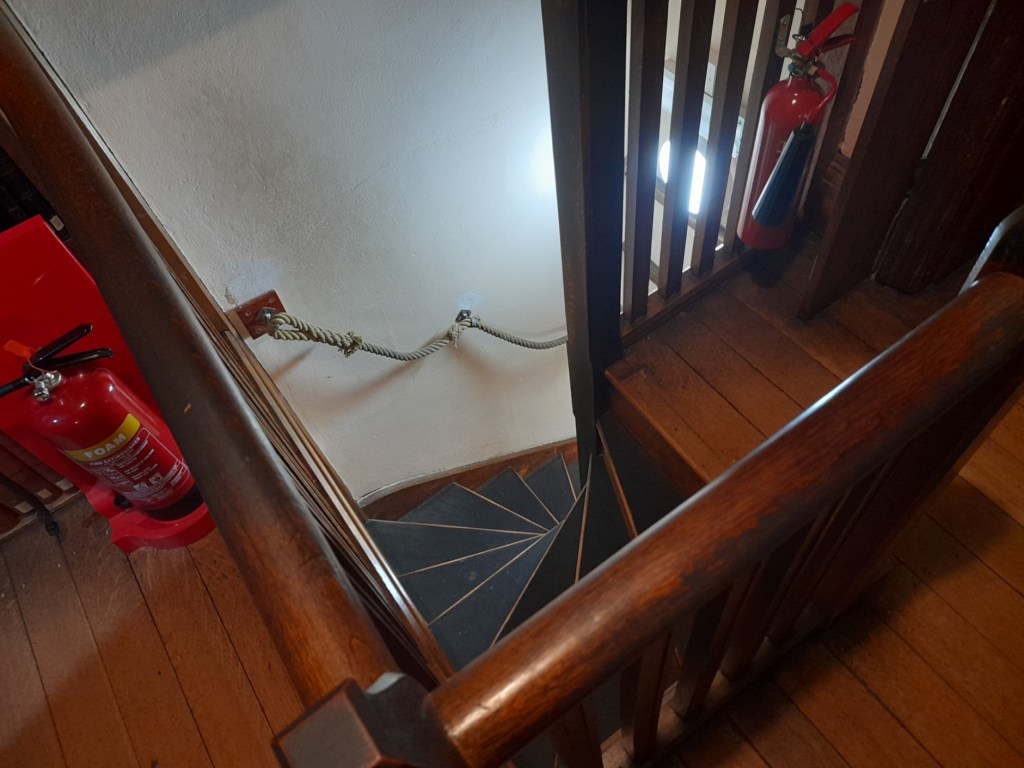
Tight spiral stairs between the ground floor and gallery
In the far corner of the History Room is a door that leads to the modern books. Stacked in those rolling cases designed to give the maximum amount of storage, each case is almost completely full. Literature. Poetry. Journals and magazines. History of Britain, Europe, all periods of time, particular histories such as the Suffragette movement. You’re welcome to take a book or more to your desk, or (for residents) back to your room for a night. Not off the premises and never to be propped open in the canteen while you eat your soup.
I took Pevsner’s ‘Buildings of Cambridgeshire’, the New Penguin Book of Welsh Short Stories and Christabel Pankhurst’s account of the suffragette movement. This was a history as far as the 1919 Act that gave a very strictly limited group of women the vote. It took until 1928 before British women were granted the right to vote on the same basis as men. If that sounds harsh, Switzerland didn’t grant equal voting rights to women until 1971. One interesting fact I found in Miss Pankhurst’s work was that the liberal-minded Gladstone – the politician who voted to end slavery in the British Empire and championed the right of all to have access to books and education – was apparently so set against extending the vote to women that he was seen as the main obstacle to full suffrage on every occasion it was put before his government.
Apart from the books, there are 33 comfortable bedrooms and a restaurant / cafe, a lounge for residents, rooms for groups to meet in and a chapel. Many of the rooms have names as well as numbers. Four or five are named after Gladstones – one is named for John of the Cross – and next time I visit, I want to stay in Room 25.
All they need to do now is rename the toilets after ‘Desperate Dan’
Anyone can turn up and ask for a card to give them access to the library for the day. Both library rooms are open from 9am till 5pm to anyone with a day card or a reader’s card. At 5pm, everyone is asked to leave the History Room and the Annexe and the doors are closed. The Theology Rooms remain open to residents until 10pm.
The Sisters in Crime loved it, and there were always a few of us in the library. Beth had returned from a day trip to Anglesey with a driving need to learn about the lives and beliefs of the Celts on the island, and her desk was decorated with piles of books on the subject.
It was chiefly a social gathering of the Sisters in Crime. The group gathered in the Anwyl and the Glynne rooms each day to discuss writing and to meet each other. We meet all the time on Zoom, but there is a different feel to meeting someone in person. A couple of people I have found interesting on Zoom and WhatsApp have now become friends, the kind I will make huge efforts to keep in touch. Though I admit the initial introduction session went on for so long my introvert fuse blew and I spent most of Saturday hiding in the library with my laptop and my latest writing project.
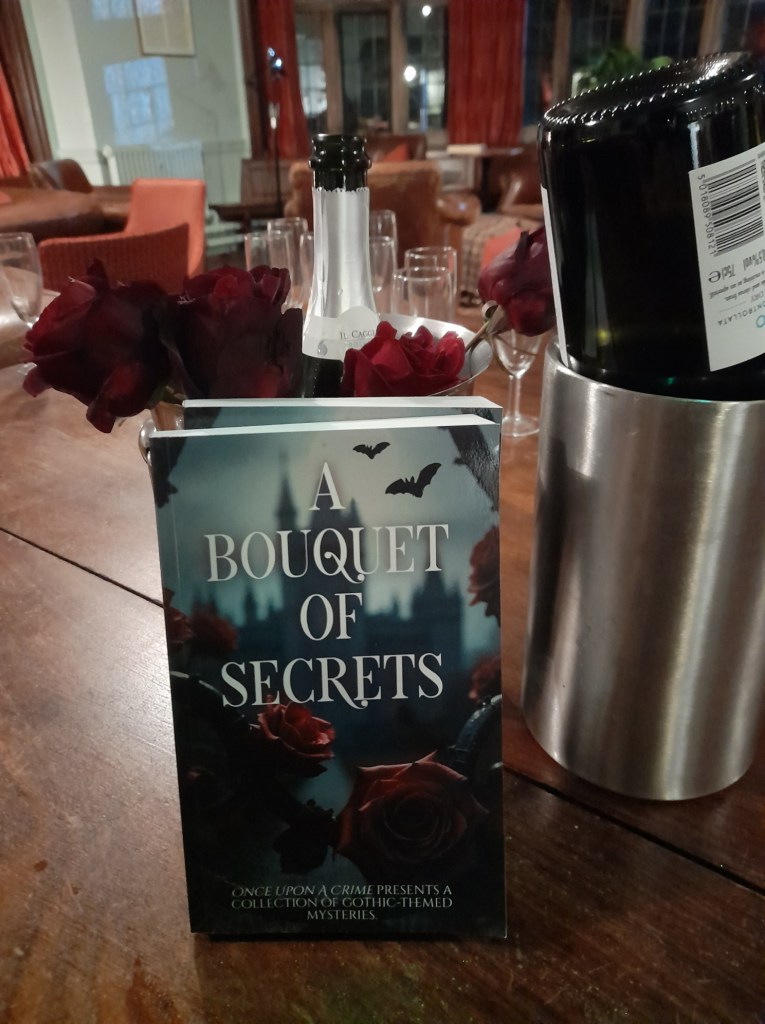
On the Friday night, we held a party to celebrate the launch of ‘A Bouquet of Secrets’ with Prosecco and Gothic fancy dress. No idea what the other guests at the library thought of it all, but we had fun. Everyone had a copy to pass around and eight of the group had contributed stories, so we swapped copies and signed.
The final day of the meeting was Remembrance Sunday. We all checked out of our rooms by 10am – I knew there’d be a queue, so I got up early and checked out at 9am. While I was loading my bag into the car, the local brass band was rehearsing by the war memorial. The road would be closed for their parade until 12.30, so I couldn’t have set off on my journey home until then.
We gathered in the Glynne Room for a goodbye session, then a final photo outside the library. Brilliant timing. Just as it started to rain. By the time I left the lunch and set off for home, it was traditional Welsh weather – raining with no sign of stopping. Just the right kind of weather to disappear into the library with a good book.