
Last Friday, we went to the orchard in the local community wood and picked specimen apples. A lot of them. Five typical apples from each tree. And like a true fanatic, I even took apples from the four trees where I had found a name tag or thought I knew the identity of the apple variety. Plus the three apple trees in the depths of the wood itself. I picked the five (taking apples from all around the tree and from the shaded interior too, snipping them from the tree so that we collected the stalk). Each set of five went back to the Central Logging Point (the patch of soft dry ground where himself sat with a pack of freezer bags and sticky labels), I told him the tree identification (Alpha Two, Delta Three etc) and left him to bag them, seal the bag and label it while I went to collect the next tree’s worth.

The next day, I sat outside and opened each bag. Took out the five apples, dried each one and wrote its tree ID on it with marker pen. Re-wrapped each group in newspaper, sealed the wrap with the original tree ID label and placed it carefully in a big box. Only then did I open the next bag, and repeat.
The day after that… showtime.
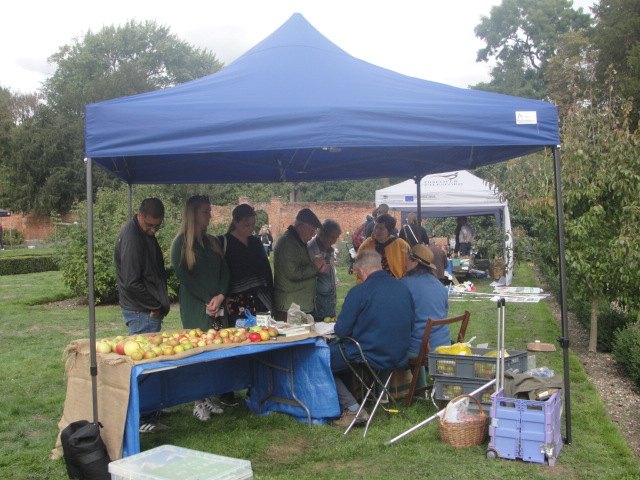
On the third day, we took that big box full of apples to the Apple Day at Great Easton Lodge near Dunmow and collared the experts. We had warned them, but as we walked across the lawn with 115 apples in a box at two minutes before opening time, we did feel a little guilty. We waited until they arrived and said sheepishly… ‘Hope this is okay?’
It was. They loved it. The experts discussed each apple variety, occasionally nipping over to their friend on the next stall to compare notes with his array of Essex varieties, and came up with a verdict. We broke off occasionally as members of the public arrived with their mystery apples (when you present 23 trees’ worth of apples, it’s polite to give way to others). One trio arrived with apples to identify and the experts sat up and murmured excitement. The older man had told them that he was a descendant of Samuel Greatorex, and when asked, admitted that he had some of Samuel’s papers in his keeping. It was like someone dropping by a 70’s music festival and admitting casually that he was closely related to Robert Plant. I noted the name, but at the time it meant nothing – just that this Greatorex was obviously an apple star.
I was included in the experts’ discussions. I’ve learned my base from my apex – the stalk is at the base and the flower end is the eye. I listened more than talked. The trees tagged up as Sturmer Pippins were definitely not – more likely to be Tower of Glamis, a Scottish cooker I was surprised to find in an Essex orchard. The Braintree Seedling was exactly that, and is one of three in the orchard. The tree I thought was a Bramley was an Annie Elizabeth, a culinary apple from Leicestershire. After four hours and twenty-five minutes, we had all twenty three trees identified, and a pair of beaming experts who were completely chuffed to have helped us. For free.
We staggered off to see the other stalls and dropped a donation into the box for the charity the experts were connected to. Brilliant place – lovely walled garden, a sunken garden and Italian garden that we never got the chance to visit, stalls selling honey, soap, seeds, juice and vegetables… and then we went home.
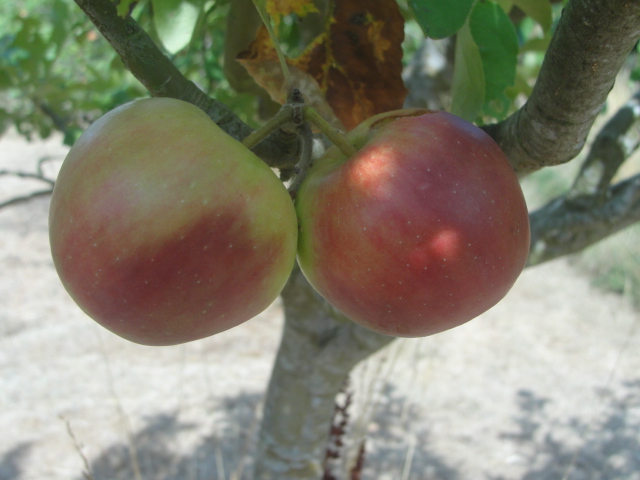
It’s taken me a week to note all those names on the chart, to look up the names and note whether they are dessert or culinary, to find their history and picking times. In the course of that, I found the history of the Annie Elizabeth apple. The original tree was raised from a pip of an Orange Blenheim apple planted in Clarendon Park, Leicestershire in 1857. By a magistrate’s clerk called Samuel Greatorex. Name ring a bell? I was standing next to his descendant last Sunday. The original tree still stands in Clarendon Park, but the girl for whom it was named – Samuel’s illegitimate daughter – died in 1866, aged just nine.
The chart of the orchard has been amended and a list of the trees drawn up. The committee of the local woodland trust said a muted ‘Well done’, and went on to grouse that the apples on the trees would be wasted. I sat back and kept quiet when they discussed whether anyone would volunteer to run an apple pressing day in the orchard – I have done plenty of chasing around for the trust this year, and with six free days left in October it’s unlikely I could man the press on a suitable date and spare the time to advertise it.
Some of the apples we took to the apple day were cut up for a close look or donated to the experts as fresh specimens, and the rest were lugged back to the car and came home with us. They will join the apples we’ll harvest from our own orchard, and will probably contribute a couple of pints of cider – which we will pay back to the members when we have our next meeting. It will probably generate more excitement than the news that 75% of their fruit trees have now been identified down to variety name.
 Julia Chalkley