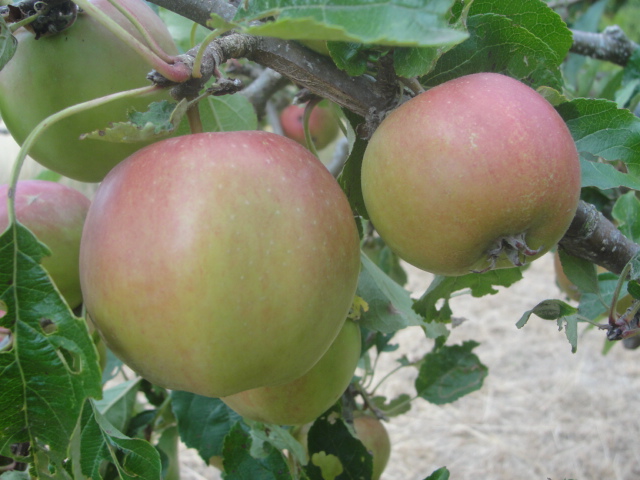
As a young child, I sat through school assemblies where September meant singing the hymn ‘Harvest Home’. Girl Guides’ church parades involved bringing something to add to the pile of harvest ‘stuff’ at the altar – the lucky kids with a fruit tree in the back yard brought an apple, some of the parents took the chance to offload one of their marrows and my mother grabbed a tin of beans out of the cupboard to give me something to offer. I would love to know what the poor and needy of the parish made of being given a marrow, a tin of Heinz and an apple for dessert. It was a time when a real meal meant scrag end of meat, accompanied by a few vegetables boiled to death. Should have taken them one of the mice that used to run across my pillow occasionally (except that I wasn’t that bothered by them, and wouldn’t have sent them to roast in a stranger’s oven)
These days, I have a real veg plot. Five metres by eight and an overspill patch next to the greenhouse, I grow enough food to keep us in vegetables for about a third of the year and as I don’t eat meat, that means I can take about a third of my meals from our back garden. I’ve even had some small success with lentils, and the plants self-seeded enough to keep themselves going for the last four years.
Autumn really means harvest to me these days, in a way that an east London childhood failed to register the season. I buy my seeds from the Real Seeds company, based in Wales but with connections across the world. The seeds they sell grow heritage varieties designed for particular conditions; tolerant of poor soil, short summers, cold weather. We got through the first lockdown on the canned and dried stuff we’d bought to get us through recuperating from surgeries, and for fresh vegetables we relied on what came up in the garden – Real Seeds kale that had self-seeded, potatoes that came up in the compost heap, over-wintering onions and field garlic.
The thing about Real Seeds is that they sell seeds for plants that have been rescued from dying out. The commercial seed companies can offer only the plants that are so mass-produced that they can guarantee that the variety they sell will be exactly the variety and not cross bred – that means that there’s a small pool of candidates for each type of fruit or vegetable. Real Seeds sells under a ‘club’ type licence, with each gardener agreeing to grow and pass on the seeds from their plant if they can.
Each plant has a story. Real Seeds tell of a man who graded seeds for a commercial seed company and (as a hobby) bred plants that thrived in his garden and were excellent for taste, cold-hardiness, productivity. He saved, labelled and graded the seeds he collected. When he died, his family cleared his house and shed, throwing away those bins of seeds. The neighbours hopped over the garden fence after the family had gone, collected all the seed they could from his vegetable patch and grew those varieties on, many of them passing on the seeds to Real Seeds later. An elderly lady passed on the seeds of the kale that survived Sutherland winters to a younger relative, who in turn passed them on to Real Seeds (named Sutherland Kale, I have seen it shrivelled by snow in my own garden and returning to full health ten days later). Real Seeds’ message to their customers is clear; buy our seed to save the variety – save seed from it and pass it on free of cost or licence.
Saving seed is a great intellectual challenge. I love veg. I love kale in a stew, a soup or a homity pie – home-grown peas in a paella – getting out the last of the stored onions and potatoes in March for a meal. But. It takes planning in the growing. All the brassicas cross-breed like Hollywood superstars, so if you want a pure-bred Sutherland kale you need to make sure that there’s no other kale, chard, broccoli, cabbage or cauliflower running to seed within half a mile. Carrot cross-breeds with other carrot and carrot ancestors – so pull up every scrap of Queen Anne’s Lace growing in your garden, neighbour’s garden and on the roadside nearby. Cucumbers cross with other cukes, as do chillies and sweet peppers and onions and garlic. Anyone remember the accidental wild courgette crosses that produced the bitter (and poisonous) courgettes in 2021? Affected Mr Fothergill’s, Thompson and Morgan and Suttons, so that they had to admit that they sourced their seeds from the same commercial grower.
I have grown only Gerghana cucumbers this year, as I do like them better than the other kinds. Melons, I grew fifteen plants – so my Bishop melon might not be pure Bishop Gris de Rennes, and my Eden Gem might have some Collective Farm Woman in it’s ancestry. I grew King o’ the North peppers alongside my Californian Wonders, so I may have a cross there. The Californian Wonder peppers were fabulous – blocky, large, lime green and thick-walled – and I will definitely grow them again.
What I have been doing for the past week or so is saving the seeds I want to grow next year in huge quantities. Some of these will not grow seedlings – some will sprout but not survive – and some of the people in my village are getting keen on growing their own plants, so I hope I can give away some packets of seeds locally and to friends.
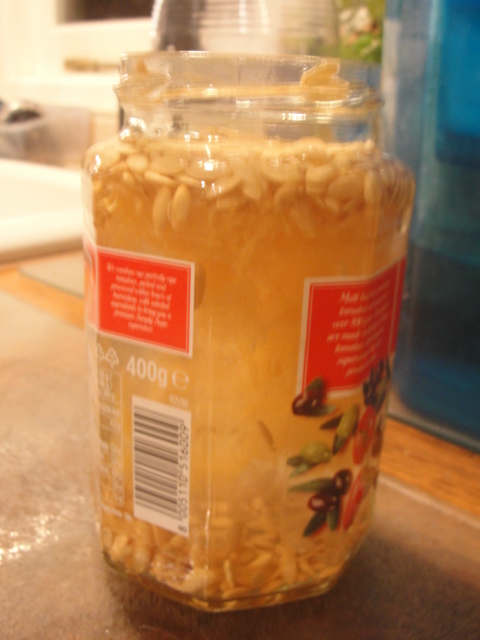
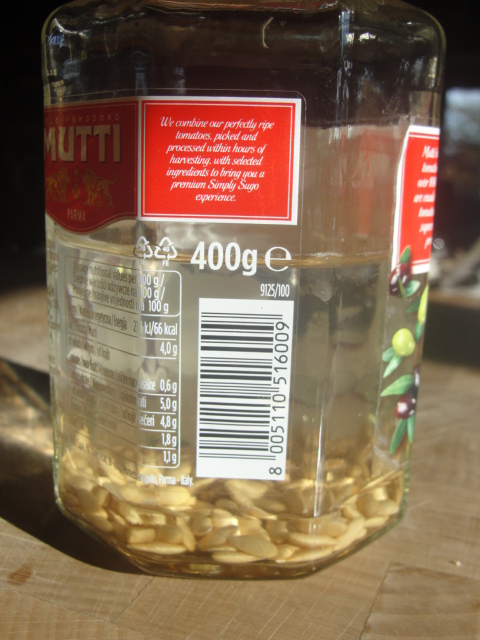
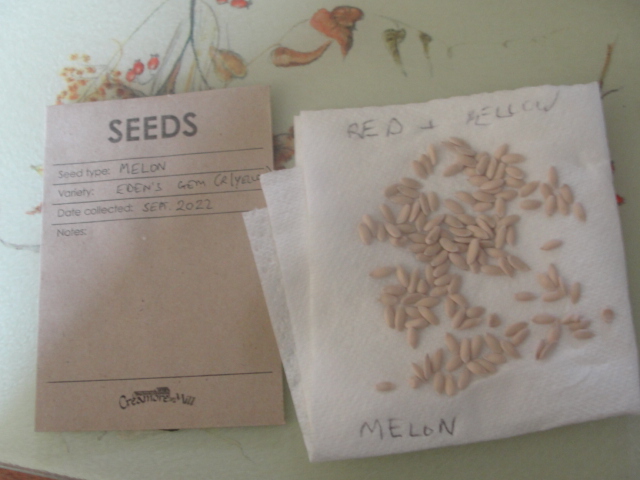
Melons, tomatoes and cucumber seeds are the same – scoop out the jelly, put them into a jar of water, shake, pour off the water and change it every day. Gradually loosen the seeds from the jelly until there’s nothing in the jar but clean water and seeds. Remove all the seeds that float, pour the rest of the water through a strainer and tip the seeds onto kitchen paper to dry. Dry thoroughly. I’ve had seeds rot and grow mould in the packet, so these days I dry them for several days before I put them into a paper packet and label them up. Variety and date collected. It works. All my cukes this year came from seeds collected in 2021. Wicked Witch chillies come from seeds collected from a plant I bought in 2015 (and their descendants). Pepper seeds are easy – scoop them off the piece in the cap of the pepper, sweet or chilli. Don’t bother with supermarket peppers, they’ll all be F1 types and won’t breed true. Buy a pack of heritage variety seeds, treat the plants nice and never buy seeds again.
On top of that, I’ve been helping to process the quinces that all decided to drop at once, the extra abundance of aubergines from my neighbour’s plants and the crab apple crop.
That’s without the cider…
 Julia Chalkley
We’re big fans of the real seed company, not just because of the work they do keeping heritage varieties going, but because they grow stuff that does well in wet, damp west wales, so we can be reasonably sure they’ll work up here, too.
LikeLike
Same here – dry all summer, wet all winter and sometimes sharp frosts in late April and May. Real Seeds does the job. Love growing Ukranian melons and Californian bell peppers side by side!
LikeLike