Iron Rules

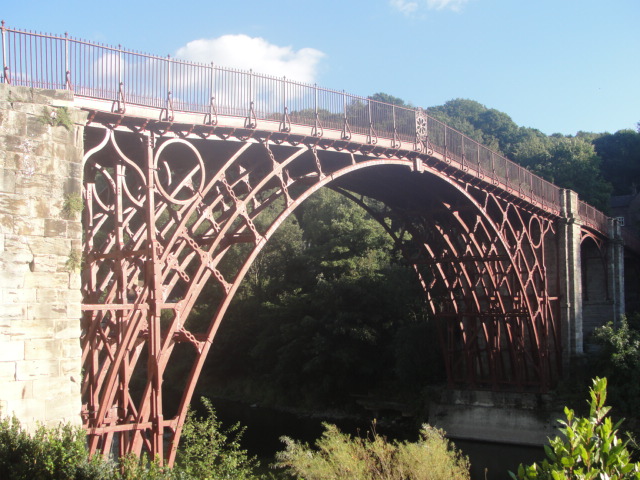
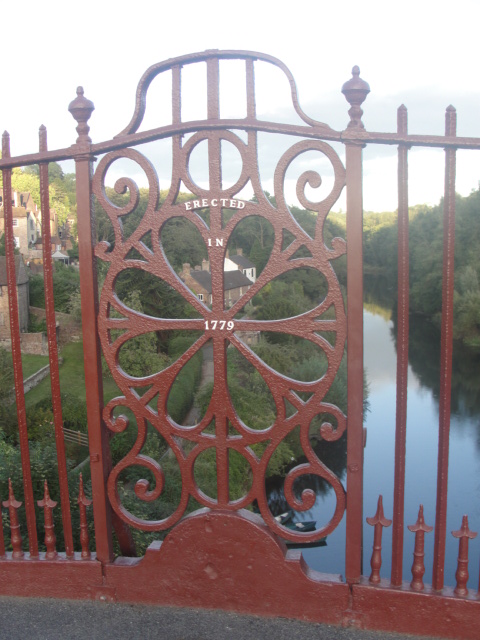
The Iron Bridge in Shropshire

We had 24 hours to spare before picking up our cats from the cattery, and my original thought – a night’s stargazing in Northumberland’s dark sky reserve – was scuppered by the almost-full moon. Instead, we went to Ironbridge.

I’ve been there in July of this year, but again, himself was left behind to look after the cats while I had fun. As a retired engineer, he would have loved to go in my place (though he would have snoozed through the lectures on romantic novel techniques). What else could I do but take him there as a tourist?

We agreed that as this was my second visit to Ironbridge (although just a few hours on a Saturday too hot to walk far), that he would have first pick of which museum to go to. He chose the Museum of Iron at Coalbrookdale, and I asked for a trip to the Clay Pipe factory at Broseley. On paper, these were just over a mile apart, and roughly a mile from the accommodation we were staying at. I had no idea at the time that Coalbrookdale would choose to throw a small party in the form of a Heritage Day, with free admission and a display of steam engines and classic cars – nor that Broseley Pipe Works would close for the season the weekend before.

Looking up the River Severn from the middle of the bridge

We arrived at three on Friday afternoon after a horrible journey down the M6, settled in and set off to see the Iron Bridge. The first part of the journey was all up… then as much down… and then we reached The Hill Top Paper Shop. Bad sign. It was steeply downhill from there. One mile underfoot on flat ground takes us about twenty minutes at an easy pace – up and down took us longer, and we felt the after-effects of a few days’ stiff hillwalking.

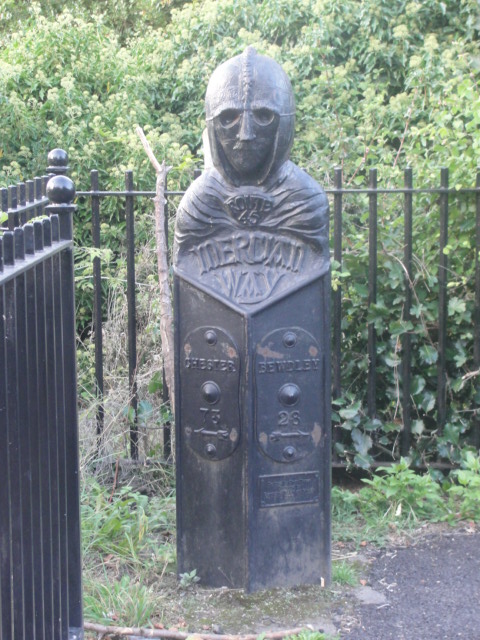
A meal and a pint in the Tontine Hotel and a wander over the bridge gave us the oomph to set off back uphill, but not before we spotted a familar little warrior;

How many miles from Sutton Hoo to Ironbridge?

We climbed back up the hill faster than we thought we could, and even had enuff puff to argue over which route was quicker – down this street and turn right, or down the next street and turn left. As soon as he set off down his chosen street, I started to run down mine, hoping to arrive at the meeting point early and pretend my route was better. Which would have worked if I hadn’t had to get the camera out for this;

Pineapple!

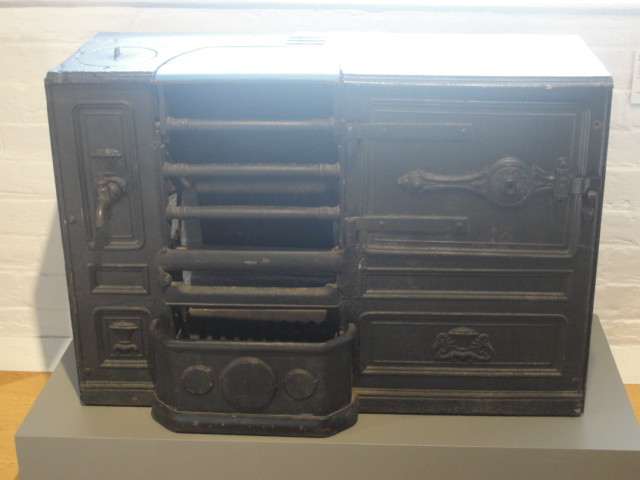
The next day, we looked at the route we’d have to take on foot and saw a lot of up, a lot of down, and much of it along fast roads with no footpath. We drove, to save our feet for the museum. Lucky we did. The Museum of Iron is on three floors, and took us two hours to go through the lot. One of the items on exhibition was a small kitchen range. I remembered our old neighbour from Stratford telling my parents that when the woman who bought our (rented) house from the landlord stripped out the walls of my aunt’s kitchen, she found a Victorian range cooker boarded up in an alcove. I wonder now if it was a Coalbrookdale range.

Small kitchen range

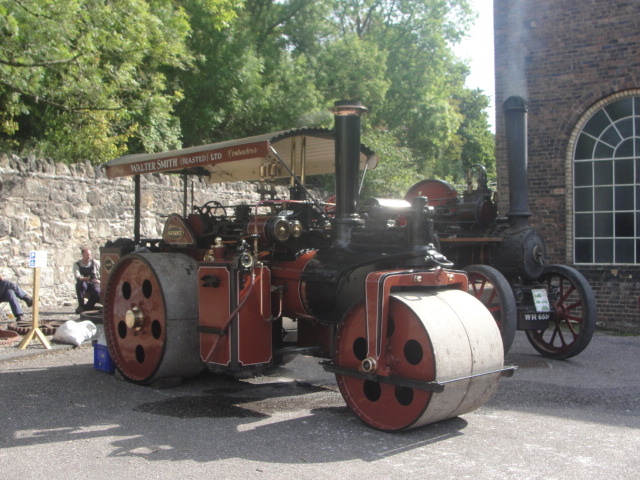
Outside, we had a meal at the cafe on site, then went to explore Enginuity, a museum for children (half-expecting to be turned away). It was fun, and there were other adults there pressing buttons and peering at the exhibits whirring around (though I think we were the only ones unaccompanied by children). After that, we went out to let the retired engineer ogle the steam engines and the classic Landrover displayed outside, before going in to the exhibit of the archives, curated by Georgina Grant. Where Oliver Meeson, clay pipe maker, had a home-made rig set up and was making clay pipes in the traditional way.

This was just for the Heritage Day – we were lucky

With an hour to go before all the museums in the gorge closed, it was obvious we weren’t likely to see the china or the tile museum on this trip. We went around the furnace at the north end of the site, where Suzanne Spicer took us for a tour of the furnace and explained the history, the difficulties of running a factory that depended on a certain river level and how the iron for the bridge was probably made as pigs here and transported down to the site to be cast.

We left at half past four and made our way back for a mug of tea and to pack the car. We left at 7pm, and got home at 9.30, ready for a good sleep before retrieving the cats the following morning and getting back to our normal lives.

Ambitions

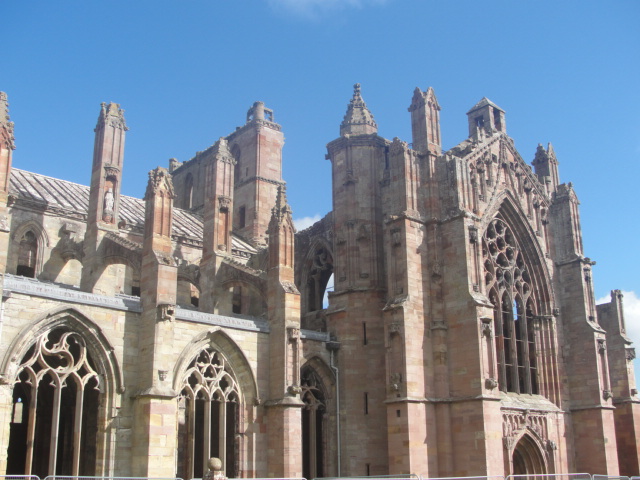
Part of Melrose Abbey

Back in March, I reported on a trip to Melrose in Scotland. The intention then was to let himself see where I’d been with my OU writers’ group, and to finish a long-held ambition to climb the Eildon hill where Thomas the Rhymer was said to have followed the Queen of Elfland before being taken into the land of Faerie for seven years. I’d stood at the foot of the hills and looked up to the summits in the early 90’s, but hadn’t had the time to climb it. Back in March, the weather closed in almost as soon as we reached the halfway point and we retreated out of caution.

The plan was to get fitter and return in September for more than a couple of days, get up the hill and back before the weather had time to spoil the party. Two out of three ain’t bad. We arrived in Melrose on Monday, slogging through a stripe of rain to get there in bright sunshine, and made an attempt on the hill on Tuesday.

It’s sensible to plan for any serious hillwalking expedition. We had a map, a compass, food and drink, strong walking boots, waterproofs, gloves and a fleece over a lightweight T-shirt. By the time we got to the gate up to the start of the hills, fleece and waterproofs were weighing down the rucksack and didn’t go back on until long after we arrived back at the accommodation.

We took the route up through the Melrose Golf Course (yes, it’s allowed – stick to the road and watch out for golf balls for the first 440 yards), past the log cabins for hire and up St Cuthbert’s Way to the saddle between the two hills. This involves a long hike up, a section going down and then a climb up to either North Hill or Mid Hill. North Hill boasts the attraction of being the site of a Roman signal station and fort; Mid Hill was, I think, the hill that True Thomas climbed. The difference in height is minor – 404 metres to the cairn at the top of North Hill, 422 metres to the top of Mid Hill – but the route is very different. The official path to the top of North Hill is long, slow and alternates between mildly steep and fairly gentle slope, while the only route up Mid Hill from the saddle is… vertical.

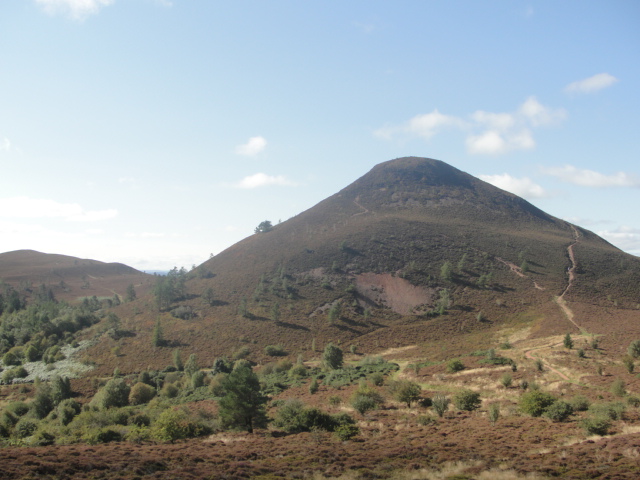
Mid Hill, Eildon, from the saddle between North and Mid Hills

We did it on our first day in Melrose – got to the top of Eildon North Hill and sat enjoying the views. I should have brought suncream and midge repellent, but hey. We chose North Hill as there were enough people on Mid Hill that day to stage a rugby match with substitutes, while just a few people were heading for North Hill. We don’t like crowds at all.

There were three people at the top when we arrived, all sitting quietly and admiring the view, so we patted the cairn to say we’d arrived and went to sit apart from them. Unpacked the food and drink and talked quietly.

The chain Bridge over the Tweed from the top of North Hill

We set off down the eastern slope of North Hill. Steep, but stone slabs have been laid in steps all the way down to about 200 metres from the base of the hill. We were both finding our knees creaking from the strain of going downhill, and by the time we reached the road we were both wobbly. Logical thing then is to go for a pint…

The next day was a day of holiday rest. Meaning, no strenuous hill climbing, but there’s sights to be seen and the town’s just a mile from where we’re staying. We got the chance to see the grounds of Melrose Abbey, and the chainbridge over the Tweed close up, and we walked back to the accommodation from there. So, not really a rest, but no considerable uphill walking.

Gargoyle high up on the abbey roof

The acid test was Thursday. Having left the most fearsome of the hills till now, we were hoping the weather (and our fitness) would hold up. We set off from Bowden Reservoir this time, for variety, and got as far as the path around the flank of the Mid Hill before I realised that my worst enemy was my mind.

I’m afraid of heights. Afraid to screaming at times. I love the new perspective I get from the top of a church tower or the ridge of my own house roof, but the sheer terror of getting there and getting back down means it takes me a while to appreciate it. I was fine climbing to the path and looking back down the slope to the reservoir. Fine walking around the flank through the stunted pines. It was when his feet began to slip sideways on the narrow path ahead of me – and the path is barely wide enough to put two feet side by side – that I thought of how easy it would be to slip on the gravel. When the crow flying past the hill fifty feet below us let out a ‘Yahhh! Yahh!’ I realised there was a steep slope a few inches to my left with nothing to stop me bouncing fifty metres or more to the level of the water. After that, it was all I could imagine. Falling.

Bless him, we turned back straight away. He knows that I can stand spiders, mice, wasps flying around the inside of my crash helmet while I’m driving and riding a motorcycle through fast urban traffic, but heights defeat me. We went back to the crossroads where the path headed back down and discussed.

Instead of going back down – we went east, between the Little Hill and Mid Hill. The path went down, through the woods, with Mid Hill rising up bare and high above us. It was very like the scene in ‘The Lord of the Rings’ where Frodo tells the other hobbits to ‘Get off the road!’ just before the Black Riders clop past. But sunlit. The path went up and met St Cuthbert’s Way and from there we turned uphill to the summit of the saddle between North and Mid Hills.

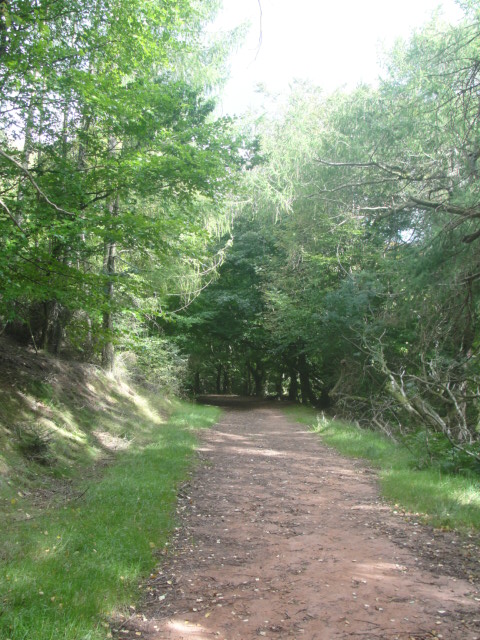
The path from Bowden to St Cuthberts Way. Get off the road…

Here we met another walker, a lady who advised us to be very careful; that the North Hill was lovely to walk on, while the Mid Hill was scary and difficult. The scree path was steep and loose underfoot, she warned. We parted ways, and I got an entire fifty yards before realising that the slope and the potential fall were just not going to let me get up the hill. Legs and lungs were willing, but the mind was cowering under a blanket and whimpering.

There is only one official route up. The topmost 150 metres of North Hill is a bare, scrubby, steep cap with a small summit. Going up is face to the gravel; coming down, I’d have to face the gravel, edge down on all fours and hope not to skid and tumble. Better to acknowledge that I am just not able to enjoy any experience that involves heights, sheer drops and steep slopes.

On the way back, it was a good walk. We were tempted to climb Little Hill, the only truly volcanic outburst in the set, and ate lunch looking south along the flank of Wester Hill and over the plains and towns stretching back to Carter Bar and Northumberland.

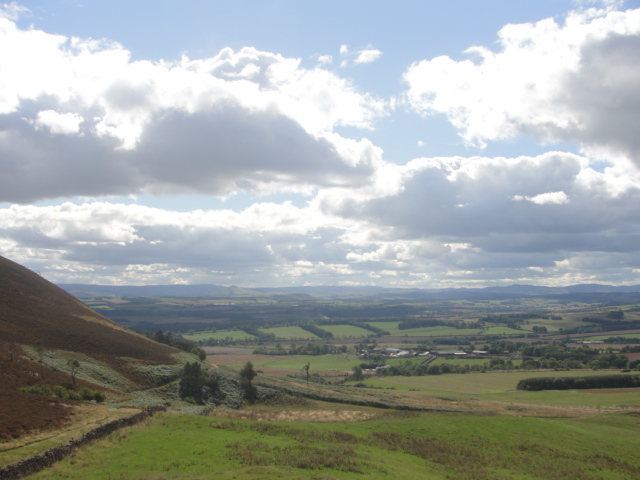
The view from the top of Little Hill

I don’t think I will ever defeat my fear of heights enough to climb steep and gravelly hills or exposed castle battlements just for enjoyment. The only other reason would be to see the view, or to tick off an experience alongside all the others that day.

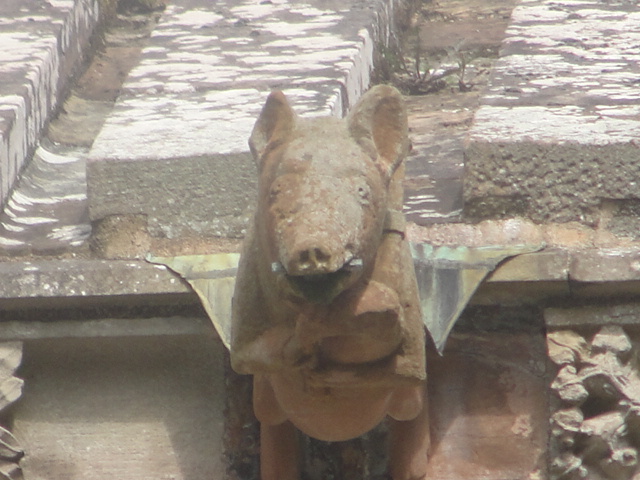
The pig that plays the bagpipes on Melrose Abbey roof – I saw it, honest I did…

I’m content. I would love to climb Wester Hill one day, and walk more of St Cuthbert’s Way, but it was a successful visit.

Kingdom

I may have some followers who don’t agree with the idea of monarchy, but I do. It isn’t the people involved, but the system. I knew I would outlive Queen Elizabeth the Second (barring serious health problems or accidents) but yesterday’s news of the Queen’s death was a shaker.

My passport, the notes in my wallet, the coins in our change mug and the stamps in our drawer all have the Queen’s name or the Queen’s head on them – getting used to having a king will be a hitch. Especially as every generation down to Prince George has the kind of skeletons in their cupboards that the true traditionalists won’t accept.

Image by Darelle, Pixabay

I will miss having Queen Elizabeth as the head of state. Interesting times ahead.

Yes, sort of – and No, sort of

I submitted a few short pieces recently, and I’ve had a verdict back on three of them. Nothing to crack a bottle of fizz over, and nothing to send me weeping to a lonely spot to reflect on how baaad my life is.

Still waiting to hear how Katarina the circus artiste went down with the judges at Storgy… not holding my breath.

First up was an entry to the Jane Austen Literacy Foundation’s ‘Inspired by Jane’ competition. I made the shortlist of twelve for my take on Miss Gardiner, who became the Mrs Bennet of Pride and Prejudice, but not the final three. I had just over a week to write it, so it was still rough at the edges – another week of editing would have knocked it into decent shape.

I made the decision to submit one of my favourite stories to the Magazine of Fantasy and Science Fiction this month. That’s like a novice romance writer asking Danielle Steele to take a look at their romantic novel draft – it was a scary step. It takes up to three months for F&SF to make a decision, and they ask you not to pester them in the meantime. Or three days, if they love the title enough to read the story straight away and then don’t love the story enough to take it. It was a kind rejection, and reading between the lines it seems that the story needs more substance. It’s not on the scrapheap, I love the idea too much – but it is on the ‘needs repair’ heap for now.

The final verdict I had was from Globe Soup, the amazing writing group who run free and paid-entry competitions on the internet and offer a huge amount of encouragement to their writing people. I sent an entry in to the memoir competition that they ran, based on ‘A place that changed me’. I was worried that they would take offence, as I based it on East London of the 1960’s. Anyone who’s watched Alf Garnett in ‘Till Death Do Us Part’ should understand what I’m worried about. Warren Mitchell performed an Alf Garnett set at the Theatre Royal Stratford in the 1970’s as a one-man stand up comedy routine, and was greeted with applause and cheering. The audience didn’t realise he was joking. These were the people of the streets where I grew up.

But my memoir was longlisted. Globe Soup encouraged anyone who made the longlist to submit the piece elsewhere, and I might yet do that.

Next on the cards is some reading I promised to do for friends for opinion and haven’t yet got around to, and a new project for Globe Soup. I love writing for them. They put a lot of effort into encouraging good writing – posting articles on matters such as first lines, showing vs telling and character description. Their competitions cost from £12.50 down to free and they publish the winning entry so that anyone can compare it to their own effort. In any competition, the judges’ opinions really matter. In case that sounds like a dead-end way to write, it’s what every writer does – tailors their work to entice the readers they want to draw in. I wouldn’t write a gory horror for People’s Friend unless I wanted to see what their rejection letters are like; I wouldn’t write a piece on a subject really dear to my heart in the kind of plodding rhyme scheme that needs a Spoon for every June and a Weasel for every Teazle.

Globe Soup’s next challenge is historical fiction; buy a ticket in one of five colours for £12.50 (on early-bird offer for £2.50 when I jumped in, and may still be so) and then open the ticket to discover which historical era your story needs to be based around. The eras are; Ancient Egypt, Vikings, American Civil War, the Roaring Twenties and World War II. Like their regular challenges, the fun is in being handed a lucky dip for something, so I’m not going to spoil your party by telling you which colour ticket will net you your favourite time. Plus, Globe Soup are easy about which other genre you stick in with the historicals – time travellers gatecrashing the American Civil War, a murder mystery in the time of Tutenkhamun or the evil spirit that haunts the Viking longboat. It’s been done before – Blythe Spirit, a supernatural comedy set in the Roaring Twenties? Stargate the (rotten turkey) film version where the ancient Egyptian gods were revealed to have been aliens? Abraham Lincoln, Vampire Hunter? Dive in, get a ticket and mix it up.

That’s me busy until Christmas.

Flapper by Artsy Bee, Pixabay.
No, the colour of her dress is NOT a clue as to which colour ticket will grant you access to the Roaring Twenties.

Community Orchard – the Verdict

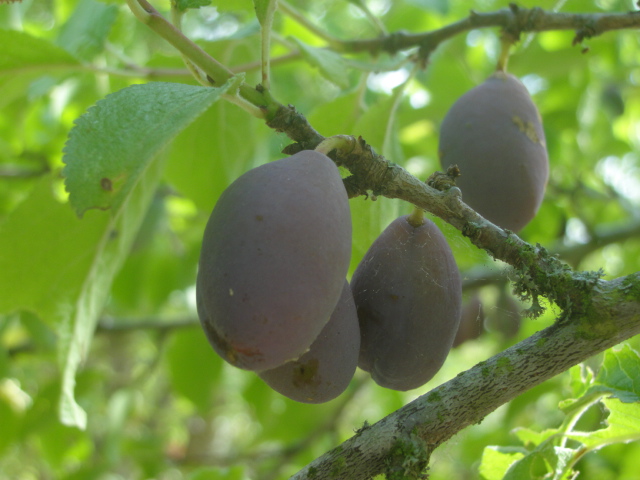
Czar plums

We’re back from an intense session of learning how to prune hard-stoned fruit trees (plum, damson, cherry and gage) with Dr Anna Baldwin leading a group of students in a theoretical and practical course in the local community orchard.

It was different from the January course on pruning apple and pear trees. For a start, warmer – much warmer – and the course wasn’t cut short by dusk falling. Anna filled in time after the January course by bringing the group to our tiny orchard to illustrate some teaching points and they found themselves squelching through ground soaked by five months of unrelenting rain. This time, we finished at four with a need to drink a lot of water and sit in the sun.

The major difference between apple and plum trees in terms of pruning is that we were aiming to create space in the centre of apple trees to ward off the spread of canker – whereas plum and gage trees don’t mind crowded centres. The second important difference is that apple has resilient wood, while plum wood is brittle and relatively fragile. Our own plum trees have had branches cracked and brought down by too-heavy crops, and one of the trees split into three down the entire length of the main trunk when the three major branches decided to go their own ways just after we moved here. Open wounds on plum trees from cuts to the bark, pruning or cracked branches are open to disease, so branches that cross each other and rub bark away should be cut out; apart from that, the trees tolerate crowded centres.

After a session of theory, we set off to the orchard to assess and prune the trees. Straight off, the course was different from January’s. This time, I led the way to the orchard and gave Anna a map of where the plum and cherry trees were, the result of hours of walking the orchard with a notebook. When the group moved on from the easier decisions to the drastic ones, I was called on to give the go-ahead for the most severe cuts. One tree had grown two equal branches at a low level, giving the tree a Y-shape and leaving it in danger of being split in two down the main trunk.

Note the dark line in the centre of the Y – given a heavy crop, one or both branches would crack away and the tree would be damaged.

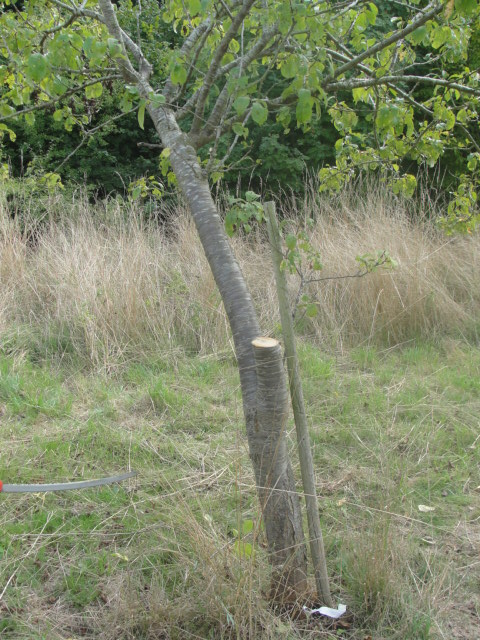
Anna suggested cutting off one branch, leaving the tree halved in width. Easy decision – having seen our own plum tree split in three to the roots and die by inches, I agreed to the cut straight away. I’d hesitated over a big decision on an apple tree in January, deferring to the senior committee members. But they’ve left me to look after the orchard without leaning over my shoulder, so anything I can do that means happy trees in future I will do.

Gone. Blame me if the tree suffers, but I know what might have happened if we’d left both branches.

One of the trees I wanted Anna to look at was in the farthest downhill corner, on the other side of the path that forms the western boundary of the orchard. It’s much taller and broader than the 2011 trees, laden with dark blue-purple plums and with two thick trunks welded together at the base. I suspected it had been there for at least twenty years. Seventy, was Anna’s assessment. She snipped off two small branches that were causing trouble for their neighbours and declared the tree to be settled and content without drastic pruning. We sat in a circle discussing the tree and its history and I watched a lizard the colour of the tree’s bark creep jerkily down from the branches to the root.

Standing alone in the corner of the orchard, this tree is about seventy years old and still enthusiastic about fruit.

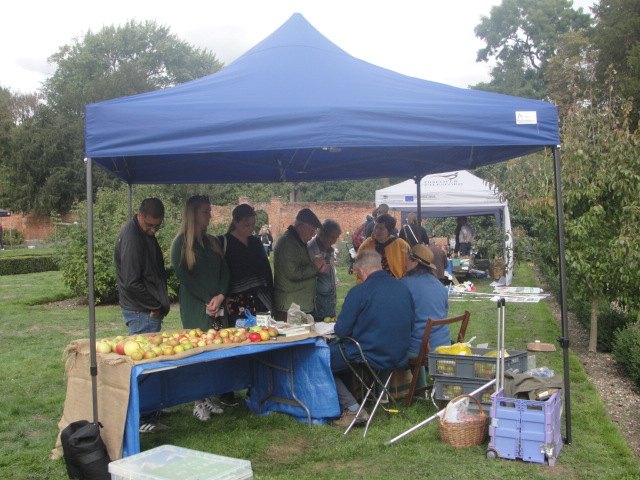
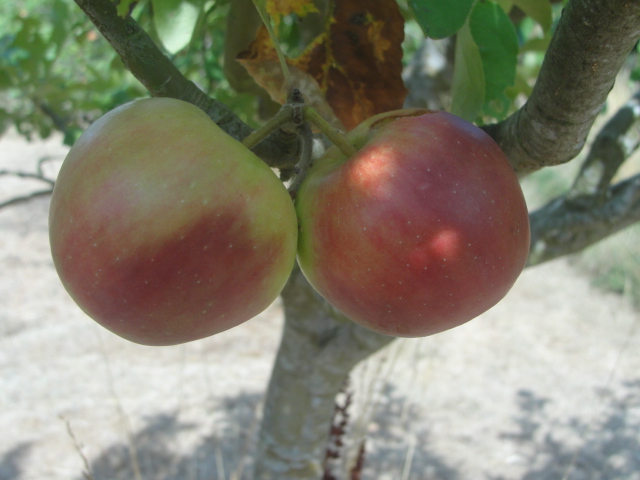
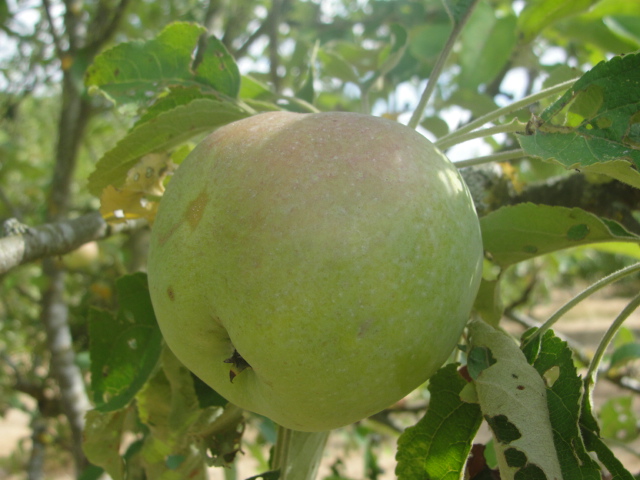
On our way out of the orchard, I asked Anna for her assessment of the orchard now. Nine out of ten? More? ‘I don’t do numbers,’ she replied. A politician’s answer. But even without a rating, I’m proud of what we’ve achieved so far, and the work goes on. We’ve found another three labels buried in soil at the foot of their trees since Friday morning and deciphered two others. That’s 24 identified varieties out of 62 surviving trees. I’ll be taking some of the mystery apples to the Apple Day at Dunmow later this month for identification, and who knows, we may start 2023 with half the trees labelled up and their histories on show for the community to read.

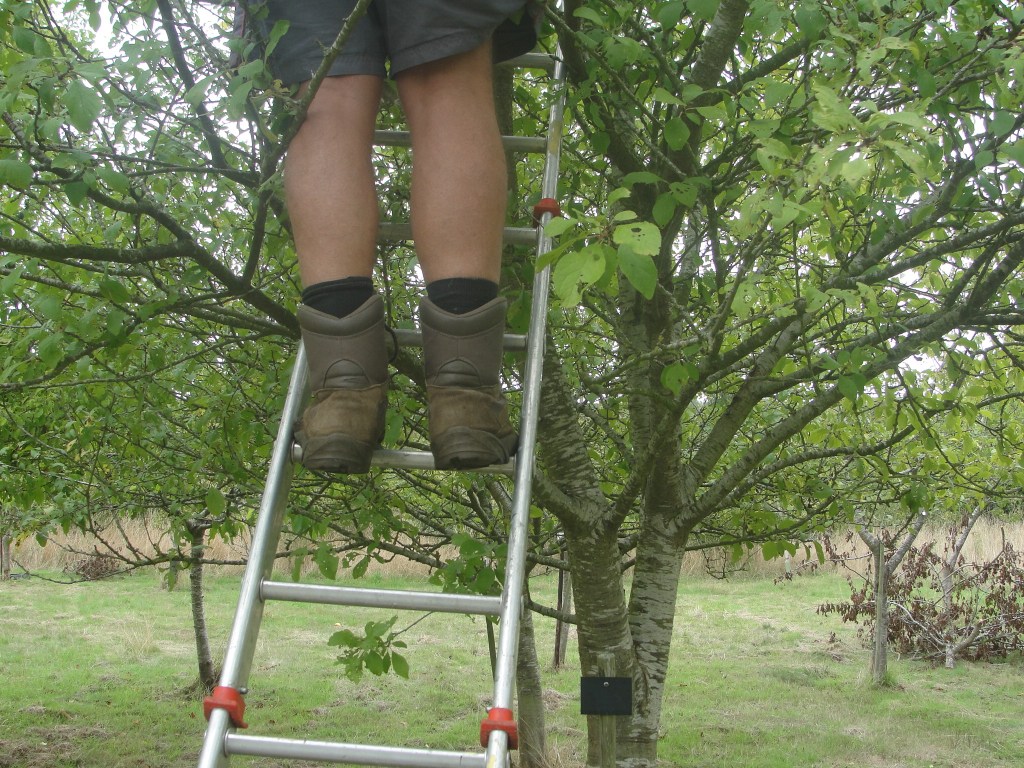
One branch was too large for the tree it grew, making the whole tree lopsided. Anna wasn’t insured for ladder work (more dangerous than staging a fight with pruning saws, apparently) and we all ran out of puff before we could get stuck in with a polesaw.

Whatever it takes to get the job done…

Well, we weren’t going to leave it there. We grew up before risk assessment was a formal thing (we always did risk-assess, but it meant having someone hold the ladder and be ready to call the ambulance if we went splat). So Monday morning we were taking turns up the ladder taking down the errant branch. Sorry, Anna. This risk wasn’t on you, and we got away with it. Let’s hope the tree does too.

The story of the community orchard goes on, with 24 of the 62 surviving trees now identified down to variety level and all but seven identified at ‘type’ level.

Found the label buried at the root of this tree – digging in our future, I think

Community Orchard – Part 3

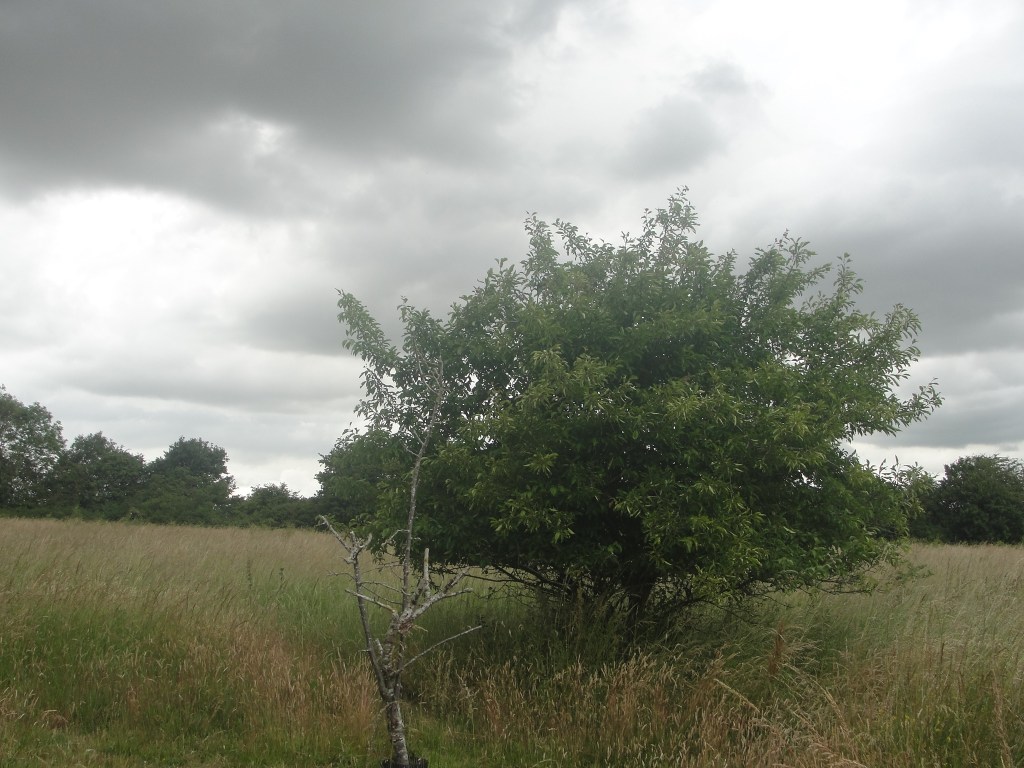
Basal sprouting on one of the trees

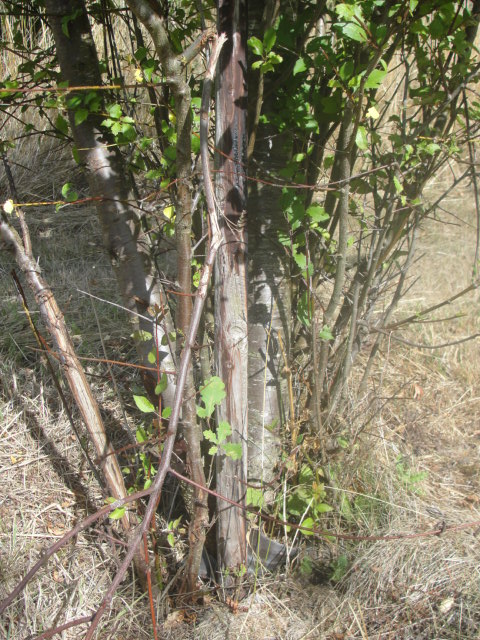
When the orchard expert came to teach fruit tree pruning in January, she told us that we needed to remove the shoots that had grown from the base of the trees, to let the tree have the full benefit of any water and nutrient in the soil. As nurseries graft wood from the trees they want to propagate onto rootstock of other trees, the rootstock sometimes attempts to continue growing and sends out shoots. Several of the trees in the orchard looked more like bushes – see the tree in the photo above for an example.

I’ve left it this late for a reason. We weren’t sure what each tree was, and as hard-stoned fruit like plum and cherry needs to be pruned in summer I wasn’t keen to cut into the shoots and find that I’d killed the main tree. But now, with most of the tree types identified, I set to a few weeks ago and cut the shoots off the pear and quince trees. These were about as thick as my thumb, and the trees looked better without them. I ran out of time before I tackled the plum trees. Ran out of courage, too.

The basal sprout on this tree was almost a tree in itself.

Anna returns next Friday to teach us how to prune hard-stoned fruit trees, and (I hope) to give a verdict on how the orchard is faring. Meaning that I needed to gather courage and remove those huge shoots from the base of the plum trees. Himself gave me a hand, luckily, and even at that it took several hours to cut away the shoots carefully and pull them free without damaging the trees.I took the advice to cut as low as possible, and in one case we dug down to find the point where the shoot emerged from the root itself. Finding not just the root, but a buried tag from the tree.

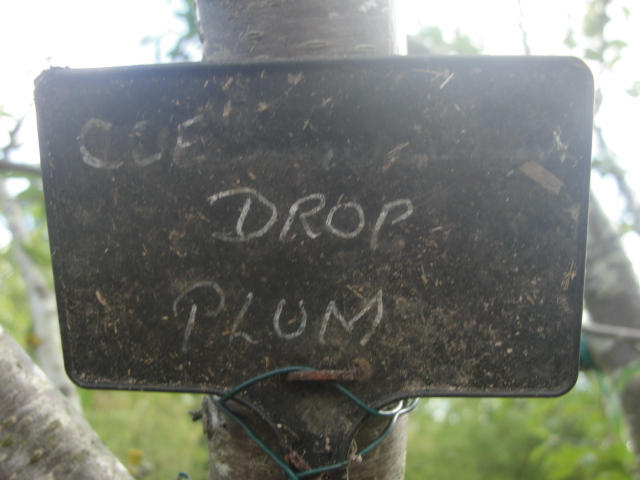
I had contacted the Orchards East project to ask whether they identified mystery apples, and they had asked me where the orchard was. When I told them, they found the record of having sold eight trees to the founder – six plum and two apple. Since then, I have found two buried tags and deciphered a third that was green with lichen – the buried tags were for a St Edmunds Russet and a Coe’s Golden Drop plum, both types bred in Suffolk. The greened tag, cleaned up, faintly showed it was a …nny Mount Pear. Frantic searching all over the nurseries and resources online failed to turn up any good candidates for the full name, until I went back to the Orchards East website. And there it was. Johnny Mount Pear, developed in Colchester around 1900 and now fairly rare.

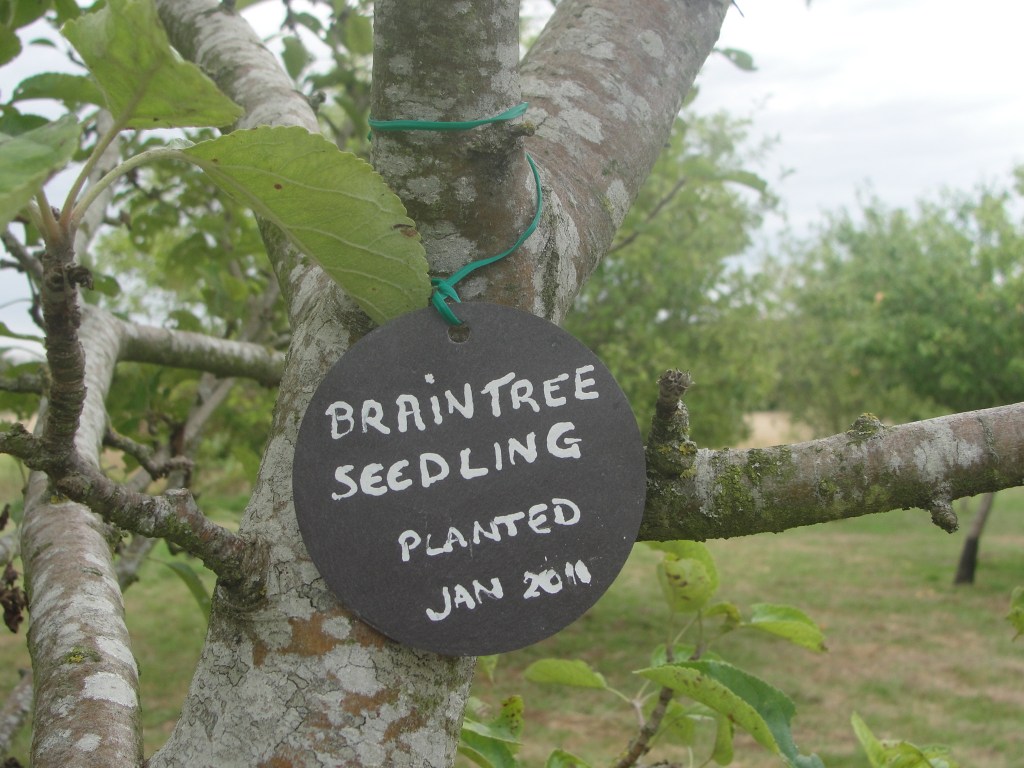
It’s clear that the founder chose the trees in the orchard carefully. All but two of the trees I have identified so far is a variety developed within greater East Anglia – Essex, Suffolk, Cambridgeshire or Bedfordshire. The more I learn about this orchard, the more respect I have for the vision behind it. It’s a live museum of local fruit trees. Very different from our own orchard – a mix of a previous owner’s randomly chosen apple, pear and plum and our own love song to the cider apple and perry pear varieties of western England (with a few intriguing eaters and a Braeburn rescued from B&Q’s sale to keep them company).

Buried treasure!

The chart of the orchard is being filled with details, and when the plum tree pruning course begins I can point out plum, damson, gage and cherry trees with confidence. I can’t wait to hear the rating the orchard gets next week.

Pygmalion

Image by Oberholster Venita, Pixabay… need to download the camera!

I’ve been following Dot Productions like a stalker for the last few years. They formed in 2008 and tend to have five actors, a producer and a wide view of what they want to perform. Three years ago, we saw Sense and Sensibility – last year, we saw their adaptation of Jane Eyre. Both were adapted from novel to play form beautifully by Pat Bush, who played parts in both productions; she was Robert Ferrars in Sense and Sensibility, which fitted so well with Austen’s vision of the foppish Robert that I wonder how nobody else has thought of it.

Yesterday’s treat was ‘Pygmalion’. I bought tickets because it was in Coggeshall Barn, a lovely setting – because Himself had no idea what Pygmalion was about (even My Fair Lady struck no note of recognition there) and because it was Dot Productions. Like the Propellor Company, everything they do is worth going to see.

We took better seats this time. Last time we went to Coggeshall, we took our lawn chairs and realised only later that the high backs that made them so comfortable also made it impossible for the rows behind to see anything on the stage. This time, I’d bought some light folding chairs that had backs low enough to see over. My bad. The seat part was just tall enough that the people who settled behind us (with low-slung seats) muttered to each other about swapping places at the interval. We were just tall enough to see over the seats in front. It’s a lottery.

Again, there were five actors – a different five, but the same Dot magic. I have to say that the subject grated on us, with the snooty Henry Higgins able to tell the Cockney flower seller to ‘Sit down and shut up!’ But by the end, Henry’s mother tells him outright that he’s a fool and Eliza finds her way out from under his control.

This is loud, boisterous and funny, and although we left thinking that we’d just seen an unpleasant piece of Edwardian snobbery, we’ve been thinking it over and seen how the end of the play leaves Eliza and Henry. She was clear thinking, willing to pay for the education that would open a world to her. Henry was sneering at her low origins and what he saw as her inability to put any delicate substance into her new genteel speech, but it was Henry who was called out for his swearing and callous attitude, while Eliza’s dignity drew praise from his mother and friend.

Dot Productions plays are always fun, and they bring some unusual works to the theatre. They’re still touring ‘Pygmalion’; you’ve missed Coggeshall, but watch out for them at Brome, Sudbury, Swindon, Brentwood, Bedford, Richmond and Doncaster.

The Potato Mines

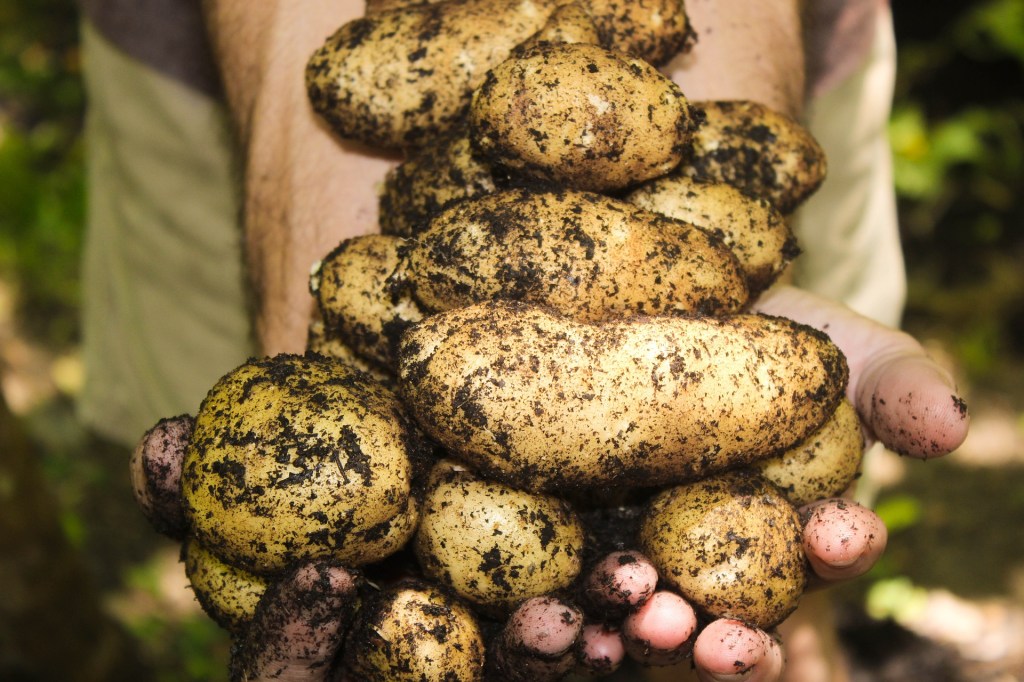
Potatoes by Pexel, Pixabay

It’s been too hot to sit outside beyond 10am here through much of August, let alone work. There’s no pleasure in barefoot gardening when the grassy areas are worn down to straw and bare earth, especially as we have a cedar tree that sheds dead needles all year round (and needles is the word for it – tough, sharp, driving into the skin when I tread on them). I have very tough skin on my feet but the cedar needles go straight through the hard outer layer and stick upright, driving further in with every step.

It rained elsewhere in Suffolk and Essex in mid-August – flooded a couple of businesses three miles away, briefly flooded the streets of towns within ten miles of us – but nothing here till Wednesday. On Wednesday, it rained heavily all day, big hefty blobs of rain and some thunder too. The pond is now full to within a couple of inches from the top, the fish are coming to the surface and it’s cool enough to work outside.

The first job I tackled after the weather cooled was to dig up the potatoes. I tried following advice this year, not planting too many or too close together, planted in long trenches and earthed up every week. It’s worked. Digging them up this afternoon was like digging in potato mines – they were packed together in great clumps, large potatoes stacked one on top of another.

There’s more yet to do, but first I’ll need to wash these and store them. In theory, these are stored in a clamp – the potatoes covered with straw and earth or sand packed around the straw. Basically, bury them again. Which sounds daft – why not leave them in the ground where they grew? – until you look closely at the soil they grew in. Tiny thin worms. Possibly eelworms. Not taking any chances. Next year, the potatoes will be planted in a different row, avoiding the eelworms and slugs that have been drawn to this year’s crop.

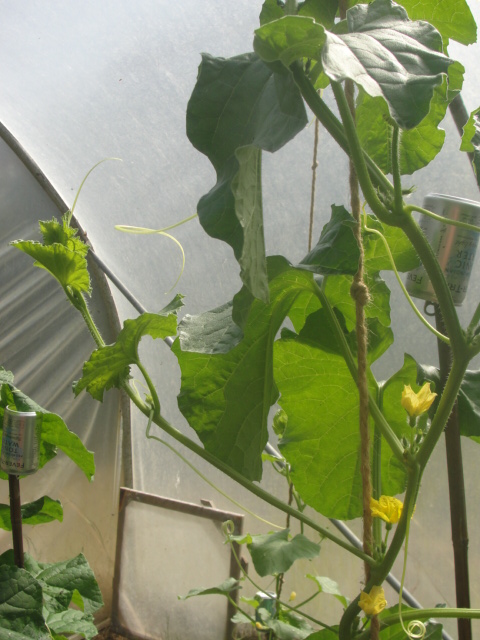
Notice the side-shoot from the leaf joint near the bottom of this picture

Clipping the spare shoots off the cucumber vines is a constant job. Cucumber and melon vines grow side-shoots from the joint between main stem and leaf, exactly as tomato plants do, and it’s best to remove those as soon as they form. I have had the experience of letting those just grow, and not being able to get into the polytunnel without treading on vines sprawling across the path. We spent two days that year cutting back those shoots, disappearing into thickets of vines snaking across the floor and taking barrow-loads of vine cuttings away to be dumped. These days I get in there twice a week to prune back the sideshoots and tie up the new growth to the ropes. Each plant has a thick twine tied to the crop bars seven feet off the floor to grow up (you can just see it in the photo, with knots in it for the ties to grip and not slide down like Nora Batty’s tights).

I’ve had an interesting exchange with the Real Seeds this week. Almost all of the seeds I plant are bought through this company. They supply seeds of rare and heritage plants – those plants that didn’t make it into the commercial seed catalogues when the regulations tightened. There are plants in their catalogue that were developed to withstand Siberian winters, to grow six foot tall cabbage ‘trees’ and to make onion plants walk across the veg plot. There’s instructions on their website on saving seeds from the plants you grow from the seeds you buy from them, so that (in theory) you buy a packet of seed from them once, treat them well, and have seed for that plant for the rest of your life. I haven’t made it work yet, but I have had some success – parsnip doesn’t just make seed, it spreads it all around and lets an army of parsnips spring up next year. Cucumbers, though…

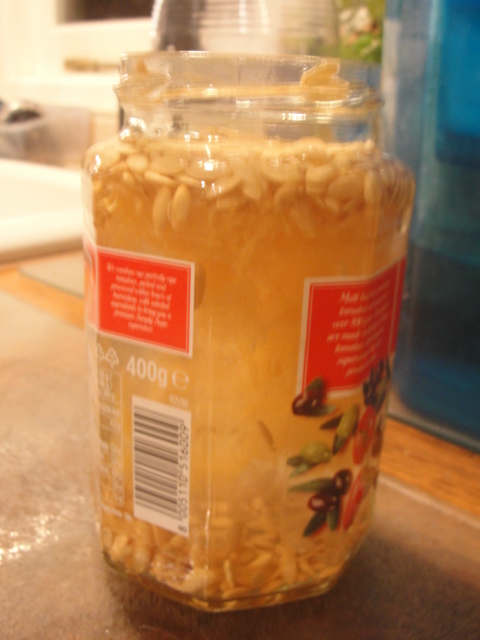
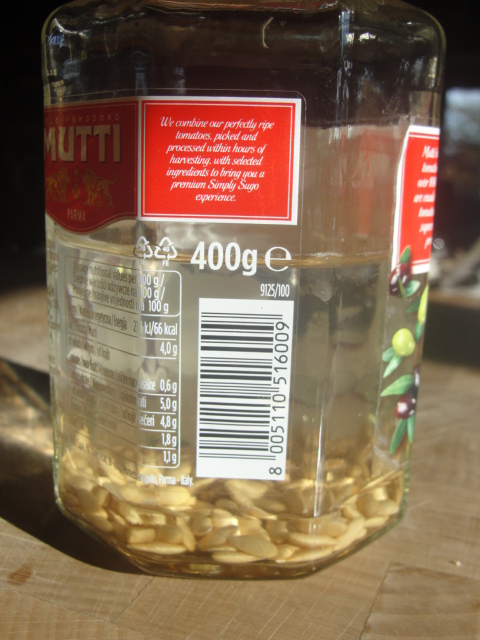
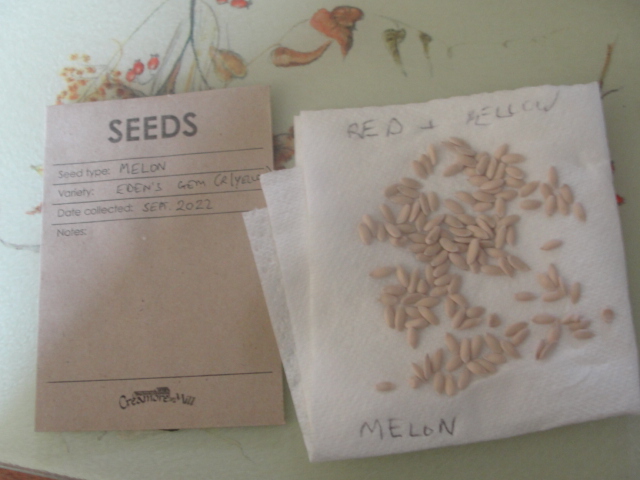
In 2021, Real Seeds stated that they were not going to stock Gerghana seed until 2025. Gerghana is my favourite cucumber (alongside Tamra) – straight, green, sweet and with small soft seeds. I was running out of Gerghana seeds then – just six left, and not all of them survive to ‘adult’ status. So I did what Real Seed recommend and planted only Gerghana cucumbers in the tunnel last year, so that every cucumber plant was pollinated by Gerghanas and every seed was of pure Gerghana stock. I took five cucumbers at the end of the season and followed instructions, scooping out the core and soaking it in a jar of water, shaking it and renewing the water every few days until all the jelly had been flushed away. Then I removed all the seeds that floated, laid the rest out to dry on paper for a week and poured them into seed packets.

This is what I used for the cucumber plants this year. I was really proud of myself until I tasted one. Bitter. Nothing like last year’s crop. If I picked a young cucumber, it tasted sweet – but only on first picking. Cut the cucumber and come back to it a few hours later, and that bitter taste was there. What’s worse, cucumbers are curcubaticeae – members of the squash / gourd / courgette family. Anyone remember the bitter courgettes grown from seed last year? The ones that caused sickness, stomach cramps and hospital stays? That was down to the parent plants being cross pollinated by wild courgette plants growing near their field. Wild cucumbers in Essex… there’s a story in that.

I asked Real Seeds for their advice. Within 24 hours, they came back to me with a very kind and informative email. Apparently, it’s more likely to be the result of large variations in temperature or water stress – and we have had temperatures between 49 degrees C and 20 degrees C in the tunnel this year, and the soil has dried out sometimes despite being well watered every evening. So it’s likely. They advised me to take off all the mature fruits, let the younger fruits develop in these cooler temperatures and go on picking the fruit for use when it’s small – using the lot in one go, as it does develop a bitter taste after being cut.

Well, as South Park would say, I learned something today. How to grow sweet cucumbers in exceptionally hot weather. That I did do the seed-saving right last year, and I can go on using those seeds. And that small seed companies are the absolute best. Kate’s email to me was like a good friend’s advice to a less experienced gardener – encouraging, reassuring and informative. Real Seeds Company for all the seeds I buy from now on.

Stars

Perseid meteor captured by Dumitru Stoica, Pixabay

The Perseid meteor shower peaked right at the same time as the full moon. Law of Sod applies; meteor showers are best seen against dark skies. But we work with what we have.

It’s been so hot during the day that going out at night is a relief. We spent time resting indoors during the heat of the day and went out after 10pm to look up. The advice is to look north, towards the constellation of Perseus – the trails of the meteors radiate out from that area. We have a south facing garden (but a ruddy long south facing garden), so we’d have to walk right up the far end or across the road and down the hill to a spot where we can look north. What we did instead was to look straight up and to the west a little, away from the glare of the rising Moon and where the sky was darkest.

We spent three nights watching the sky. For all the fanfare, a meteor shower is not like a fireworks display – nothing like as spectacular and at one per ten minutes it is not for the easily bored. But when they zizz across the sky – this is something much further away than a firework exploding a hundred metres or so overhead. It looks tiny, but the thrill of seeing that brief fizz miles overhead – catching something that lasts just a second or two – it’s better than fireworks, where you bought it, placed it, timed it and lit the fuse that sent it on its way. This was a spark we saw by lucky chance.

We saw several on each night we went out to look. Looking up, looking north, looking south… in every direction, there were meteors. It was a good time to sit and talk between sightings, too. Sometimes, it isn’t just the light show in the sky above, it’s the chance to do nothing on purpose without feeling you’d better get up and get working.

There’s meteors and burning space junk at all times of the year, so if you have the chance, look up.

Hoo’s There?

Lady Macbeth at Stratford on Avon, courtesy of Steve Oprey, Pixabay

The third visit to Sutton Hoo this year. This time to see the Red Rose Chain Theatre Company present Macbeth in the forest. I’m surprised there aren’t more plays performed in the open like this. We’ve seen a performance of Midsummer Night’s Dream in a park in midsummer, decades ago, and the memory stays with me – dusk coming down as the play gets more and more supernatural, the tidy little rockeries lit with lanterns and very different from their prim daytime selves.

This play was performed against a backdrop of tall trees, with the hill sloping down behind them. Red Rose Chain are lively, and all young – the oldest might have been close to thirty and there were a lot of talented child actors playing full roles in the play. The girl who played one of the hired murderers crept up beside our seats to screech her lines to the other murderer on stage and then quietly apologised for startling us. “I do hate murdering people,” she said, as she sneaked off.

The actors were never still, unless someone else was delivering a monologue that they were not meant to hear – they fought, danced, ran around the back of the set and leapt into and out of barrels. They played instruments – flute, trumpet, accordion, guitar, a lot of bashed tins and pots to act as makeshift drums and an upright piano. There was a lot of comedy chucked in at odd moments, too. The Witches were oversized puppets with the kind of faces you’d see at a continental Carnival, dancing and singing their first scene in huge macabre spite. The Porter put a lot of extras into his “Knock, knock, knock!” speech and one lucky little girl got the chance to throw a mug of water over one of the actors. Not yer usual Shakespeare tragedy, though I’m willing to bet his actors put a bit of extra clown into even the tragedies (“Let not your actors speak more than I have writ down for them…”)

But the play became darker as dusk fell. The spotlights came on, and some dimmed to leave the sides of the stage area in darkness where characters crept around. The Witches returned in a much more sinister mood, and when they threatened to have their master answer Macbeth directly, there was a sense that something more evil still might be summoned up to the stage.

I won’t post pictures of the cast and stage here, in case Red Rose get upset; in any case, going to their website will show you much better images than I was able to take. The only thing their photos missed was the full moon shining through the branches of the trees backing the stage as the battle for the crown of Scotland took place. There is nothing like being there for the whole spooky atmosphere.