Not Going Out

We get around to December and all our preparations for Christmas look like a siege. We declare the last shopping day before Christmas, the last trip out, the last set of Christmas cards written and posted. After that, we close the doors against the world and don’t go back out into the traffic again. We’ve walked to the local wood for a session of carols around the bonfire, walked to neigbours’ houses, but no more daft trips out to the beach, no more journeys to relatives’ houses and definitely, no more shops.

Our last trip out this year was to see the Christmas decorations at Holkham Hall in Norfolk. The photo above is of the Marble Hall at Holkham, before the decorations went up. It was a birthday treat for Himself, chosen to get us into the mood for Christmas. We’d gone for a candle-lit tour of Audley End in autumn 2019, and since then ill health and lockdowns had stopped any such outings.

It was spectacular. I won’t spoil the surprises for anyone with a tour booked, but if you didn’t manage to get there you can see the tour of the hall filmed by Channel 4 if you tune in at 8pm on December 22nd. The rich can certainly do it differently – their decorations took over the entire room. What cheered us up was that their decorations looked fantastic, but many were composed of small items saved from previous years’ displays and others were put together from left-overs, broken cases, scraps of wood. We could probably put up a display just as impressive (though much smaller).

The interesting insight came from a volunteer manning the gate as we left that evening. We stopped to chat, aware all the time that we had just finished the last tour of the night and that every person on the staff was preparing to shut down and go home. She listed out the number of staff at the hall. It was less than the number of staff needed to maintain the buildings and canteen for the much smaller office block where I used to work.

We drove home carefully. The temperature had dropped to two degrees above zero on our way there, and I switched the car on to find it was now zero, dropping to minus figures within minutes of setting out. We’d been warned that the weather would turn cold on the north Norfolk coast, but as we drove home it dropped to minus half, minus two, minus 2.5 before settling at zero by the time we arrived home.

Since then, the entire east coast of Britain has been hit by a blast of freezing weather. The threat of light snow and minus three last week turned into 10cm of snow, icy roads and cars stuck in every ditch and hedge for miles around. Motorways across the south and the north of Britain were closed by multi-vehicle crashes and cars went skating on minor roads. Our county council claimed to have salted our road, but maybe they have some kind of stealth salter… certainly nothing passed our house between 8am and midnight. By 9pm, there’d been so many crashes at the junction to the west and on the gentle hill to the east that no traffic at all disturbed the snow on the road outside our house until the early hours of the next day.

The snow is still as deep and widespread, a week further on. The temperature hasn’t risen above zero for more than a couple of hours a day, and the lowest low of the region was recorded at an official weather station a few miles from here – minus ten, not as bad as Braemar’s minus fifteen but bad enough. It’s due to drop further this week. It will be a few weeks or months before we understand how tough the damage has been to our trees and plants. Roses, geraniums, nasturtiums and fuschias were still sporting flowers the night before the freeze started, and the chard and kale was still as good as autumn. Now? I have some scraping up and composting to do when the weather clears. The good news is that this kind of cold will kill off some of the vicious bugs that attack our fruit trees in spring and summer, so we may have a decent crop. We’ve already thinking of what seeds need to be set off in January.

Here’s to next year’s crop.
Cromer

After a frantic few weeks of organisation, our OU writers’ group met up at Cromer in the last weekend of November 2022. Six of us arrived at West Cottage; the other three turned up on our screens thanks to Zoom. For the first time since 2015, we had all nine of our group gathered together.

We’ve had a long history. We were all students on the Open University’s third level creative writing course in 2010/11, nine of the dozen or so who had taken to the national forum for student chat and feedback on our work after we found that our regional tutor group forum wasn’t lively enough. At the end of the course, we’d all said; “I’ve loved chatting with you! We have to meet up in person! Where are you?” Four of us were based in Scotland, two in northern England, one in East Anglia, one in Sussex and one in Geneva. It’s a diverse campus, the OU. The 2009/10 graduate group from A215 met up in Birmingham, being a Scottish / northern / eastern / Devon / London mix that couldn’t have met locally, and met just the once; the A363 graduates met in the holiday cottage of one student on Tiree, in the Inner Hebrides in 2011 and we have met almost every November since then.

It was my turn to host this year, and I brought them to Cromer on the north Norfolk coast. We’d discussed bringing the reunion south before, and a few people had noticed Cromer as a possible destination. This year I went looking for houses that could allow anywhere up to nine people the chance to live, write and sleep.

Sue Cook has posted on her blog about how the weekend went, and about the value of a writing retreat – you can join a commercially organised one, or you can gather your writing friends and make your own. This is what we look for. None of us want to share a double bed with another, so there has to be a bed or a comfortable sofa to sleep on for each person. There must be a big kitchen (we take turns to cook and wash up, but as with every party, people tend to gather in the kitchen). We need a comfortable space big enough for everyone to sit and talk, and a dining room large enough for everyone to sit down for lunch and dinner. Above all, places to sit and write.

We started the weekend by talking. And talking. We meet like this once a year and we have a lot to say to each other when we do. This year, three of us had had novels published while others had won competitions or had short stories accepted for publication and one person had won a prize for his novel at a conference. We’re a varied lot, writing short fiction, novels, poetry – in various forms, from romance to crime to science fiction.

We went out for walks – in town, along the beach to the lighthouse, along the beach to West Runton, in every bookshop in town (there are three) and out onto the pier. Sue was running an online writing sprint with her other book group, and we all joined in; Mairi ran an online meeting with her writing friends and some of us dropped in to wave. Enza and I discovered that the twin room in the attic we were sharing could only be accessed by spiral stairs that led through the corner of Sue’s bedroom, and we had a quiet battle with the heating before finding that the cleaners had left the thermostat turned so far below ten degrees that only a snowstorm would have switched the heating on. We finished the weekend with our usual look forward to the next year. This was what we always referred to at the next year’s opening meeting… “You said you’d finish that novel! Have you?” “You said last year that you were going to write every morning for twenty minutes…”

This year, we began by saying how we’d done this weekend. Everyone had written something they were proud of – a plan for a novel they’d had an idea for, morning pages, an episode of a serial they’d been commissioned to write. Everyone except me, who writes better after midnight and into the early hours. We finished by saying what we’re going to do next year. Crucially, we’ll hold a Zoom meeting in May that will hopefully focus our minds on these goals (or our excuses for not having met them!).

We left the cottage on Sunday morning and went on to Felbrigg Hall, only two miles up the road, to walk around the Walled Garden and the bookshop and the tea-room. We split up from there, five people going west to join the A1 and on to the north, and me going south, back to my home. Of course, with a few days left on my week-long parking ticket, I brought Himself back to Cromer a few days later, so that he could see the sights and the bookshops, and take a guess at how many books there are in Felbrigg Hall’s Christmas Book-Tree. That’s another story.

Called to the Table

Our latest trip out was to Ely Cathedral. It’s the third time we’ve been there, and every time that first sight of the cathedral is a Wow moment. All those miles of flat land and then that enormous pale building on the skyline.

The first visit was for my graduation from the OU with a BSc in Earth Sciences – priority given to students from the East Anglian region, so I was able to book a ticket for my husband and father to watch as I went up on stage to collect a blank scroll of paper and shake the hand of the Vice-Chancellor. The second visit was to the 2018 Christmas Fair – stalls lined up along the aisles of the cathedral and the Lady Chapel. This time, we’d been drawn in to see the Table.

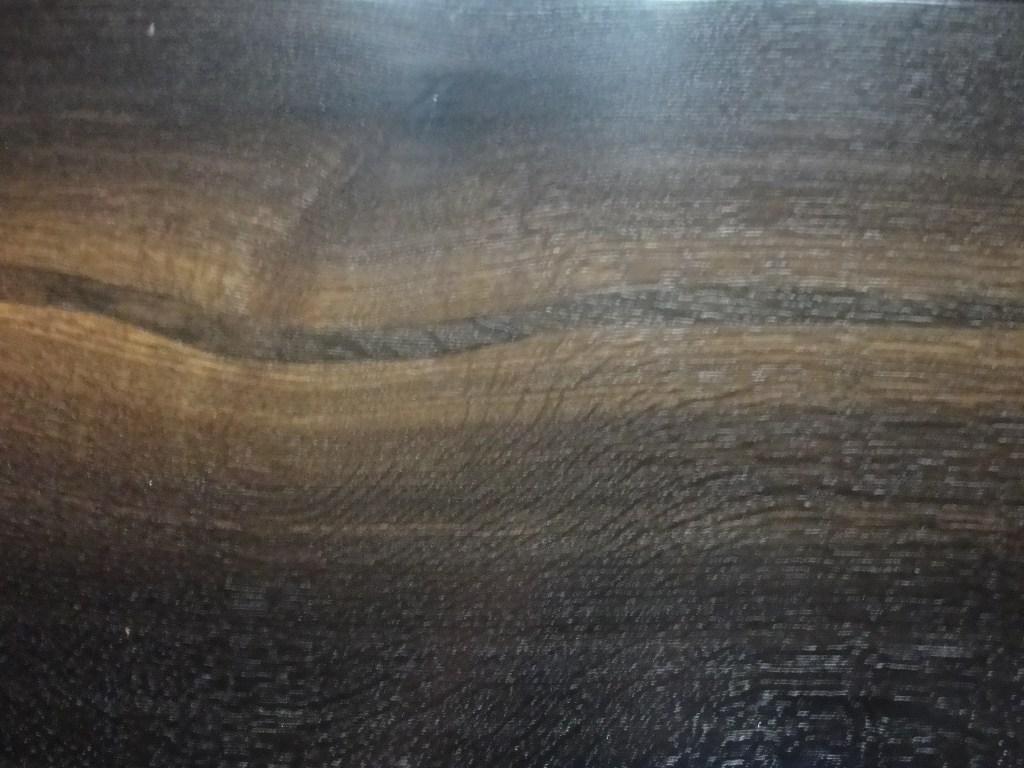
In 2012, a farmer in nearby Wissington found a tree trunk buried in a field he was ploughing. Whatever made him call the experts, I have no idea; what they found was a thirteen metre long section of black oak that had fallen in the Fens 5,000 years ago. When the experts tried to work out which end was the rootball and which was the canopy, they realised that it was barely tapered – that it was a section from a much larger tree. The height of the complete tree was estimated at 50 metres, almost twice as tall as the tallest oaks today.

The Canadians sent their largest mobile mill over to England to create planks from it, and the crew found that it was easier to set up the mill in the field than it was to move the tree trunk. They got ten planks from the trunk, and dried them out over the course of ten years in a purpose-built dehumidifying kiln. The planks lost nearly 1,800 litres of water – 1.8 metric tonnes – along with half of their thickness, a quarter of their width and 150 mm from their length. There was still enough left to make a table. The Jubilee Table.

The grain and colour and shine of the wood is amazing. The sign on the table invites visitors to touch it, luckily, as the first thing I did on reaching it was to run my hands over the surface. It’s beautifully designed and put together, and they would have to put up some barrier to stop people from stroking it.

Having travelled all the way to Ely – and got up early enough to get a parking space – we were going to make the most of the trip. We’d booked tours of the Octagon Tower and the ground floor and entry to the Stained Glass Museum. The West Tower was closed, and frankly, I’m now pretty relieved that it is. The Octagon Tower was tall enough. I was lucky the guide realised that I was afraid of heights and took it easy on me. Thanks, Dave.

The journey up to the top of the tower is in stages, via three sets of spiral stairways – we came out onto the gallery overlooking the ground floor at first, then on to a walkway along one edge of the northern transept (with a very low stone wall between you and the lawn some thirty metres below) to the inside of the octagon. Impressive enough to see the huge struts of oak supporting the tower, and then to hear that it cost £2,000 in mediaeval times (they still have the invoice in the archives) and weighs 200 tons. Then he opened Door number 2.

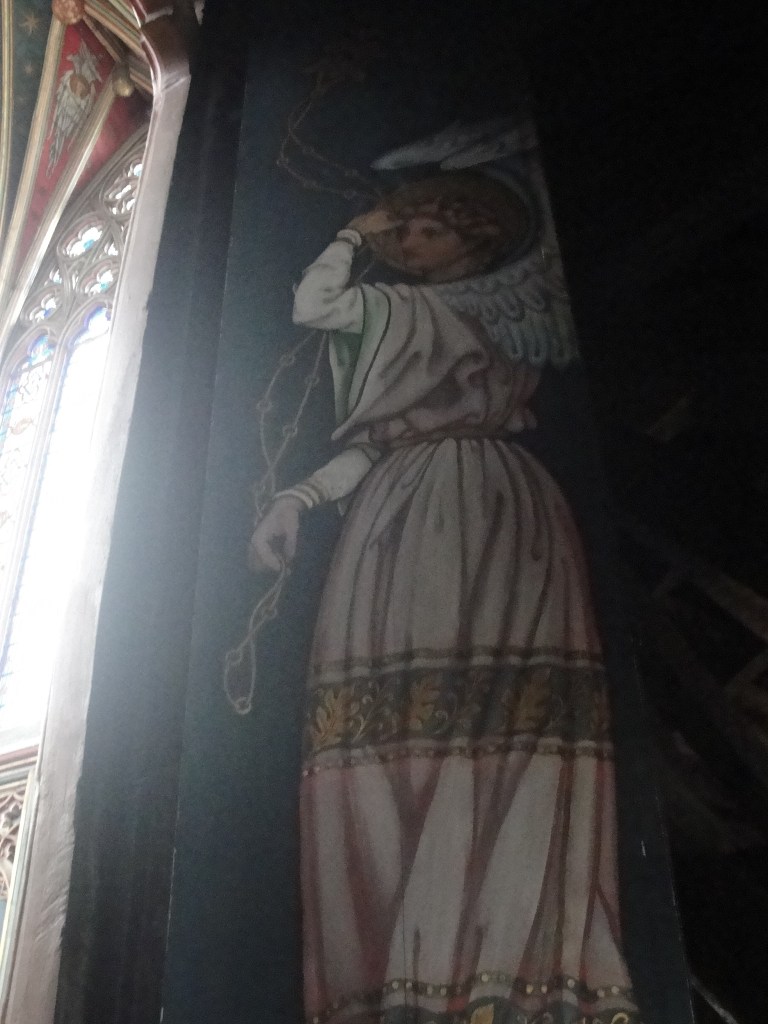
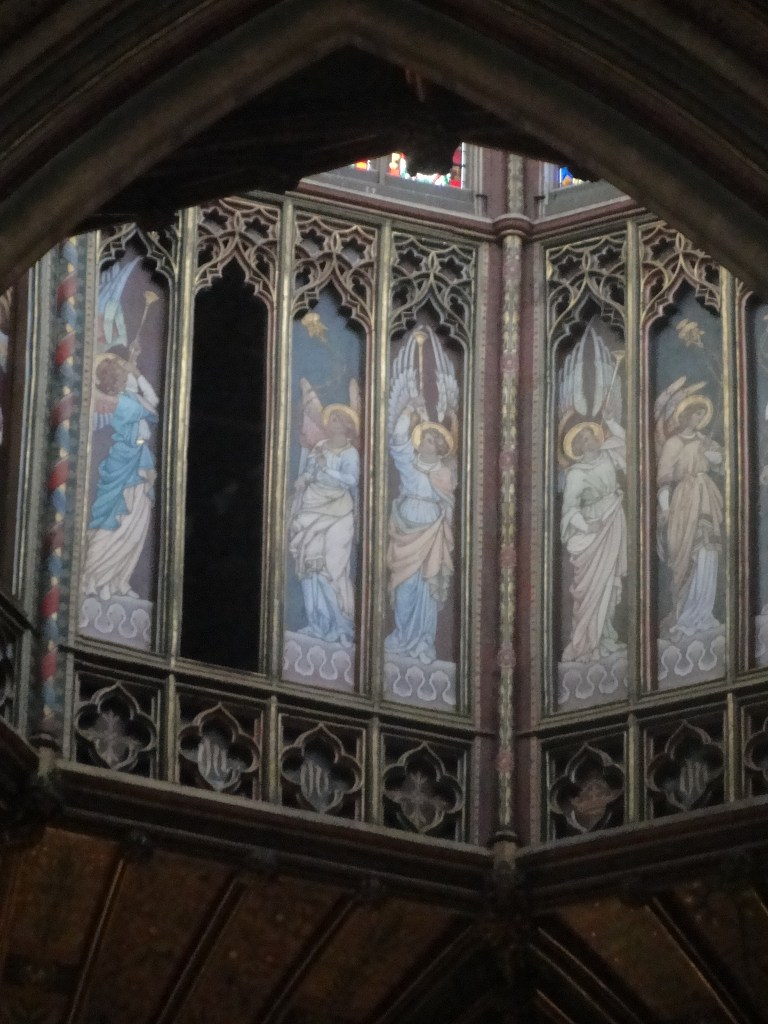
There are 32 angel panels around the Octagon, and each one is a doorway. Open it up and look straight down 142 feet to the floor of the cathedral. I managed that, just. Above each angel is a stained glass window, and our final stop was to get onto the walkway around the outside of those windows. Up one final set of stone spiralway with a rope for a handhold and out through a door designed for a ten year old. Onto the roof of the Octagon.

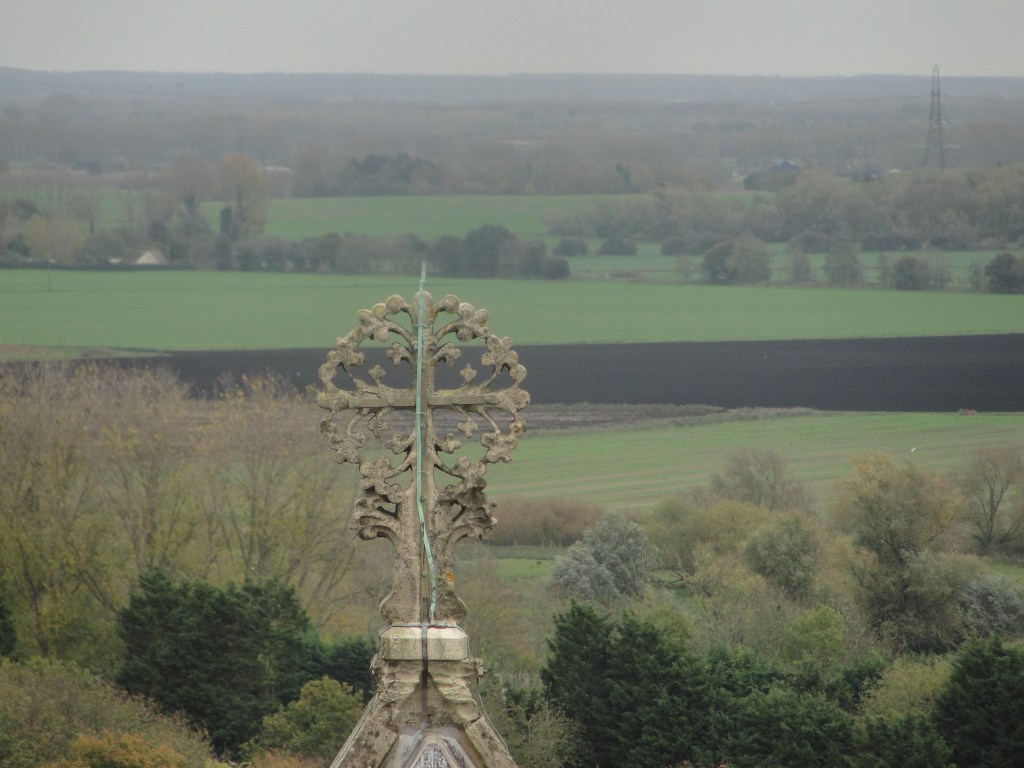
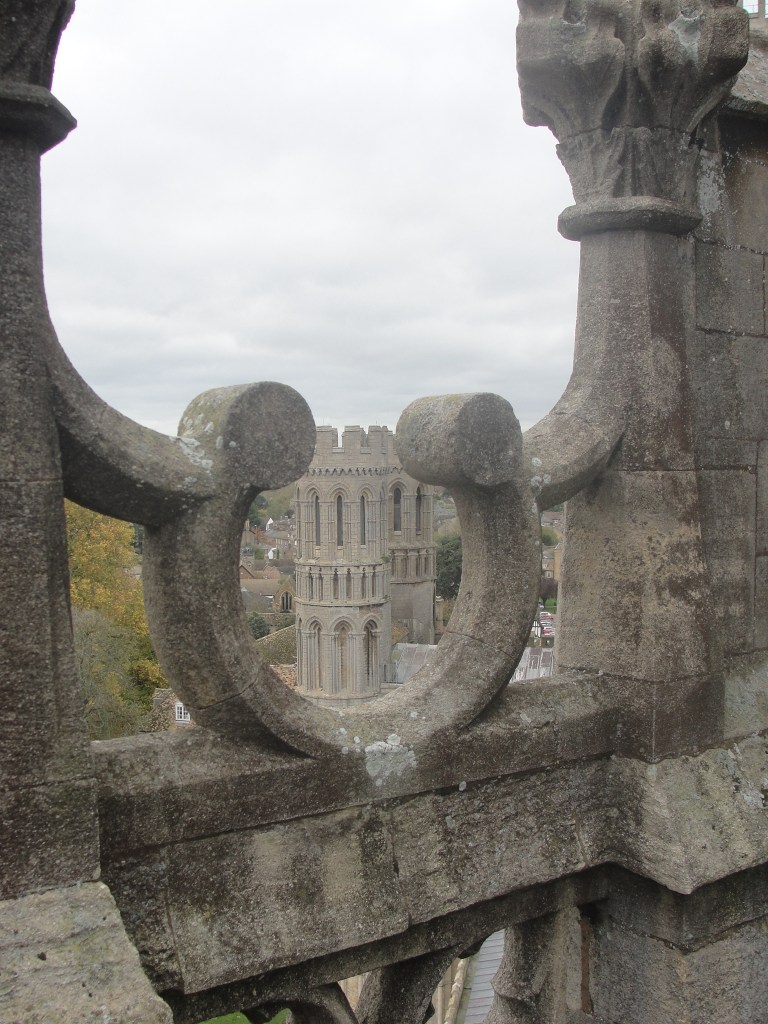
The view was spectacular. There’s a taller stone balustrade between you and the lawn below, but visitors walk around a steel platform set a metre back from the stonework, with its own scaffolding handrails. It was almost like not being a fatal height above the ground. I think this first view might be across the fields where Pink Floyd set up two giant heads for the cover of ‘Division Bell’. Take a close look at the distant background between the heads on that cover and you’ll see Ely Cathedral.

There’s another 200 tons of lead protecting the wooden structure below, so a total of 400 tons on the roof of the tower. We’d already been told that the original tower collapsed in 1322, and that the cathedral is built on very shallow foundations on soggy Fen land. Now Dave pointed out that the West Tower – the main tower at the front of the cathedral – is a few degrees tilted off true, one side sunk a little further than the other into the soft ground. The whole structure was built to be a huge impressive statement of victory at long last over the rebels who held the Isle of Ely against WIlliam I for longer than any other part of Britain, and I doubt anyone would have spoken up to the king about the sense of putting a tall, heavy structure on shallow foundations.

We walked the full circuit around the walkway and then back the way we came, down past the angel doorways and along the walkway to the next set of spiral stairs, down to the floor of the nave. I thanked Dave for putting up with my fear of heights – I like to test myself, and sometimes I fail. We went off with wobbly legs to wander around the Stained Glass Museum. It’s small but it packs a lot in. We were hoping to see the Seven Ages series again, but it was one of the exhibits that had been moved on and been replaced by something new.

And at last, the tour of the ground floor.

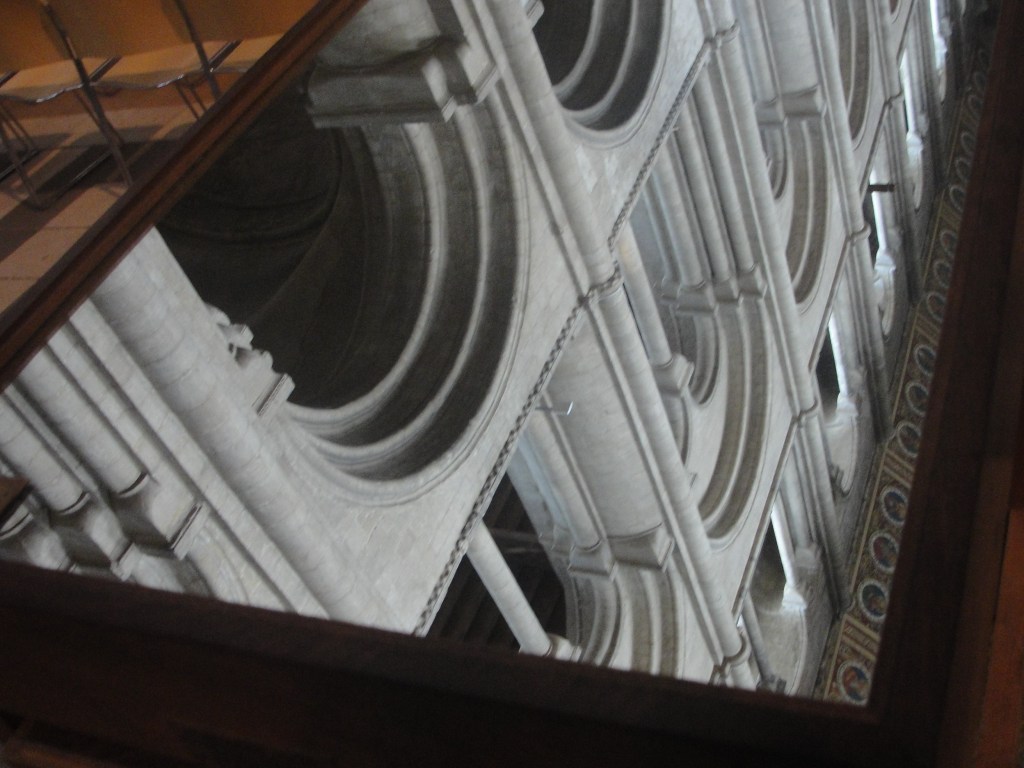
It’s the kind of place where you can’t help but look up, so these mirrors on the nave showing the details on the ceiling are valuable for visitors. Our guide pointed out the painted figures and faces along the ceiling, including one of the prophets who had been painted with the face of the dean of the time. While I was looking up, I noticed that the next tour of the Octagon Tower had the angel doorways open in the gloom – the same door with the pink angel that I photographed earlier.

We left the cathedral after the tour, having spent almost the whole day there. One last long sweep along the table, and we were out in the gloomy afternoon. We didn’t have time to visit Oliver Cromwell’s house, just a few hundred yards away, or the Thursday market or the local museum. We will have to come back one day. Soon.

Drain the Swamp

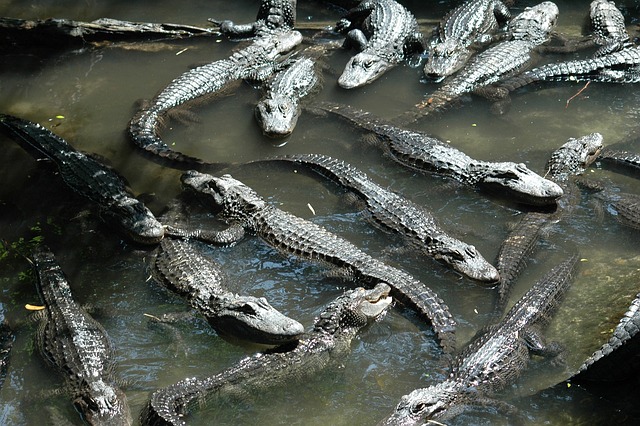
As the saying goes; ‘When you’re up to your ass in alligators, it’s easy to forget that you went in there to drain the swamp.’

I started this blog two years ago after a (more successful) writing friend told us about ways to advertise your writing. I write for fun, but the idea of starting a blog sounded like fun as well, so I did. Since then, it’s been a blog about all the other things I do – gardening in a large space, star gazing, getting the trees in our community orchard identified, travel, cats. Occasionally, writing. Rarely, writing, which is the original point.

I haven’t stopped writing for long over the last two years, though there have been times when I haven’t written or read a single original word for a fortnight. I had one of those times in mid-September to early October, starting with a small set-back and snowballing to being unable to even think of writing. What set it right was someone giving me an honest critique of something I’d written before the standstill and saying that they really enjoyed it. This is someone from a hard-boiled critique group, where they know they have to point out all the flaws that let the whole piece down (“He tells her that he’s from the future and that she should invest her life savings in a tech start-up she’s never heard of… and she does??? Hmmm. Wouldn’t you think – ‘Scam’?”).

That one enthusiastic ‘Like’ set me to writing again. I’d entered Globe Soup’s Historical Fiction competition with a will in early September, had three weeks of not being able to write and had three weeks to write four stories. Two of which I had no idea what I could write about (GS sold tickets in five assorted colours, and you chose a ticket without knowing which time period you’d be assigned). I had pretty much written off any chance of writing any coherent fiction based on Ancient Egypt and I know a lot of the contestants were struggling with the kind of racist language that both sides would have used without question or alternative during the American Civil War. But I had a decent World War II story and now a 1920’s one that somebody else liked… And I was off and writing, three new stories in the historical challenge finished in three weeks flat.

Strike rate this autumn so far; the fastest rejection ever for my Crazy Cat Lady story, five varied historical stories sent to Globe Soup (including a very strange one set in Ancient Egypt – and one set in the American Civil War without any words that might be offensive to anyone unless they’re from Edinburgh). Bought a couple of tickets for Globe Soup’s next competition – Paranormal – and got assigned the two categories I wanted. Not a peep about the Shallow Creek competition, and The Literal Challenge has stopped sending out prompts.

I’ve spent a lot of time over the last few weeks arranging a meeting for my OU writer’s group this month – we studied online and chatted through the OU’s forum for a year and agreed to meet up at the end of the course. We’ve been meeting up in person or virtually every year since 2011. Every year, we start with last year’s resolutions and admit what we have or haven’t done – spend time catching up, exploring the area and writing. We end the long weekend with a session where we each say what we mean to do over the next twelve months, and one person writes it all down and circulates it later. I organised this year’s meet with the knowledge that again, I belong to a group of nine writers where six have at least one published novel, half of them have sold a short story or two, one has won an award and one helps to run a literary magazine. I’m the comedy act at the end of the session with null points.

With days left before we meet again – I got an email. I had won the short story competition in Writers’ Online, please send photo and author bio, payment to follow shortly. Yes, I checked it wasn’t a scam. No, I don’t quite believe it. But still, I’m going up to Cromer in a few weeks with a shortlisted and a win to my credit, with another five stories in the judges’ in-box that might get a mention – or a home somewhere else.

Harvest – the fruits

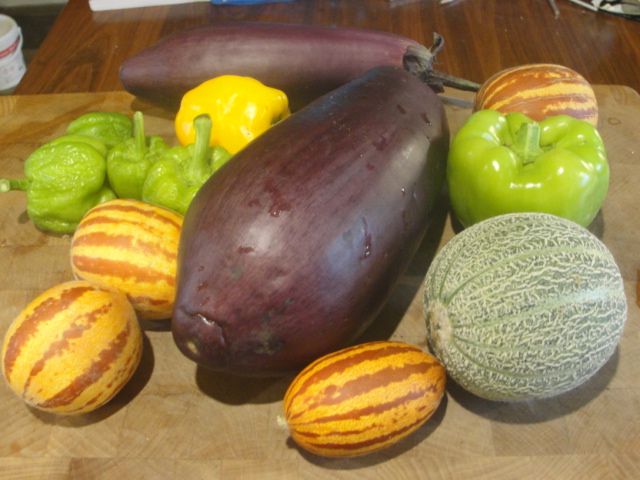
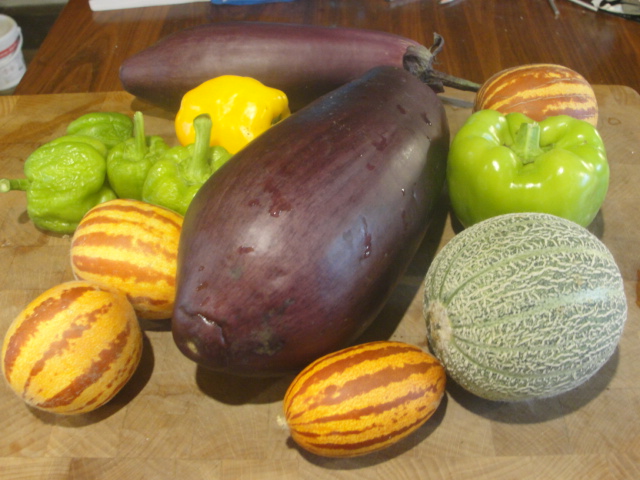
Some of the produce from our polytunnel.

Last year we planted eight melon vines and were rewarded with two melons. So I planted the last of our melon seeds with more hope than expectation this year. I ended up with fifteen surviving melon plants and no-one else offering to take them in, so I planted the lot in the polytunnel. Laws of Sod, they all produced melons except for the Collective Farm Woman melon vine (on strike, I think) and every damn fruit turned ripe during our September holiday, and half were on the floor by the time we returned. We ate as many as we could. The cucumbers objected to the heat and produced cukes that were so bitter that I didn’t like to give the excess away. The aubergines went completely beserk, and the peppers (after a slow start) are providing a good crop. We grow a full salad here, with a glut of cucumbers in August, good crop of lettuce in September and a few tomatoes in October. We need a time machine to make the whole lot into a few decent, varied salads.
But the apples – the apples have made up for it all.

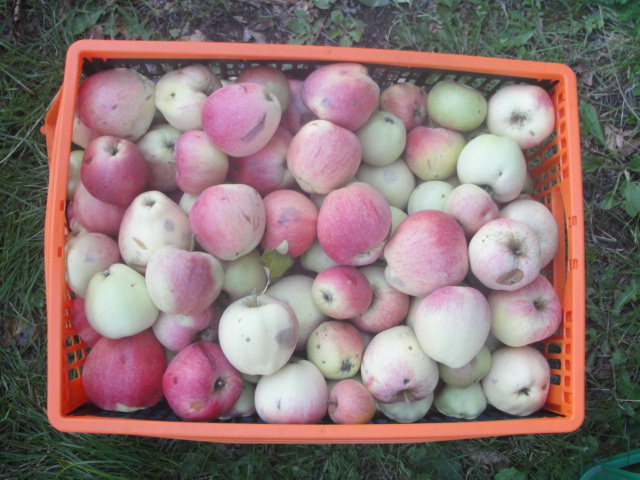
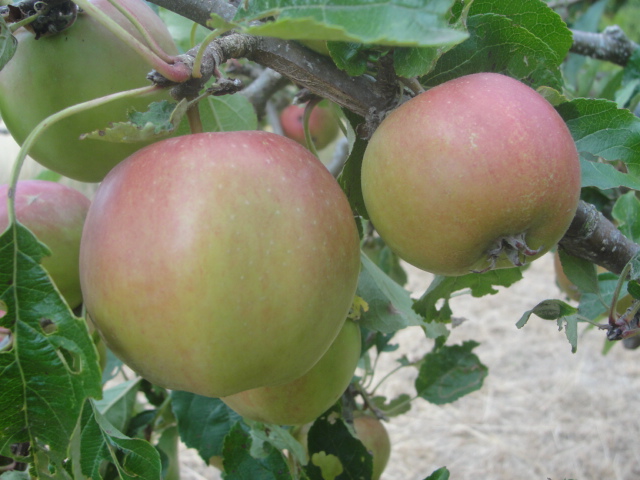
After four bad years, the apple trees have come out in force. Our neighbour told us that he was throwing his apples on the compost heap as no-one in his family were keen enough to keep up with its output. We volunteered and a day later we had five full crates of juicy eaters to deal with. When we’d finished with those, we stripped our own cider apple trees – planted in 2008, they have finally found their strength. The Yarlington Mill and Michelin was laden, and the Morgan’s Sweet offered four huge yellow apples. The Kingston Black, the Stoke Red and the Dabinett had a dozen each. Between them, they gave us four full crates. Next up was the Bramleys. You can make a good sharp cider from Bramley, as long as you don’t mix it with other varieties, and we stripped the tree. Five kilos for fruit for future apple crumbles, the rest went through the scratter.

Crate full of Yarlington Mill cider apples

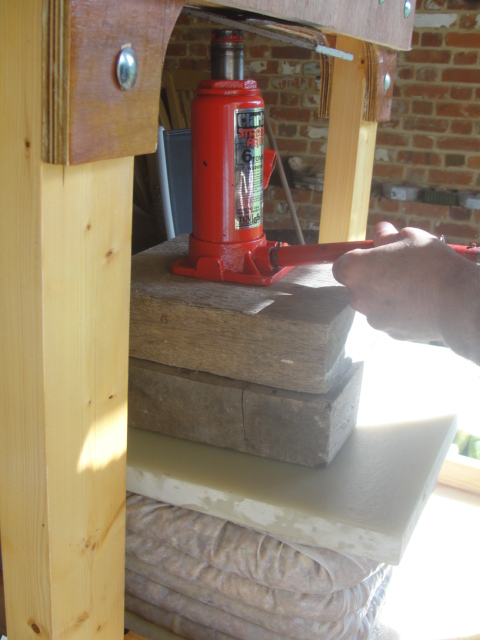
I admit we had an advantage this year. Our Gloucestershire friends are hoping to move house soon, and are clearing away some of the stuff they’ve acquired over their decades in their current house – including the cider press he built a decade or more ago. We took it home and have been testing its limits this week. It’s a serious piece of kit. It’s a wooden arch over a tray with a drain hole. The apple mash is formed into a pile of squares enclosed by fine mesh (‘cheeses’) in the tray and covered by a slab, or two or three… a car jack on top of the slab presses up against the arch and down against the slabs, pressing the juice from the mash. Efficient, quick and fun.

John’s Super-Duper Juicer!

The neighbours’ eaters gave us six gallons in a barrel and four gallons in four demijohns – the juice gushed out, pouring two gallons into the barrel even before we put pressure on. The cider apples were dry and stubborn, giving just six gallons of thick, dark juice and staining our hands bright orange. It took 24 hours of determined scrubbing to get the Tango off. Yesterday we pressed the crates of Bramley and got almost eight gallons of juice – a full barrel, a gallon demijohn and a few litres to freeze for apple juice in the depths of winter.

If you leave freshly pressed apple juice, the yeast from the skins will begin to ferment within hours – slow at first, then desperately quick and vigorous. The only ways to stop this is to pasteurise it (heat it to at least 63 degrees F for at least 20 minutes), freeze it or put in a carefully calculated dose of sodium metabisulphate. This is why extra gallons in demijohns are so much fun. Early batches of cider were half OK and half vinegar – these days, we can all but guarantee a decent cider in the barrel from a calculated stop and re-start with a yeast culture, leaving the demijohns for experiments. Fizzy? Double strength alcohol? Mild and weak? Oak or vanilla flavoured? We can risk a gallon to try out ideas.

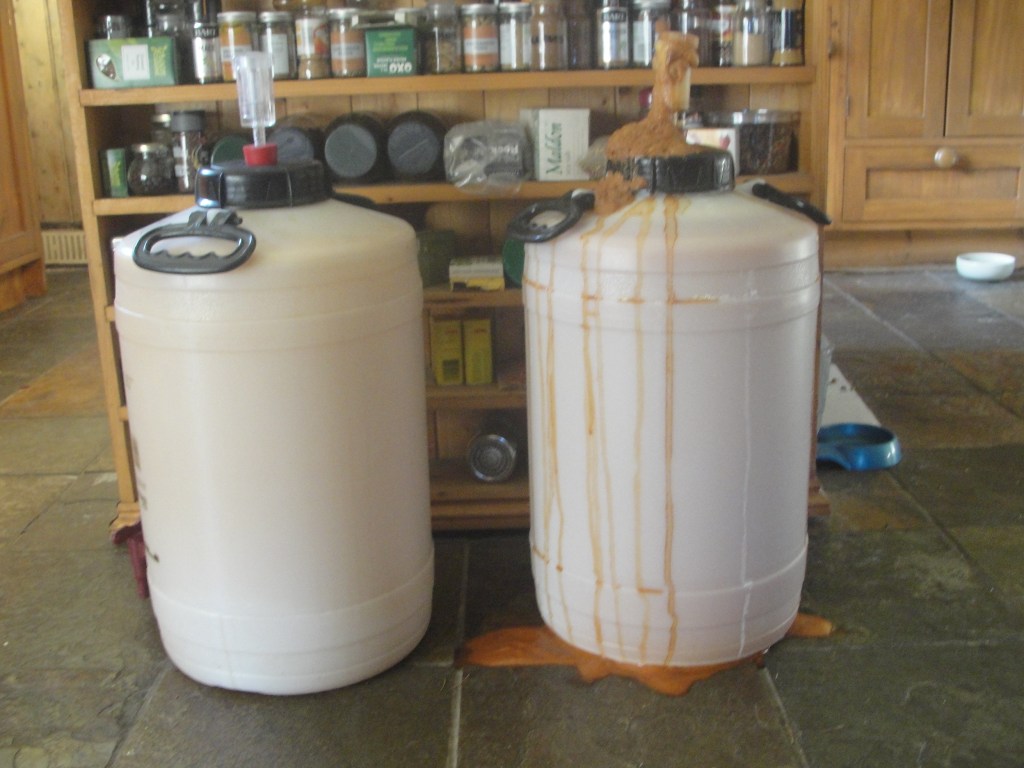
The barrel belching out dark orange sludge is full of pure cider apple juice…

The pure cider apple barrel is a thug, belching dark orange syrup out through its airlock every hour. It’s been like cleaning up after a messy kitten, mopping the floor and scrubbing the barrel. Next door’s eaters have been blopping away quietly and steadily and we’ve just put the E1118 yeast culture into the Bramley barrel, so we wait to see how well mannered this one is. The demijohns are lurking in the shower room. We are back to the days of explaining to visitors that we don’t drink all this in one year… honestly… and it’s been a real blast to be back making cider.

Harvest – the seeds

The apple trees did their job this year, at last

As a young child, I sat through school assemblies where September meant singing the hymn ‘Harvest Home’. Girl Guides’ church parades involved bringing something to add to the pile of harvest ‘stuff’ at the altar – the lucky kids with a fruit tree in the back yard brought an apple, some of the parents took the chance to offload one of their marrows and my mother grabbed a tin of beans out of the cupboard to give me something to offer. I would love to know what the poor and needy of the parish made of being given a marrow, a tin of Heinz and an apple for dessert. It was a time when a real meal meant scrag end of meat, accompanied by a few vegetables boiled to death. Should have taken them one of the mice that used to run across my pillow occasionally (except that I wasn’t that bothered by them, and wouldn’t have sent them to roast in a stranger’s oven)

These days, I have a real veg plot. Five metres by eight and an overspill patch next to the greenhouse, I grow enough food to keep us in vegetables for about a third of the year and as I don’t eat meat, that means I can take about a third of my meals from our back garden. I’ve even had some small success with lentils, and the plants self-seeded enough to keep themselves going for the last four years.

Autumn really means harvest to me these days, in a way that an east London childhood failed to register the season. I buy my seeds from the Real Seeds company, based in Wales but with connections across the world. The seeds they sell grow heritage varieties designed for particular conditions; tolerant of poor soil, short summers, cold weather. We got through the first lockdown on the canned and dried stuff we’d bought to get us through recuperating from surgeries, and for fresh vegetables we relied on what came up in the garden – Real Seeds kale that had self-seeded, potatoes that came up in the compost heap, over-wintering onions and field garlic.

The thing about Real Seeds is that they sell seeds for plants that have been rescued from dying out. The commercial seed companies can offer only the plants that are so mass-produced that they can guarantee that the variety they sell will be exactly the variety and not cross bred – that means that there’s a small pool of candidates for each type of fruit or vegetable. Real Seeds sells under a ‘club’ type licence, with each gardener agreeing to grow and pass on the seeds from their plant if they can.

Each plant has a story. Real Seeds tell of a man who graded seeds for a commercial seed company and (as a hobby) bred plants that thrived in his garden and were excellent for taste, cold-hardiness, productivity. He saved, labelled and graded the seeds he collected. When he died, his family cleared his house and shed, throwing away those bins of seeds. The neighbours hopped over the garden fence after the family had gone, collected all the seed they could from his vegetable patch and grew those varieties on, many of them passing on the seeds to Real Seeds later. An elderly lady passed on the seeds of the kale that survived Sutherland winters to a younger relative, who in turn passed them on to Real Seeds (named Sutherland Kale, I have seen it shrivelled by snow in my own garden and returning to full health ten days later). Real Seeds’ message to their customers is clear; buy our seed to save the variety – save seed from it and pass it on free of cost or licence.

Saving seed is a great intellectual challenge. I love veg. I love kale in a stew, a soup or a homity pie – home-grown peas in a paella – getting out the last of the stored onions and potatoes in March for a meal. But. It takes planning in the growing. All the brassicas cross-breed like Hollywood superstars, so if you want a pure-bred Sutherland kale you need to make sure that there’s no other kale, chard, broccoli, cabbage or cauliflower running to seed within half a mile. Carrot cross-breeds with other carrot and carrot ancestors – so pull up every scrap of Queen Anne’s Lace growing in your garden, neighbour’s garden and on the roadside nearby. Cucumbers cross with other cukes, as do chillies and sweet peppers and onions and garlic. Anyone remember the accidental wild courgette crosses that produced the bitter (and poisonous) courgettes in 2021? Affected Mr Fothergill’s, Thompson and Morgan and Suttons, so that they had to admit that they sourced their seeds from the same commercial grower.

I have grown only Gerghana cucumbers this year, as I do like them better than the other kinds. Melons, I grew fifteen plants – so my Bishop melon might not be pure Bishop Gris de Rennes, and my Eden Gem might have some Collective Farm Woman in it’s ancestry. I grew King o’ the North peppers alongside my Californian Wonders, so I may have a cross there. The Californian Wonder peppers were fabulous – blocky, large, lime green and thick-walled – and I will definitely grow them again.

What I have been doing for the past week or so is saving the seeds I want to grow next year in huge quantities. Some of these will not grow seedlings – some will sprout but not survive – and some of the people in my village are getting keen on growing their own plants, so I hope I can give away some packets of seeds locally and to friends.

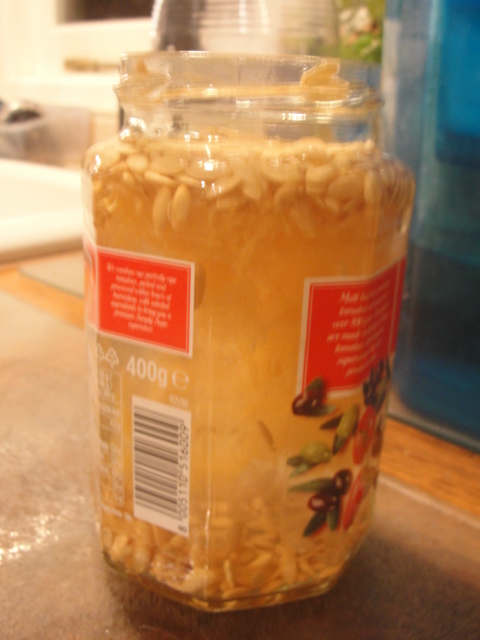
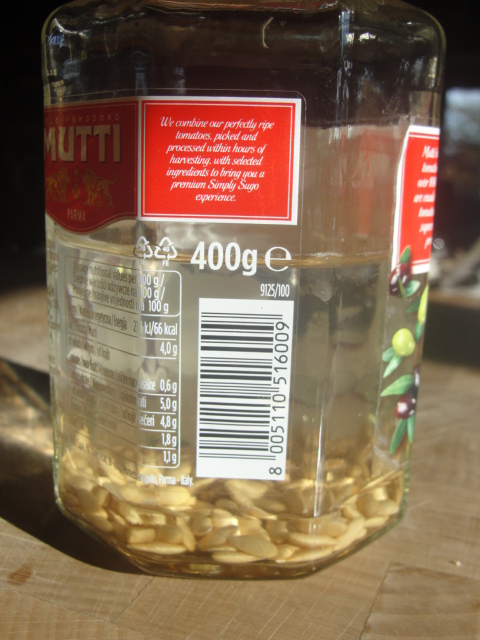
Melon seeds in a jar – first go around
Melon seeds after several washes through water. Chuck away any that float.
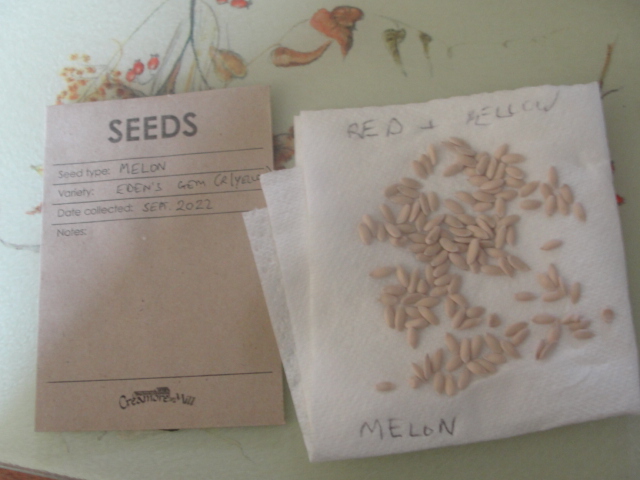
Pour the jar through a tea strainer and dry the seeds thoroughly or they will rot in the packet

Melons, tomatoes and cucumber seeds are the same – scoop out the jelly, put them into a jar of water, shake, pour off the water and change it every day. Gradually loosen the seeds from the jelly until there’s nothing in the jar but clean water and seeds. Remove all the seeds that float, pour the rest of the water through a strainer and tip the seeds onto kitchen paper to dry. Dry thoroughly. I’ve had seeds rot and grow mould in the packet, so these days I dry them for several days before I put them into a paper packet and label them up. Variety and date collected. It works. All my cukes this year came from seeds collected in 2021. Wicked Witch chillies come from seeds collected from a plant I bought in 2015 (and their descendants). Pepper seeds are easy – scoop them off the piece in the cap of the pepper, sweet or chilli. Don’t bother with supermarket peppers, they’ll all be F1 types and won’t breed true. Buy a pack of heritage variety seeds, treat the plants nice and never buy seeds again.

On top of that, I’ve been helping to process the quinces that all decided to drop at once, the extra abundance of aubergines from my neighbour’s plants and the crab apple crop.
That’s without the cider…

Apple Mad

The gate to the wood late on a sunny autumn evening

Last Friday, we went to the orchard in the local community wood and picked specimen apples. A lot of them. Five typical apples from each tree. And like a true fanatic, I even took apples from the four trees where I had found a name tag or thought I knew the identity of the apple variety. Plus the three apple trees in the depths of the wood itself. I picked the five (taking apples from all around the tree and from the shaded interior too, snipping them from the tree so that we collected the stalk). Each set of five went back to the Central Logging Point (the patch of soft dry ground where himself sat with a pack of freezer bags and sticky labels), I told him the tree identification (Alpha Two, Delta Three etc) and left him to bag them, seal the bag and label it while I went to collect the next tree’s worth.

The next day, I sat outside and opened each bag. Took out the five apples, dried each one and wrote its tree ID on it with marker pen. Re-wrapped each group in newspaper, sealed the wrap with the original tree ID label and placed it carefully in a big box. Only then did I open the next bag, and repeat.

The day after that… showtime.

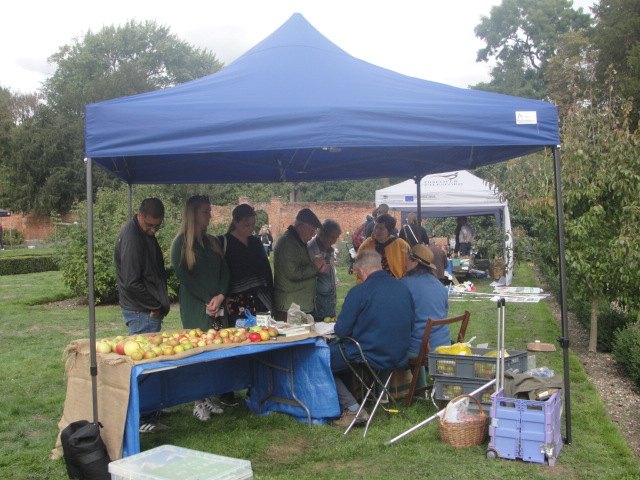
The experts at the Easton Lodge Apple Day

On the third day, we took that big box full of apples to the Apple Day at Great Easton Lodge near Dunmow and collared the experts. We had warned them, but as we walked across the lawn with 115 apples in a box at two minutes before opening time, we did feel a little guilty. We waited until they arrived and said sheepishly… ‘Hope this is okay?’

It was. They loved it. The experts discussed each apple variety, occasionally nipping over to their friend on the next stall to compare notes with his array of Essex varieties, and came up with a verdict. We broke off occasionally as members of the public arrived with their mystery apples (when you present 23 trees’ worth of apples, it’s polite to give way to others). One trio arrived with apples to identify and the experts sat up and murmured excitement. The older man had told them that he was a descendant of Samuel Greatorex, and when asked, admitted that he had some of Samuel’s papers in his keeping. It was like someone dropping by a 70’s music festival and admitting casually that he was closely related to Robert Plant. I noted the name, but at the time it meant nothing – just that this Greatorex was obviously an apple star.

I was included in the experts’ discussions. I’ve learned my base from my apex – the stalk is at the base and the flower end is the eye. I listened more than talked. The trees tagged up as Sturmer Pippins were definitely not – more likely to be Tower of Glamis, a Scottish cooker I was surprised to find in an Essex orchard. The Braintree Seedling was exactly that, and is one of three in the orchard. The tree I thought was a Bramley was an Annie Elizabeth, a culinary apple from Leicestershire. After four hours and twenty-five minutes, we had all twenty three trees identified, and a pair of beaming experts who were completely chuffed to have helped us. For free.

We staggered off to see the other stalls and dropped a donation into the box for the charity the experts were connected to. Brilliant place – lovely walled garden, a sunken garden and Italian garden that we never got the chance to visit, stalls selling honey, soap, seeds, juice and vegetables… and then we went home.

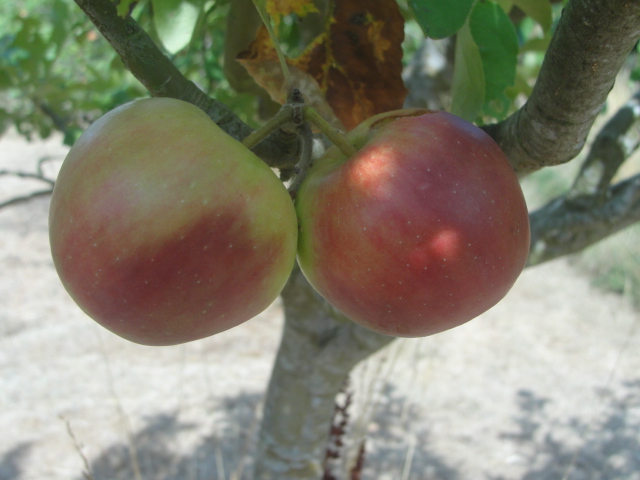
Annie Elizabeth in August

It’s taken me a week to note all those names on the chart, to look up the names and note whether they are dessert or culinary, to find their history and picking times. In the course of that, I found the history of the Annie Elizabeth apple. The original tree was raised from a pip of an Orange Blenheim apple planted in Clarendon Park, Leicestershire in 1857. By a magistrate’s clerk called Samuel Greatorex. Name ring a bell? I was standing next to his descendant last Sunday. The original tree still stands in Clarendon Park, but the girl for whom it was named – Samuel’s illegitimate daughter – died in 1866, aged just nine.

The chart of the orchard has been amended and a list of the trees drawn up. The committee of the local woodland trust said a muted ‘Well done’, and went on to grouse that the apples on the trees would be wasted. I sat back and kept quiet when they discussed whether anyone would volunteer to run an apple pressing day in the orchard – I have done plenty of chasing around for the trust this year, and with six free days left in October it’s unlikely I could man the press on a suitable date and spare the time to advertise it.

Some of the apples we took to the apple day were cut up for a close look or donated to the experts as fresh specimens, and the rest were lugged back to the car and came home with us. They will join the apples we’ll harvest from our own orchard, and will probably contribute a couple of pints of cider – which we will pay back to the members when we have our next meeting. It will probably generate more excitement than the news that 75% of their fruit trees have now been identified down to variety name.

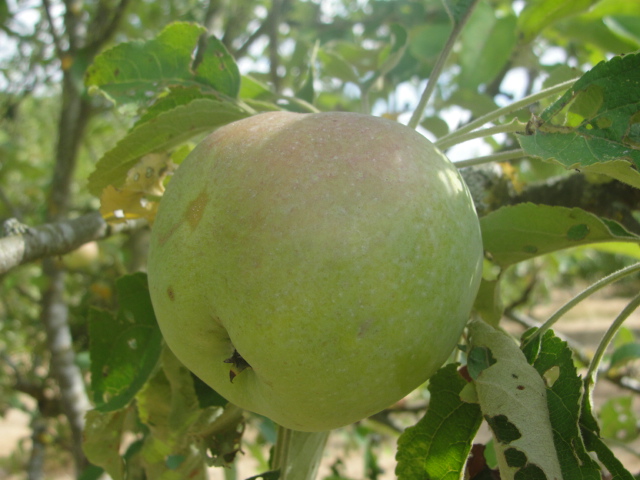
Stanway Seedling

Iron Rules

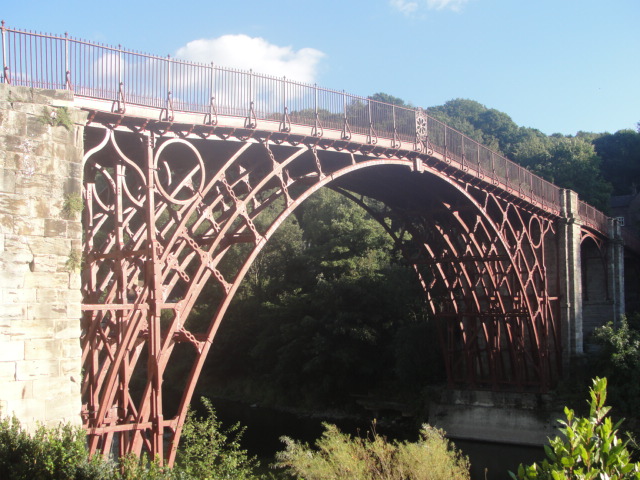
The Iron Bridge in Shropshire

We had 24 hours to spare before picking up our cats from the cattery, and my original thought – a night’s stargazing in Northumberland’s dark sky reserve – was scuppered by the almost-full moon. Instead, we went to Ironbridge.

I’ve been there in July of this year, but again, himself was left behind to look after the cats while I had fun. As a retired engineer, he would have loved to go in my place (though he would have snoozed through the lectures on romantic novel techniques). What else could I do but take him there as a tourist?

We agreed that as this was my second visit to Ironbridge (although just a few hours on a Saturday too hot to walk far), that he would have first pick of which museum to go to. He chose the Museum of Iron at Coalbrookdale, and I asked for a trip to the Clay Pipe factory at Broseley. On paper, these were just over a mile apart, and roughly a mile from the accommodation we were staying at. I had no idea at the time that Coalbrookdale would choose to throw a small party in the form of a Heritage Day, with free admission and a display of steam engines and classic cars – nor that Broseley Pipe Works would close for the season the weekend before.

Looking up the River Severn from the middle of the bridge

We arrived at three on Friday afternoon after a horrible journey down the M6, settled in and set off to see the Iron Bridge. The first part of the journey was all up… then as much down… and then we reached The Hill Top Paper Shop. Bad sign. It was steeply downhill from there. One mile underfoot on flat ground takes us about twenty minutes at an easy pace – up and down took us longer, and we felt the after-effects of a few days’ stiff hillwalking.

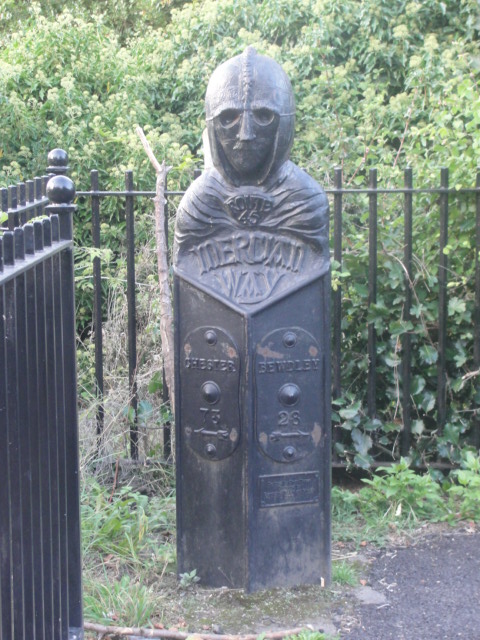
A meal and a pint in the Tontine Hotel and a wander over the bridge gave us the oomph to set off back uphill, but not before we spotted a familar little warrior;

How many miles from Sutton Hoo to Ironbridge?

We climbed back up the hill faster than we thought we could, and even had enuff puff to argue over which route was quicker – down this street and turn right, or down the next street and turn left. As soon as he set off down his chosen street, I started to run down mine, hoping to arrive at the meeting point early and pretend my route was better. Which would have worked if I hadn’t had to get the camera out for this;

Pineapple!

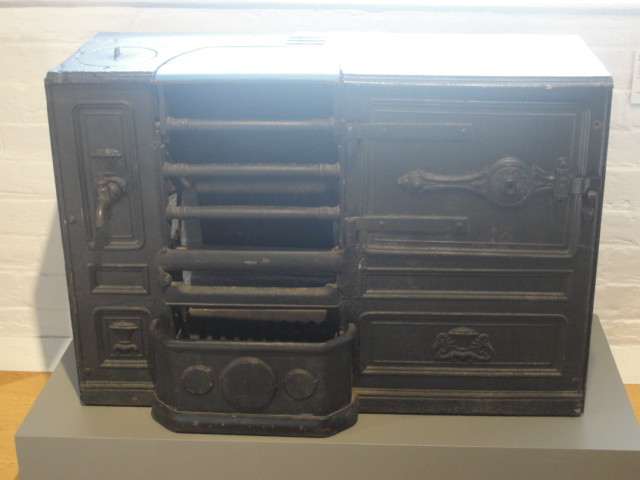
The next day, we looked at the route we’d have to take on foot and saw a lot of up, a lot of down, and much of it along fast roads with no footpath. We drove, to save our feet for the museum. Lucky we did. The Museum of Iron is on three floors, and took us two hours to go through the lot. One of the items on exhibition was a small kitchen range. I remembered our old neighbour from Stratford telling my parents that when the woman who bought our (rented) house from the landlord stripped out the walls of my aunt’s kitchen, she found a Victorian range cooker boarded up in an alcove. I wonder now if it was a Coalbrookdale range.

Small kitchen range

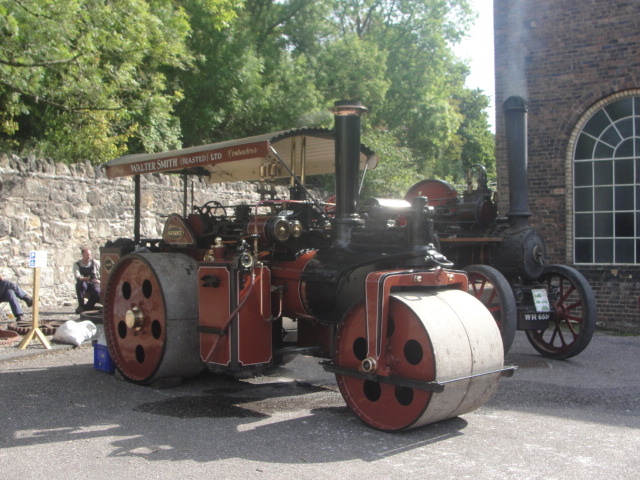
Outside, we had a meal at the cafe on site, then went to explore Enginuity, a museum for children (half-expecting to be turned away). It was fun, and there were other adults there pressing buttons and peering at the exhibits whirring around (though I think we were the only ones unaccompanied by children). After that, we went out to let the retired engineer ogle the steam engines and the classic Landrover displayed outside, before going in to the exhibit of the archives, curated by Georgina Grant. Where Oliver Meeson, clay pipe maker, had a home-made rig set up and was making clay pipes in the traditional way.

This was just for the Heritage Day – we were lucky

With an hour to go before all the museums in the gorge closed, it was obvious we weren’t likely to see the china or the tile museum on this trip. We went around the furnace at the north end of the site, where Suzanne Spicer took us for a tour of the furnace and explained the history, the difficulties of running a factory that depended on a certain river level and how the iron for the bridge was probably made as pigs here and transported down to the site to be cast.
We left at half past four and made our way back for a mug of tea and to pack the car. We left at 7pm, and got home at 9.30, ready for a good sleep before retrieving the cats the following morning and getting back to our normal lives.

Ambitions

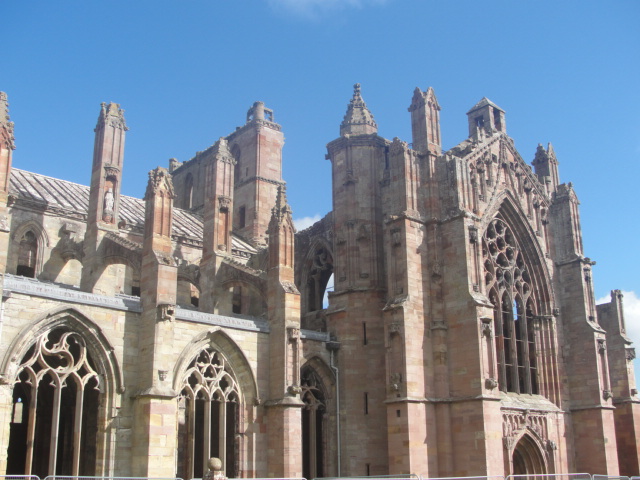
Part of Melrose Abbey

Back in March, I reported on a trip to Melrose in Scotland. The intention then was to let himself see where I’d been with my OU writers’ group, and to finish a long-held ambition to climb the Eildon hill where Thomas the Rhymer was said to have followed the Queen of Elfland before being taken into the land of Faerie for seven years. I’d stood at the foot of the hills and looked up to the summits in the early 90’s, but hadn’t had the time to climb it. Back in March, the weather closed in almost as soon as we reached the halfway point and we retreated out of caution.

The plan was to get fitter and return in September for more than a couple of days, get up the hill and back before the weather had time to spoil the party. Two out of three ain’t bad. We arrived in Melrose on Monday, slogging through a stripe of rain to get there in bright sunshine, and made an attempt on the hill on Tuesday.

It’s sensible to plan for any serious hillwalking expedition. We had a map, a compass, food and drink, strong walking boots, waterproofs, gloves and a fleece over a lightweight T-shirt. By the time we got to the gate up to the start of the hills, fleece and waterproofs were weighing down the rucksack and didn’t go back on until long after we arrived back at the accommodation.

We took the route up through the Melrose Golf Course (yes, it’s allowed – stick to the road and watch out for golf balls for the first 440 yards), past the log cabins for hire and up St Cuthbert’s Way to the saddle between the two hills. This involves a long hike up, a section going down and then a climb up to either North Hill or Mid Hill. North Hill boasts the attraction of being the site of a Roman signal station and fort; Mid Hill was, I think, the hill that True Thomas climbed. The difference in height is minor – 404 metres to the cairn at the top of North Hill, 422 metres to the top of Mid Hill – but the route is very different. The official path to the top of North Hill is long, slow and alternates between mildly steep and fairly gentle slope, while the only route up Mid Hill from the saddle is… vertical.

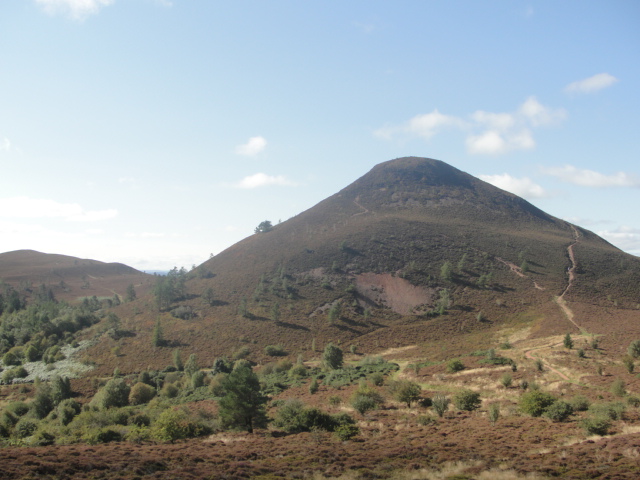
Mid Hill, Eildon, from the saddle between North and Mid Hills

We did it on our first day in Melrose – got to the top of Eildon North Hill and sat enjoying the views. I should have brought suncream and midge repellent, but hey. We chose North Hill as there were enough people on Mid Hill that day to stage a rugby match with substitutes, while just a few people were heading for North Hill. We don’t like crowds at all.

There were three people at the top when we arrived, all sitting quietly and admiring the view, so we patted the cairn to say we’d arrived and went to sit apart from them. Unpacked the food and drink and talked quietly.

The chain Bridge over the Tweed from the top of North Hill

We set off down the eastern slope of North Hill. Steep, but stone slabs have been laid in steps all the way down to about 200 metres from the base of the hill. We were both finding our knees creaking from the strain of going downhill, and by the time we reached the road we were both wobbly. Logical thing then is to go for a pint…

The next day was a day of holiday rest. Meaning, no strenuous hill climbing, but there’s sights to be seen and the town’s just a mile from where we’re staying. We got the chance to see the grounds of Melrose Abbey, and the chainbridge over the Tweed close up, and we walked back to the accommodation from there. So, not really a rest, but no considerable uphill walking.

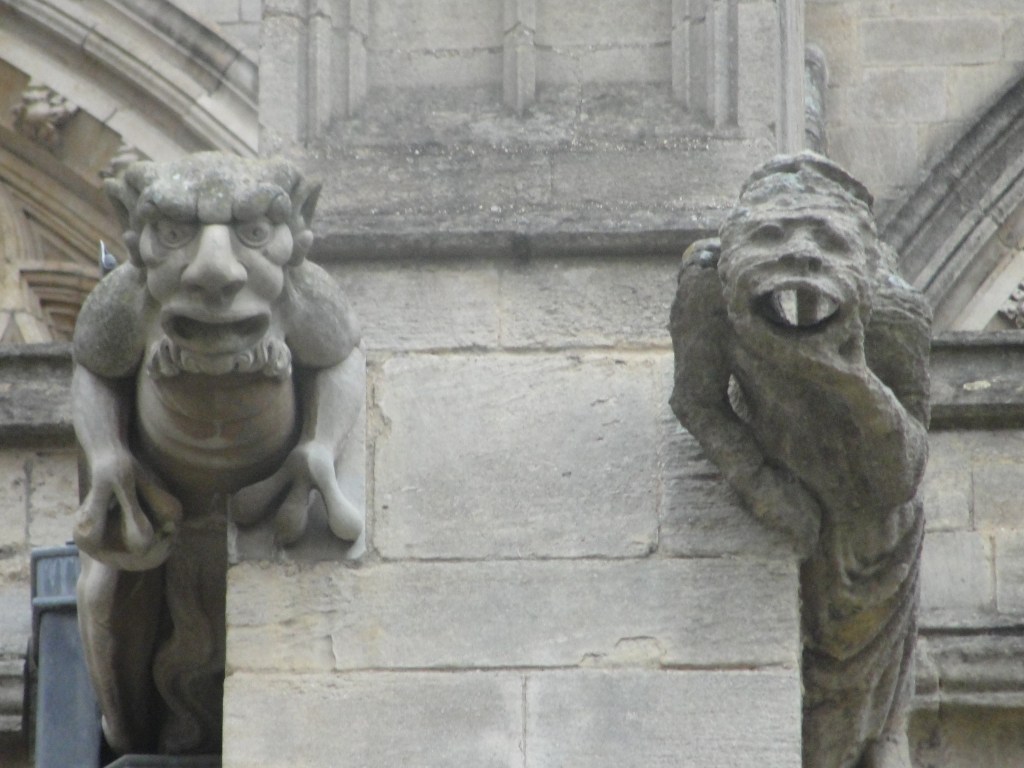
Gargoyle high up on the abbey roof

The acid test was Thursday. Having left the most fearsome of the hills till now, we were hoping the weather (and our fitness) would hold up. We set off from Bowden Reservoir this time, for variety, and got as far as the path around the flank of the Mid Hill before I realised that my worst enemy was my mind.

I’m afraid of heights. Afraid to screaming at times. I love the new perspective I get from the top of a church tower or the ridge of my own house roof, but the sheer terror of getting there and getting back down means it takes me a while to appreciate it. I was fine climbing to the path and looking back down the slope to the reservoir. Fine walking around the flank through the stunted pines. It was when his feet began to slip sideways on the narrow path ahead of me – and the path is barely wide enough to put two feet side by side – that I thought of how easy it would be to slip on the gravel. When the crow flying past the hill fifty feet below us let out a ‘Yahhh! Yahh!’ I realised there was a steep slope a few inches to my left with nothing to stop me bouncing fifty metres or more to the level of the water. After that, it was all I could imagine. Falling.

Bless him, we turned back straight away. He knows that I can stand spiders, mice, wasps flying around the inside of my crash helmet while I’m driving and riding a motorcycle through fast urban traffic, but heights defeat me. We went back to the crossroads where the path headed back down and discussed.

Instead of going back down – we went east, between the Little Hill and Mid Hill. The path went down, through the woods, with Mid Hill rising up bare and high above us. It was very like the scene in ‘The Lord of the Rings’ where Frodo tells the other hobbits to ‘Get off the road!’ just before the Black Riders clop past. But sunlit. The path went up and met St Cuthbert’s Way and from there we turned uphill to the summit of the saddle between North and Mid Hills.

The path from Bowden to St Cuthberts Way. Get off the road…

Here we met another walker, a lady who advised us to be very careful; that the North Hill was lovely to walk on, while the Mid Hill was scary and difficult. The scree path was steep and loose underfoot, she warned. We parted ways, and I got an entire fifty yards before realising that the slope and the potential fall were just not going to let me get up the hill. Legs and lungs were willing, but the mind was cowering under a blanket and whimpering.

There is only one official route up. The topmost 150 metres of North Hill is a bare, scrubby, steep cap with a small summit. Going up is face to the gravel; coming down, I’d have to face the gravel, edge down on all fours and hope not to skid and tumble. Better to acknowledge that I am just not able to enjoy any experience that involves heights, sheer drops and steep slopes.

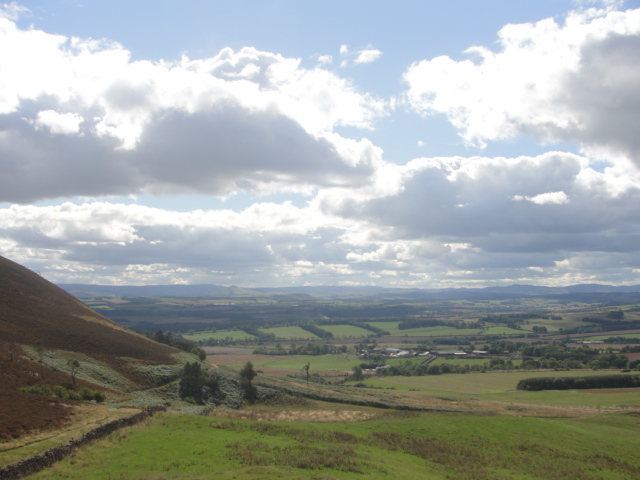
On the way back, it was a good walk. We were tempted to climb Little Hill, the only truly volcanic outburst in the set, and ate lunch looking south along the flank of Wester Hill and over the plains and towns stretching back to Carter Bar and Northumberland.

The view from the top of Little Hill

I don’t think I will ever defeat my fear of heights enough to climb steep and gravelly hills or exposed castle battlements just for enjoyment. The only other reason would be to see the view, or to tick off an experience alongside all the others that day.

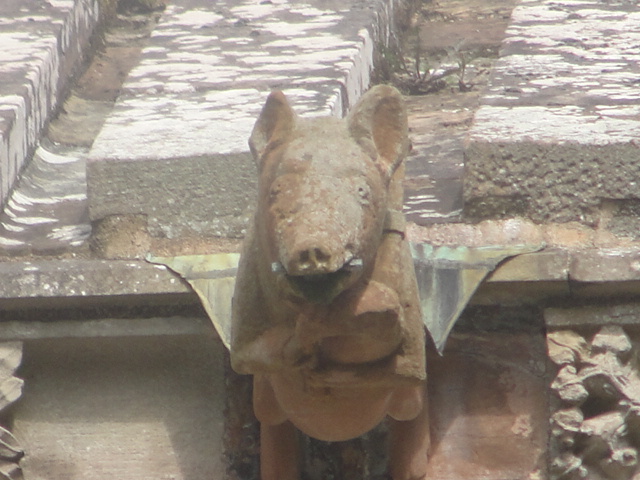
The pig that plays the bagpipes on Melrose Abbey roof – I saw it, honest I did…

I’m content. I would love to climb Wester Hill one day, and walk more of St Cuthbert’s Way, but it was a successful visit.

Kingdom

I may have some followers who don’t agree with the idea of monarchy, but I do. It isn’t the people involved, but the system. I knew I would outlive Queen Elizabeth the Second (barring serious health problems or accidents) but yesterday’s news of the Queen’s death was a shaker.

My passport, the notes in my wallet, the coins in our change mug and the stamps in our drawer all have the Queen’s name or the Queen’s head on them – getting used to having a king will be a hitch. Especially as every generation down to Prince George has the kind of skeletons in their cupboards that the true traditionalists won’t accept.

Image by Darelle, Pixabay

I will miss having Queen Elizabeth as the head of state. Interesting times ahead.