Community Orchard – Part 1

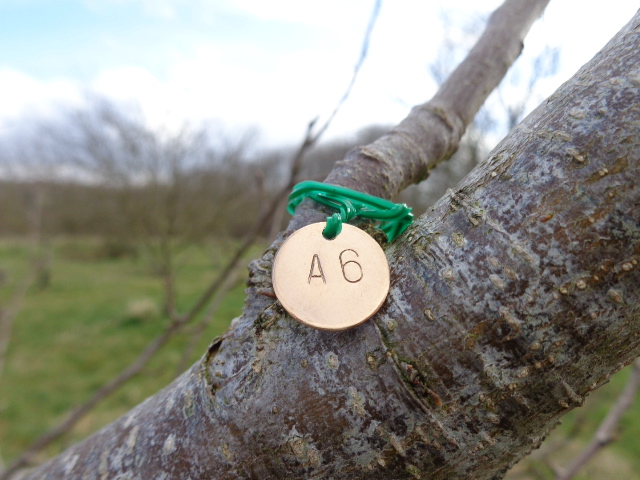
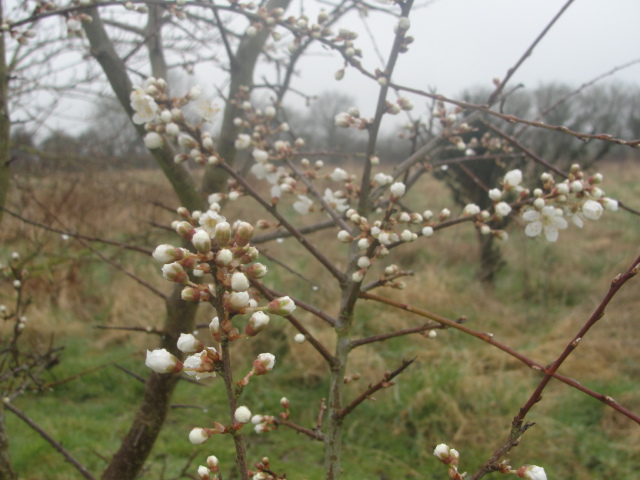
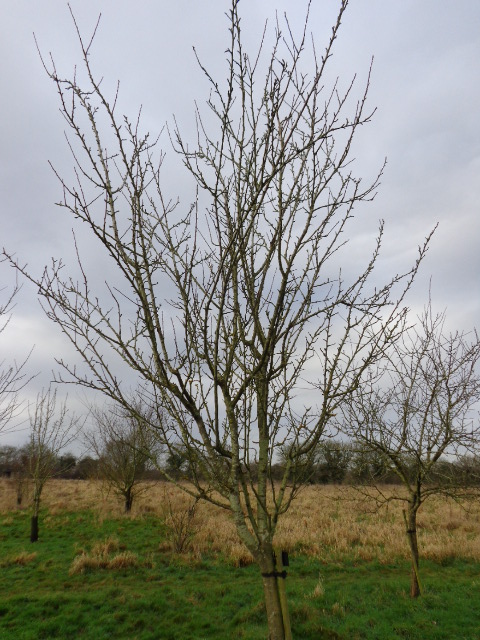
One of the tagged trees in the community wood

This probably sounds like an odd project, but here goes.

Two months ago, I went on a tree pruning course in the community wood, led by Dr Anna Baldwin. She was asked for her opinion of our orchard, and gave it as “Seven out of ten”. Part of her reservations stemmed from the tree-guards we were using – solid rather than mesh-type, which allowed the soil to build up around the base of the trunk – and the fact that the straps holding the trees to their supporting stakes were now tight enough to restrict growth of the trunk. Two of us set to work on that within a week, and that problem is now gone.

Dr Baldwin suggested that we map the orchard and keep records of each tree individually, stating the type and variety, date planted, date pruned and any damage or disease noted. She’d seen that most of the trees had no label and five or six labels had been bleached to blankness over the years. We weren’t able to provide even the simplest information about most of the trees, and I mean, whether they were apple, pear or plum. As plum and cherry trees need to be pruned in summer and apple and pear are best pruned in winter, that is a basic necessity.

It’s been a job I meant to do in our own orchard, where about half of the trees are survivors from before we moved in – our orchard was so badly overgrown by six foot tall nettles and brambles that we didn’t realise there were fruit trees there. It took us two years to clear away the nettle roots and dead trees and rubbish (alongside putting in the fence and hedge all around and keeping up with the immediate repairs like stopping the kitchen tap from leaking at the rate of a gallon every four minutes). When we’d cleared it, levelled the ground and planted grass seed, we found that some of the trees had stakes beside them with variety names, date of planting and rootstock – many of these were cleared away before we realised they weren’t part of the general chicken wire, sandwich wrapper and broken bottle rubbish slung there by a previous owner. By the time we spotted that the trees had been meticulously laid out in rows, a lot of information had been lost. Just like the community wood.

If you’ve ever heard the legends of standing stone circles where the stones themselves move around and cannot be counted – well, don’t laugh until you’ve tried to count them. It’s taken me eight weeks of nipping back to the community orchard for an hour, cussing over GPS apps that helpfully tell me the lat and long of the nearest road but not the tree I’m standing next to, counting trees, writing a draft map, counting again and pacing the distances to get a roughly accurate map of the orchard. As of last Friday I can safely say that there are 64 trees, laid out in a grid pattern.

Previous neighbours who helped to plant the trees in 2011 have told me that there were ropes laid out in lines to determine where the trees were to be placed. I haven’t asked them who shifted the southernmost row halfway through to let the last three trees of that row veer off course, or who thought it was a smart idea to plant a tree right in the middle of a row in each direction – think of the dot in the centre of a five on a dice, and you’ll get a rough idea of where this stray tree ended up. The pattern of dots on a five-face on a dice is called a quincunx, by the way. Scrabble glory awaits, when those seven letters turn up on my rack with the right eighth letter and enough space. Watch my opponent spoil it by plonking some mundane word there before I can stop him.

The original planting crew didn’t leave a list of trees, a chart or a numbering regime for the community orchard in any record that survives. Five of the trees are numbered, though Tree 25 is next to Tree 27 with no room between for Tree 26 and no possible scheme of numbering could let us surround trees 7, 13, 25, 27 and 41 with logically numbered neighbours. Which is great, because it left us free to devise our own system.

So. Ten rows of trees, each with five, six or seven trees in them. I called the rows A, B, etc, all the way to J. The traditional English way of numbering left to right would be scuppered by the fact that the rows are soldier-straight on the eastern edge and ragged with gaps on the western edge, so I chucked tradition in favour of practicality. There’s a beautiful carved bench at the south-eastern corner of the orchard. I started the numbering system there, with the tree closest to the bench being designated as A1. There’s a straight line of ten trees running downhill from the bench – A1, B1, C1 all the way to J1 – and the line of six trees heading up to the upper entrance of the wood – A1, A2, all the way to A6. If you know the tree’s designation, you can find which row and which column it’s planted in.

Okay, there’s strays. C6 and I2 are missing, presumed dead and uprooted long ago. J6 is on its last legs, and C2 is a tiny tree with all the bark eaten away at the base, so they may be gone within the year. D6E is on its own between D6 and E6. H12 is an extra tree between H1 and H2. Two of the spaces are taken up with fruit bushes instead of trees. But broadly – 64 trees, of which 14 have labels clear enough to read in part or full. All of those trees now have the little medals you see pictured above, as of today – tied on with garden wire rather than traditionally nailed. Yes, I know the magpies are probably untying them as I write this. I don’t care. I have the chart drawn up with the bench marked and a North arrow. I know which tree is which.

It will be a long project. When the leaves and blossom appear, I will try to identify tree type and add the information to the chart, and to the file I will make up and leave in the cabin. If we’re lucky enough to get fruit on them this year, I’ll see whether I can add a variety type. Though even finding out which is apple, cherry, pear and plum would be an achievement.

The trees have made a start. Some have blossom on them already, and one is breaking into leaf-buds. Better yet, the bulbs I planted last winter are sending up shoots. Spring’s here.

Any ideas? No leaves yet…

29 Plays

Actually, I wrote 29 plays. The Literal Challenge people, who organise the 28 Plays challenge, ask participants to submit a test piece. That can be a Word document with “Quick Brown Fox” written on it, or a play, anything that will test whether you can get through the submission process (which is simple to do, but… always test). I wrote them a very short play about people’s reaction to hearing that I was attempting to write a play each day, from scratch.

We had a wide variety of briefs. I looked forward to 22.00 each night, cheering like it was Christmas, then fretting because I couldn’t think of anything to write. Sometimes I started to write late at night, and once (during the worst of the storms) finished just after 4am and submitted it immediately, in case the power went off again.

I have spent the last four weeks writing about – what’s going on tonight, the Bible, nihilism, city life, librettos, musicals with no music, writing to a set opening line that was seriously barking mad and writing to ten set rules that dictated the number of words to the line, among other things. Last night’s brief was the worst. I didn’t write a word until 1pm today.

But, I’m done. As of 4pm today, I have submitted 28 original plays. What do I get? Listening to my fellow idiots on Zoom last night – they’ve come away with RSI, fury, an appreciation of some utterly odd subjects and at least three decent play drafts to draw on in future. Plus an offer from a participant to take up any play that fit their criteria, and I think all of us had at least one play that would fit.

And at 4pm we were cooking a celebration meal. We moved into this house from 11am on 28 February 2002, twenty years ago. We had the gubbins from a three bed house and a double garage, a dustbin full of pondwater and fish, two Landrovers and five motorcycles to move. I drove my bike up from our old house to this one, and was sent down to collect the key. And was refused. Because the money had not been registered as having been transferred, the vendor would not release the key. I drove back to the house to relay the bad news and found that my enterprising brother in law (who was our emotional and transport support that day) had let himself in through the Rottweiler-sized dog-flap and taken the front door off the hinges, so that the removal van could lug our furniture in through the front doorway. By 3pm, the removal men had all but finished, and I was kneeling by the phone to take the message from the estate agents that we could collect the keys now. How they thought we could pick up the phone INSIDE the house when they had refused to let us have the key is another matter. I suspect they’d driven past the house (a mile from their office) at lunchtime and seen what a cheeky person could do with a dogflap.

We love living here, and we’re now just getting on top of the garden and the house itself. The roof’s good, the windows are sound, the render’s solid and the chimneys are lined and topped. We have a working oven and working stoves, a good woodshed full of seasoned wood from the garden itself and a gorgeous floor in the living room. More to do, but comfortable living. Cuttings from Dad’s roses are thriving in the garden and the veg plot is ready for the year.

Twenty years. Two census entries. A decent social circle. And excellent neighbours. The perfect set-up for a play just before everything goes horribly wrong. Life’s good. All we need to do now is keep it spinning.

Life in a Bagatelle

Public Domain Pictures

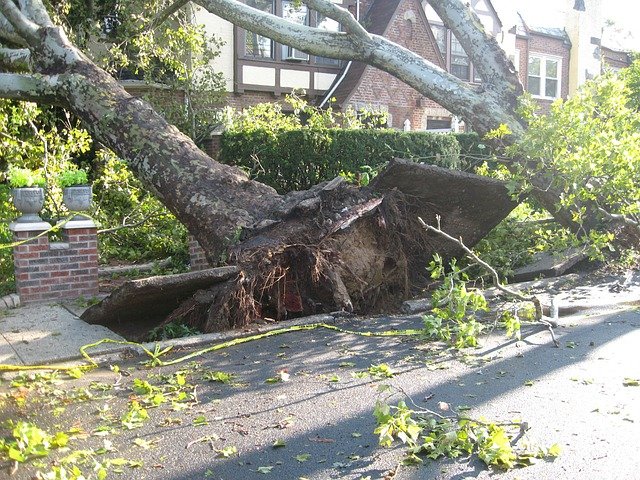
We saw Storm Dudley approaching, due to hit Scotland and the north of England. We were worried for the friends we have in the north, and were worried again when Storm Eunice followed on behind Dudley and was due to hit Scotland and the north again. We were under a yellow warning for high winds, and then an amber warning. We woke up on Friday morning to find that Eunice had drifted south and we were under a red warning – danger to life.

We didn’t go outside much. We have several large trees in and around our garden, and we know that some of the trees next to our land are very large and very dead. The wind came in from the south west, so that the birch tree next to the drive was being blown directly towards the house. We’ve felled trees – we know how heavy live wood can be. That birch is taller than the house, and it would have carved a slice into our bedroom roof if it fell.

We could see the trees thrashing outside. The walnut tree has three trunks from its base and is over a century old, and the three trunks were waving like wheat stalks in the wind. When the wind swung around to the west, we could hope that the birch would just miss us – we’d get a walnut trunk through the front door instead. Nice. Maybe we could use the wood to replace the door.

The storm diminished and swept out to the coast and out to bother the North Sea, and we nipped out to see what the damage was. The wind was still strong and the trees were creaking, so we kept it brief and were ready to run. Twigs and small branches down, but otherwise all was secure. The enormous cedar to the east of the house had spat three small branches into the front garden, but we’d fared better than our neighbour, who had to go out at the peak of the storm to clear a branch from his conifer off the main road. The work we’d done to keep the cedar away from the power cable years ago was worthwhile; even at the worst of the storm, the cable was untouched.

Saturday morning, we did a more thorough patrol. A tree I’d suspected was dead had been uprooted and was propped against a clump of coppiced beech, rocking slightly on its base. A big elm in our neighbour’s garden had fallen away from our shared fence and into his garden. A dead maple on our southern hedge had uprooted itself neatly and fallen squarely into our garden, and a tree we hadn’t even noticed as dying was cracked jaggedly at the base and only held upright by having its branches threaded into a neighbouring tree.

Storm Franklin hit us on Saturday afternoon – another named storm, though it suffered from comparison to its big sister (“60 mph winds! Bah, just breezy!”). While the record gust for Eunice was held by the south coast – 122 mph – the winds here were strong enough to cut power to thousands of homes and bring down centuries-old trees – often right into house roofs or onto cars, and Franklin was the last straw for a few more.

We got off far more lightly than in 2014, when our power was off for five days – we had a solid two hours without power, followed by days of sudden brief cuts, but so far we’ve had electricity most of the time. Luckily. The 28 Plays Later challenge doesn’t allow for technical difficulties like dying computers or power cuts, so if I didn’t submit one play every day by 10am, I’d have failed to complete the top (timed) level of challenge. They are flexible, accepting photos or PDFs of handwritten plays emailed to them, but without mobile coverage or WiFi even that was out. I could have driven a dozen miles to a free WiFi hotspot and emailed off the play, if the roads were clear of trees and not flooded (yup, flood warnings too!)

So far, touch wood, all good. The 28 Plays crew have asked us to write a zarzuela, a libretto, a musical stripped of music, a play inspired by Dolly Parton and a riff on the number two, among other bizarre things. I’m still starting each night with a brief and no ideas at all – I posted on their FaceBook group once that I was coming up blank on tonight’s brief, and the admin replied that at least I had a great title and to start from that. And yes, I did use that title. So far, I have put in a play each day by the deadline of 36 hours after the brief is posted, although during the storms I was up till 4am writing to make sure I could submit before the power went off again. It’s been fun, it’s been like being the ball in a bagatelle machine, and it’s left me with ideas for March and onwards. That’s the whole point.

Tonight’s brief is in, and right now I have no idea what to write. Give me time. Another 35 hours to go before it’s too late.

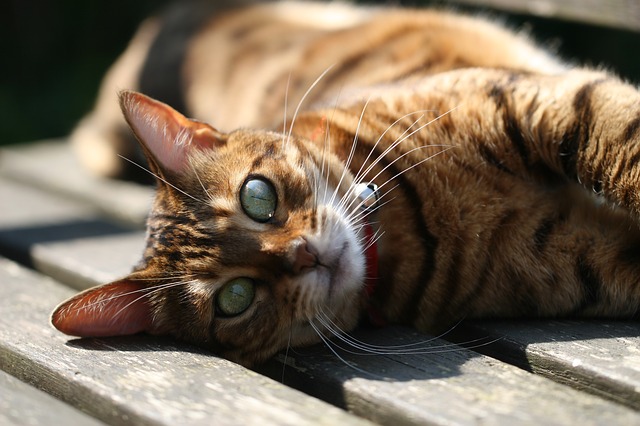
Tigerrrs all the way

Photo by Carola de Poel

I’d forgotten what it was like to be head-down in a Literal Challenge challenge, but I have been Reminded. This is how it goes.

Sign up for it. Some time beforehand, so forget about it, apart from telling your writing mates and letting them laugh and be puzzled. Get the email two days before the start, telling you to submit a test document so that they know you have got the email, will receive each brief as it is issued and can send documents through. Cue flurry of panicked emails from people who did not get the email, forgot to sign up, can’t access the website etc. This time, I got the email first time and sent them a short play I’d written as a test of the formatting.

The big Hello, the Zoom meeting for as many participants as they can squeeze into one room to launch the challenge, and halfway through that, they release the first brief. I missed the launch Zoom, as it clashed with a regular Zoom with friends that I didn’t want to give up. But I got the first brief at 22.00 on January 31st, and I was away. Read it and was away writing. Bear in mind, I have 36 hours to submit, no excuses, and the wind outside was threatening to bring down the power lines.

Wrote the first play… re-read the brief… understood what they were REALLY asking for… wrote them a different short play that actually fit the brief they were asking for and submitted it 25 hours after getting the brief.

Just an hour before I dispatched Play number 1, the brief for Play 2 landed in my inbox. I read the brief and (as always) had no good ideas of what I could write for it. Got an idea that fit their requirements. Then another. Wrote them a play. Re-wrote it. Edit. Submit. Sitting back now for a precious two minutes before Brief Number 3 lands in my inbox, and I have 36 hours to formulate an idea, write, edit, submit. Hoping all the time that the power isn’t cut, I have ideas, I’m not struck down by Covid or laziness or something else…

At 22.00 tonight, I get my orders and tomorrow I’ll be off again, writing, writing. Enjoying it, don’t get me wrong, the briefs are inventive and I’m glad I signed up. But… the pressure. Just, please, no more tigers.

Cambridge Botanic Gardens

Photo by Hans Braxmeier, Pixabay

We’ve had a series of miserable weather days recently – cloudy, grey, frosty mornings, drizzle. We’ve been lethargic, not moved to do anything – having finished the decorating has left us in the middle of a lot of small odd jobs. We’ve snapped ourselves out of it by going out for the day.

Cambridge Botanic Gardens.

It was a good choice, and the weather helped. We headed straight for the Winter Garden – designed to look its best at this time of year. We had blue skies, decent temperatures and there were not many people there, so we had time to wander around without being crowded. The daphne was out in bloom and the scent of it reached us about ten yards from the tree. A single bee floated noisily around the blossoms and away into the blue, and a few birds were singing Spring songs in the trees.

We both love the Winter Garden. He wanted to see the New Zealand section of the Botanic Garden, and I wanted to wander through the glasshouses – a mixture of warm/humid, cool and dry, hot and wet (with a bed of rice growing in that house). Fact of the day – it takes 2,500 litres of water to grow 20kg of rice. 90% of the world’s rice is grown in Asian countries, but I’m told it’s also grown in California, where water’s becoming a scarce resource.

Out of the glasshouses and back into the sunlight. We were both feeling achy by then – hips, back, knees and feet – so we walked slowly through as much of the bamboo groves as we could before heading back to the entrance. The best part of the bamboo walk goes in a circle, where at the midpoint of the path all you can see is bamboo on every side, seven or eight feet tall and hissing in even a slight breeze. Badgers enjoy the bamboo walk, apparently; they’ve dug a set under the path so humans aren’t allowed to walk on that part. I didn’t think badgers could get into the Botanic Gardens, but it seems they can.

Around the lake, down through the avenue of cedars and sequioas, a few minutes sitting by the fountain, back through the Winter Garden and out. Ninety minutes after leaving the gate, we were home.

It’s been a good day. Better yet, it’s jolted us out of the rut of doing odd jobs, sitting wishing the weather would stop being so miserable. We have a list of things we want to do tomorrow, starting with coppicing one of our hazel trees.

The cats were pleased to see us, and I hope they’ll follow us around the garden tomorrow, judging what we’re doing and making mischief. After a day out, it’ll be a pleasure to be at home.

I’m steaming ahead with the reading challenge, too. It’s 36 books, not the 24 I thought were originally set; nine down, 27 to go. I’ve enjoyed some and slogged my way through others – ‘Tom’s Midnight Garden’, ‘The Patchwork Cat’ and ‘All Systems Red’ were fun, while the cosy crime book recommended by another member of the group left me furious at the lazy plotting and the facile division between Good People and Nasty People.

From Monday onwards, I’m back in the grip of The Literal Challenge, joining a few hundred people as daft as me trying to write 28 plays in 28 days. So I’m clearing up before I spend all of February writing – tidying up the memoir for the Globe Soup Memoir Challenge that had me exploring my home town more thoroughly than I expected and setting up a stage play template. I’m looking forward to February, though the game of wondering where the year’s gone has started already.

Tree pruning… part 1 of 100

Part of the orchard in the community wood

I got persuaded to take part in a tree pruning course in the community wood last Sunday. It was chilly and threatening to rain, so I could have happily stayed home, but out I went. I’m glad I did. The course tutor, Dr Anna Baldwin, had a great teaching manner; enthusiastic, knowledgeable, took questions as a priority. She rated our little orchard as a seven out of ten – considering it’s been sporadically looked after by volunteers, that’s not a bad score.

The orchard was the result of people asking the wood’s donor what he wanted for his 90th birthday. He told people not to buy a present for him, but to buy a fruit tree for the wood. He died five years later, but his presence lives on in the wood and the trees, and in our memory of him. I still remember reading the interview with him when his house was flooded. “The river runs deeper when it rains,” he’d said. “I can’t stop that, so I tiled the ground floor of the house, because carpet just gets ruined. I put the furniture up on bricks, open the front door and the back door and let the river flow through the house until the river subsides.”

The trees he asked to be planted are going strong a decade later, though they need some serious work. Some of the quince trees are sprouting pear shoots from the base, the muntjac are eating the apple tree bark and all of the trees are in serious need of pruning. We formed three pairs, each pair taking on a tree. First, twenty minutes walk around to consider the shape and any problems we could see. Then cutting, standing back, reconsidering and cutting again. We were told to aim for taking off 20% of the branches each year, and to make a separate pile of cuttings for each tree to make it clear how much we’d cut. Good idea, as it soon adds up. And before anyone says the whole tree will be shaved to a stump within five years, the tree responds to a cut by growing even more shoots.

By the end of the day, we’d pruned eight trees and had an idea of how much we had yet to do. For a start, they have the same problem as us – most of the labels have either dropped off or are bleached blank. In winter, that means that we’re relying on bark and growth characteristics. Pity the pair who pruned a tree to perfection, only to find they’d pruned a plum tree. Hard-stone fruit like plum should be pruned between mid-summer and early autumn. Whoops.

Two of us went back to the orchard yesterday to finish the job of cutting all the tree ties off before they strangled the trees. We put as much protective mesh around the trunks as we had mesh for, to save them from the deer. By the end of the year, I hope we can map the orchard, identify the trees (even just as “apple”, “pear” and “plum” if not the cultivar) and get some idea of how much pruning we want to do. And whatever we intend to do in the community wood, I need to tackle our own trees just as much. The one small comfort I have is that Dr Baldwin tells me that cider apple trees do not need pruning. That’s a third of the orchard done, then.

It’s been fun to work with a team again, and this time I’m working with a team that’s turned up because each person’s keen on the task rather than paid by the hour. This is a task that won’t finish for as long as the wood remains in community trust; these trees will (I hope) outlive me by a century.

Of apples and pears

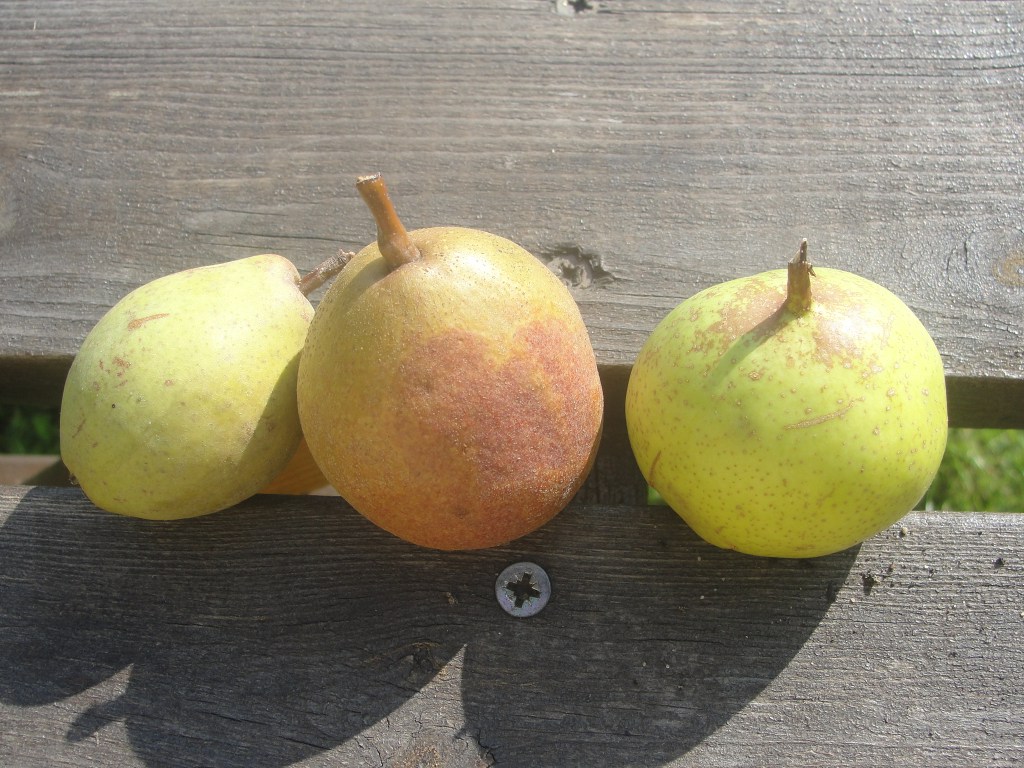
Perry pears. One bite and your mouth’s dry all day.

Haven’t posted for nearly two weeks. It would have been dull. For most of that time, we have been watching paint dry. Still painting the living room – and of course, filling in the cracks and the gaps between skirting board and wall, sanding down the filler, covering the elegant green blobs on the nice white ceiling, fixing the curtain pole that has repeatedly applied for a divorce from the wall…

We took down the Christmas decorations on January 5th like good people, and went out to wassail the apple trees. It’s an old ritual, with various formulae around the country, but the basics are the same. Make a loud noise to scare off evil spirits, choose an apple tree in the orchard, politely entreat the tree and all its colleagues nearby to provide a good harvest next year, pour cider around its roots and put toasted bread into its branches.

We went to an organised wassail some years ago. The loud noise was a shotgun blasted up into the air (away from all buildings or attendees), each person hung a square of toast in the branches and the head wassailer poured a generous dollop of last year’s cider in a circle around its roots (and then the rest of the gallon into a wooden bowl). His address to the tree was as follows;

“Old apple tree, we wassail thee, and hope that you will bear… Hatfuls and capfuls, three bushel bagfuls, and a little heap under the stairs!”

It was everyone’s job to pass the bowl around and help to empty it. It’s the kind of ceremony that wouldn’t have been open to the public over the last year or two, but we have kept up the tradition ourselves. Last year, I skipped the poem and gave the trees the kind of ‘Pull yourselves together’ talk that would have sent my staff running to their union rep in tears. The apple trees let us know they were offended – for the third year running, we had a poor harvest and the few apples that did ripen disappeared over a few days. Birds, we think. This year, it was a frosty evening and we chose a tree that hadn’t had our attention recently and gave it the wassail poem and patted its trunk before running back to the comfort of the stove.

It won’t end there. We will trim the branches and clear the grass from the roots, spray the leaves if we have another attack of whatever tiny pest has eaten the leaves of the nearby maple to lace over the last three years. We don’t usually spray pesticides, but even a good dose of soapy water might do the trick; it’ll be worth spraying half the trees with soap, two with pesticide and leave the rest to judge the effects.

We’ve been enjoying our cider and perry this winter, and we’re keen to pick up where we left off two years ago. Our perry pear trees are starting to produce crops of pears, and the cider trees we planted a decade ago were doing well until recently.

The propagator is set up, with pots of seed compost. Plugged in and warming up. It’s set to be frosty again tonight and the thought of planting the first pepper seeds tomorrow is a comfort. However bad the previous year’s harvest, I never stop hoping that this year we’ll be picking our own peppers and courgettes and aubergines. The first step is taken tomorrow, when I plant seeds with names like ‘Yellow Monster’, ‘King of the North’ and ‘Wicked Witch’.

Monster and King are from the Real Seeds Company. Their seeds come from heritage plants, bred by amateur or professional gardeners or handed down by grandparents from plants that have succeeded in their gardens. They have varieties like True Siberian and Sutherland kale (bred to withstand snow and ice), Asturian Tree Cabbage (grows to about six foot tall with kale at its top) and Cherokee Trail of Tears, a black bean said to have been taken across America by the Cherokees evicted from their native lands. They all have stories attached.

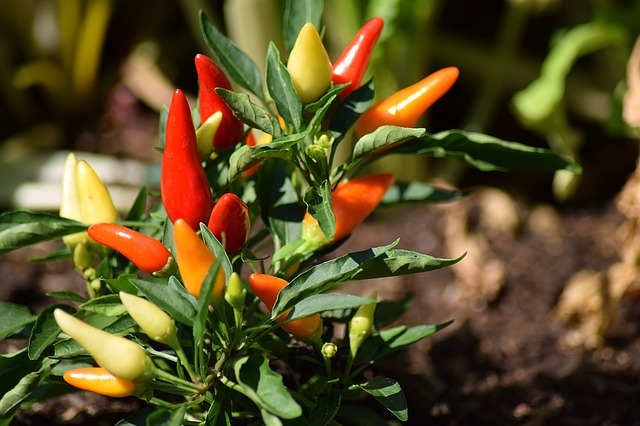
The Wicked Witch chillies also have a story, though they aren’t from the Real Seeds catalogue. There used to be a farmers’ market every month in a nearby village hall. The last time we attended, there was a plant stall, and the stallholder had some small chilli plants labelled ‘Wicked Witch’. I bought two of them, and asked about the name. Apparently, they grew on the plot next to theirs in the allotments, and the plot owner offered them a plant. A week later, they had obviously done something offensive – they never discovered what – and the plot owner was not just not speaking to them, she was rude, insulting, and possibly behind some of the sabotage inflicted on their plants. Other plot owners shrugged and said she’d always been eccentric.

“So we named her chilli plants after her,” the stallholder finished. “She was the Wicked Old Witch ever after.”

The markets ceased soon after, but we enjoyed the chillies and saved the seeds. Every year we grow a couple of Wicked Witches and save seeds, and are grateful that we have our own land and fences to keep out the witches of horticulture from putting the Spell of the Boot on our tiny plants.

Here’s to Spring.

Photo by Hans Linde, Pixabay

Happy Start to a New Year

Max is seventeen today. No, we haven’t put him on the local electoral roll.

Between wishing a Happy New Year to our lovely neighbours, enjoying the fireworks and staying up to finish our glasses of fizz, we got to bed – very early this morning. And woke late. But we did get outside, on a sunny and warm day that has outclassed every day since October 2021 began.

Max came out with us. He likes to stick with us, either because he finds us interesting or perhaps from some lion instinct to protect his herd, so when we’re out, he’s out. He even went for a run, tail straight up and yowling the cat equivalent of “Wheeeeeee!”

He’s seventeen today, according to his paperwork. That’s roughly equivalent to 84 in human terms, and if your 84 year old grandfather went out for a run on New Year’s Day you’d be entitled to call the local paper and get him the front page slot. He’s still healthy and seems content, still goes off in a dream and likes nothing better than sleeping on a human.

He’s also a good influence on our nervous young tortie. She was asleep on the cushion next to me and jumped off in a fright when I leaned forward – then came back, looked at Max still fast asleep and doing the complete opposite of panicking, and she decided that if he wasn’t worried, she wasn’t worried. She’s now back in her place, asleep and less inclined to budge when I move.

I submitted a short-short story to a podcast magazine last night, more as an exercise than anything. You can go out for a run without intending to stun the world at the next summer Olympics, and I count it as an achievement to send off a piece, without expecting the recipient to accept it.

2022 has started out well, then. Work in the garden, Max running around like an over-excited kitten in the sunshine and an evening spent watching rugby with cats asleep around us. I don’t bother with resolutions these days, as they never survived the first week of the year, but I have taken up three challenges – to write horror, to read 24 books fitting random categories chosen by a group to make us ‘Try something new’ and to spend February writing a stage play every 24 hours with The Literal Challenge.

Set small goals, enjoy time outside and adopt an elderly cat. They are inspiring. Happy birthday, Max.

Best Wishes for 2022

Photo by Gerd Altmann, Pixabay. Because after years of trying, I still haven’t got the hang of firework photos.

I found a card last month that said; “2021. A great year. Unless you wanted to go anywhere, do anything, or meet anyone.” I sent it to a friend who needed a laugh. But looking back on 2021 earlier today, we were pleased at what we’ve achieved in the year. Rosebeds, repaired compost heap structure, woodshed put up and filled, the kitchen finished and the floor in the living room finally laid down, and a work of art it is too. Wonderful underfoot and a work of art.

We are looking forward to 2022. Less than two hours to wait, though we won’t be tackling any large projects at midnight. We do have Plans, though. Finishing the repair on the compost heap structure. Anyone having a good laugh at how long it takes can consider that a two-bay structure measuring 2.4 meters deep by 4.8 metres long by 1.8 metres tall – getting the right angles right and putting a shuttering mechanism on the front face to hold back the grass when it is piled nearly two metres high – is a bit of an engineering challenge. The first bay went well. Now we have to repair the second bay to match it, but the hard part is done.

The rainy weather recently has been a good time to hide indoors and write. I submitted my Globe Soup flash fiction entry two days ago, sent off a weird fiction for a fantasy magazine yesterday and I’m currently shaving words for a flash fiction to a podcast magazine. From 1,200 words down to 800. No pressure, eh. But then again, no deadline for this one – the other two expire at midnight tonight, like 2021 does.

It was a kind day today, weatherwise. Sunny, largely dry and very warm. He repaired a broken panel on my car (at 17 years old, a cable-tied panel and a splash of nearly-matching touchup paint is good enough – it’s the sheer oomph under the bonnet that keeps me patching up this ancient speed queen). I cleared away some of the brambles in the planned fruit patch and leftover bean stalks on the veg plot, and pulled away the fleece that’s been protecting the over-wintering onions from frost. It was 15 degrees Centigrade at best, 11 degrees right now, and we were sweating in T-shirts today.

It’s been good to get outside today. We’ve forgotten how happy it makes us to work in decent weather. It’s been raining most of every day for several days, and we’ve found indoor jobs to do, like painting, writing and watching the excellent Royal Institution Christmas Lectures, a better explanation of virus control than was ever presented for adults in the daily briefings. My respect for Jonathon Van Tam has gone up immensely – those tortured football analogies were worse than having my tooth drilled, but hey, we’re rugby fans.

The shortest day’s over and we are telling each other we’re noticing the sunset getting later (what a lovely fiction), and I will be planting up the first seeds of 2022 in a fortnight. That’s the start of the year, for me, and I cannot wait.

Happy New Year to everyone reading this. Give yourselves something to look forward to and make it happen.

You know it’s all over when…

Boxing Day supper. Christmas colours, but not really traditional

We play a word game along the lines of “You know it’s all over when…” While I was working, Christmas was all over when I went back to work, which would have been the day after Boxing Day (having packed up early on the afternoon of Christmas Eve). Having given up work (or on those years when I got the lucky ticket and could take time off around the big day), Christmas was all over when we considered what we wanted to drink and came up with a mug of tea instead of dipping into the ocean of alcohol. Tonight, he had his preferred Boxing Day meal of cold turkey and ham with mashed potato and pickles – being vegetarian, I had the green and red salad above (that’s half of it… I was halfway down before it occurred to me to take a photo).

We have kept up our tradition of a game of Scrabble after a meal, and it’s currently one game all with some new words appearing (‘nazes’ was my favourite, and the definition wasn’t what I guessed it to be – ‘oe’ is one I have never heard before, but am very grateful it exists).

As soon as it stops raining, we need to clear the gutters, ready for the next downpour, and the cat is snuffling and looking sorry for herself, so the vet is on the list. Christmas 2021 is going down in memory. New Year still looms, and Twelfth Night with the wassail of our lazy cider apple trees – plus the gift I had from La Befana, courtesy of a friend (thank you!). And a week or ten days after Twelfth Night… I will set up the propagators, plant some chili and sweet pepper seeds and the 2022 growing year will be under way.

The trick is to always have something to look forward to, and whatever 2022 brings, I think we have plenty in store to enjoy.