Didn’t It Rain

Image by Yuri_B, Pixabay

The weather forecast for our area continues to promise temperatures above the average for autumn with the chance of an odd shower, and the skies are still emptying their bladders on our roof for hours at a time. It’s been raining on and off all day, and is still raining hard now. Appropriate, then, that I’ve spent the afternoon writing the latest in the Scriptly challenge series; this time, a script based on Hugh Laurie’s version of Didn’t It Rain. Trying to find some way of setting a script to Morecambe & Wise’s ‘Bring Me Sunshine’ in the thin hope that I can write us some good weather.

Today’s Scriptly brief has asked for something very twisty and original, and I admit to brain-fade. Maybe because I wrote a couple of scripts in ragged poetry, then a long and dark version of a prose story I wrote earlier this year into one script, and launched straight into a screenplay that was essentially set to music. Right now, I’m not capable of surreal and twisty. I might write them something obvious and simple – maybe a short script for very small children about a dog called Spot who has a big red ball to play with, and hope that none of their parents are veterinary surgeons with dirty minds.

In other worries, our escape artist tortie cat can tell the time. We have a curfew catflap that locks at a given time and unlocks at a given time. We like to shut them in at dusk and let them out around dawn to give the local wildlife a fighting chance, but Genie seems to know. She runs downstairs five minutes before the flap unlocks and is outside as soon as it does; she demands food fifteen minutes before the flap locks for the evening, won’t wait for any delaying tactics and is outside ten minutes before the flap locks shut for the night. So we shifted the time back by half an hour. Abracadabra – Genie wanted her food fifteen minutes before the new time. Shifted the lock time back by an hour… you guessed it. She scooted outside with ten minutes to spare and sauntered back soaking wet and skittery at half past ten. Full moon soon, and I think the little hunter is under its spell already.

Time I returned to the Scriptly struggle – ten down, four to go.

Scriptly Gets Inventive

We have been asked by the organisers of the Scriptly Challenge not to share details of the challenge on any blogs we write – to leave the exact wording of the brief vague. So I haven’t been giving the brief word for word, but it’s hard not to share the main detail. We’ve been asked to write around specific settings, to write a very short but still complete script (‘Waiting for Godot’ would be far too long…) and to write a short musical. Tonight’s brief is based around poetry. This challenge is starting to feel like being slung around in a bagatelle machine, but so far I’ve submitted a script on time.

Tonight’s brief feels tougher. First I have to find the kind of poetry the Scriptly folk are referring to and read it. Then, love it or hate it, I have to write them a script based on it. If I get all the way through this and submit all fourteen scripts on time, I’ll feel I have really achieved something. It’s been great at training me to form an idea, get stuck in and write.

I am really not sure I’m capable of their February challenge, though. Known as 28 Plays Later, it involves the same format but twice as tough – every day in February, a brief and a deadline to submit all 28 plays. Playwright Bootcamp, or what.

I’ve got how long, again?

Such a lovely day, and we spoilt it all by setting off our bonfire. We did make sure the wind was north-westerly, which means that the smoke went off in a south-easterly direction – next nearest neighbour to the south east is about a mile away, and the smoke is light, pale and dispersed long before it gets there.

We spent the day worried about our tortie cat, the sister of the black cat who was killed on the road in January. She didn’t come in for breakfast, as normal – didn’t come back for her afternoon food – strolled in full of pep and probably takeaway rodent at 8pm, and is now locked in for 24 hours.

And I wrote the next brief for Scriptly. What the… I am asked to pack in dance, music, humour, script… within a fifteen second limit? Bring back the horror brief, I say. Actually, no. I got something written and submitted (that will offend EVERYBODY if it’s ever filmed) and now they have asked us for… oh, get real. Seriously. Even horror and chicklit is better than this.

Take me to the beach

The weather is still forecast to turn colder soon, and I’m giving up hope for a late summer. It’s been annoying, hearing the national newscasters giving us advice on how to stay cool in this heatwave, week after week, while we huddle down in fleeces and hope it’ll stop raining before the house floats away. We’ve had perhaps twelve or fifteen hot sunny days this year in East Anglia, and can’t easily book a sneaky week somewhere hot without worrying that the rules will change before we land.

We made the most of this reasonably warm day. We went out to the beach. Two beaches. The first, we’d never been to; the second, we visited once, over thirty years ago.

First off, Walberswick. We parked up in an almost empty car park and went for a long trudge along the beach. An excellent beach it was, too. Soft, clean, pale sand and long stretches of deep, loose, large pebbles, the kind it’s difficult to walk through but really satisfying – loud and crunchy. When we reached the ferry, we’d reached the end of the world as far as Walberswick was concerned – muddy banks, a narrow river and the ass-end of Southwold on the other side. The ferry was a simple boat large enough for a dozen people and a man rowing it. It would have taken him less than five minutes to reach the other side, and it did look like fun.

Maybe we missed something – or maybe Walberswick is tiny. Two tea-shops, two pubs, two gift shops and a village hall – plus, some of the smallest cottages I’ve ever seen on the Suffolk coast. Definitely not tourist central, though from the quay we could see Southwold’s water-tower and lighthouse across the river, about a mile away and I’d imagine their streets are still busy.

The best part about Walberswick is the people. Complete strangers passing us said good afternoon, smiled, laughed at our jokes about their dogs thinking of following us home. We felt at home, and who knows, we do have a lottery ticket running so we might be able to afford one of those two-room cottages next week. Walberswick is a relaxing place to be.

Next stop – Dunwich. We came here in the mid-80’s with the bike club, and it hasn’t changed at all. We could still see Southwold’s lighthouse flashing every nine seconds or so, and a red boat on the shingly beach that seems to appear in every postcard and photo of the beach over the last decade. The chip shop had closed, so – definitely a repeat visit.

Home, getting caught in the rush hour and very glad not to be slogging home in it every night.

Home to struggle with the Scriptly commission. Horror. Not my thing. The piece I’ve written isn’t really horror, but if they wanted true horror they should have asked Stephen King. If I thought the horror was over… I do not even understand the brief for Day Five’s script, so they are about to get Gar Bij from me.

He loves us… he loves us not.

Max was not impressed

Up early to take Max for his annual MOT and booster jabs. There’s been talk of animal vaccination supplies – especially cat vaccinations – suffering a shortfall. Priority is being given to first-time vaccinations, so some adult cats are having their boosters cancelled. I think Max would have preferred that. Instead he got taken into the surgery and checked.

He’s lost weight since last October, apparently, but that’s understandable. Losing his last cat ‘brother’, and being kept in a pen while his owner was on the edge of hospital or care home and then waiting to see whether her family would adopt him… he’s a sociable lad, and he must have been very lonely and stressed. On the other hand, he is running around more now and that’s a great way to keep the podge down. I should, I know, I should.

Back home, he sat near us for an hour or so, not quite sitting close and cuddly, then curled up on his favourite cushion and shut himself down for a long snooze. He’s forgiven us now and is sitting on my husband’s lap, bolt upright, thinking senior cat thoughts.

On the writing front – still ploughing through the screenwriting challenge. The third day’s challenge was a peculiar one, and my mind went blank of ideas. I put in something, so I’m still on track to complete the challenge. The Literal Challenge people who set these briefs did promise an easier challenge for Day 4. Easier. It arrived in my inbox at 22.00 hours as usual and… the genre is horror. I’ve changed my mind about my worst-ever genre. Give me chicklit, give me romcom, but pleeease, not horror.

Photo by Jplenio, Pixabay

Letting Go

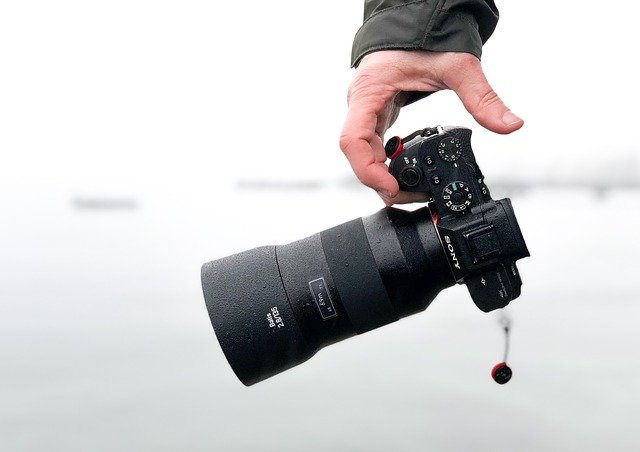
Photo by Qamera, Pixabay

My father had several jobs during his life – dairyman’s assistant, window-cleaner (stop laughing) and accounts clerk for the King George docks – but he was briefly a professional photographer. He worked in the docks during the day, took photos and wrote articles for the docks’ magazine PolaNews and took photos for weddings on Saturdays. After he died, I found the hire purchase agreement he signed for his camera equipment in 1963, and the contract that PolaNews offered him to provide words and photographs for their articles. The money he earned was the same as the money he paid for his camera, light-meter, tripod and flash gun.

My father-in-law was also a keen photographer. My mother in law said that he would have liked me to have his cameras and equipment, as I’d showed more interest than his own children. So I inherited a lot of top quality 20th century cameras from two keen photographers. Plus, Dad bought me a tiny Rollei for my eighteenth birthday and I bought myself a second-hand Olympus as soon as I started work. Rent be damned, I’d been brought up taking photos and I knew what I wanted.

Today, we took most of those cameras to a charity shop. It was a hard decision, and I almost held onto them before passing them over – it felt as if I was letting go of those two keen photographers themselves. But those cameras have been gathering dust in our attic, my father in law’s for twenty years and my father’s for two years. This charity shop – St Helena’s Hospice – asks a techie minded volunteer to look the cameras over and get them working well, then sells them on to photography students, who are still asked to train with those old cameras. I had to tell myself that Dad and Terry would prefer to have their cameras being toted around taking photos than being dusted and looked at every year or so. It was still a hard decision, but – I haven’t used my old Olympus reflex camera for years, haven’t seen rolls of film for sale anywhere recently and have boxes of printed photos that are as dusty as the cameras. Whereas my digital shots get used as screensavers, emails, headers for blog posts (I didn’t take the shot above, incidentally… bad me… thank you to Qamera, who did).

It was a hard day. The cameras joined a dozen others waiting for new owners and we drove away feeling lighter and guilty and hopeful. The Rollei B and my old Olympus are still with me, but in our new ‘clear it out’ mood, who knows how long for.

Dad let me choose the camera for my eighteenth birthday present, and we agreed on the Rollei B. He’d told me about the times when he’d visited the restricted sections in the docks, no recording equipment allowed, and had handed over his Olympus to the security guards to prove that he wouldn’t take photos. “The Rollei fitted into my jacket pocket,” he explained. “If they saw me hand over the big camera, they never suspected I had a little camera that I kept. I always looked surprised when the photos of banned areas appeared in the PolaNews, and the magazine never let on where they’d got the photos from. The guards were cross, but as I told them, ‘You had my camera in your hut while I was in there… Couldn’t have been me…’ “

So the cameras and bags and lenses and filters have gone, but I still have that drive to take photos. Some things you never let go of, and photography is a great inheritance.

With all the excitement, the second Scriptly brief got pushed to one side, but I did get around to writing it. Be surreal, they said. Not sure my idea was surreal enough, but today’s script was about a hotel stay that was definitely not of this world. It’s been fun so far; two down, twelve to go and the third brief is looking like I might end up skipping one.

Photo by Sue Rickhuss, Pixabay

With a Little Help…

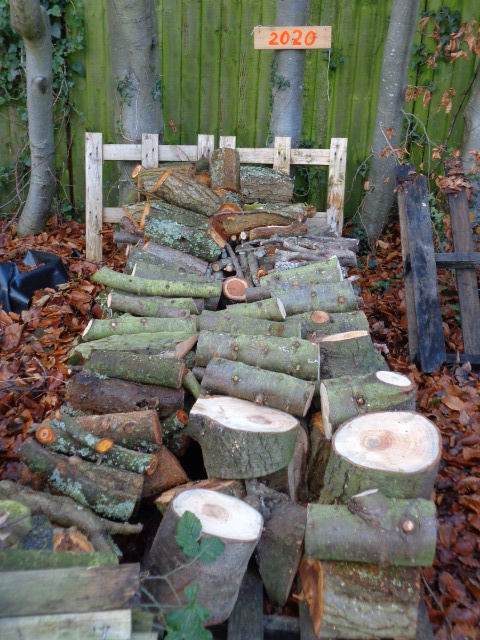
Wood cut in 2020 – needs to be dried out for at least three years before burning in the stove.

As I write this, the wood in the photo above is sitting in the 2020 bay of our new woodshed. We got started on stacking the wood this weekend, with a little help from our friends, and finished stacking all of our cut wood this afternoon. It’s surprising, seeing how much wood we’ve cut over the last four years.

The 2020 pile is the biggest, and the 2018 pile is so far the smallest, as I raided it for warmth when the heating kept packing up in winter 2020 while my husband was recovering from his second major operation in the space of four weeks, huddled up in bed and feeling cold and unwell. Not a problem, as we still have the largest chunks of the century old walnut tree to be cut into stove-sized chunks.

The whole stacking project has been a personal history lesson. The 2018 wood came from our huge cedar tree – a large branch fell off in January 2018 under the weight of the snow, and we called in a tree surgeon to thin the tree. He took out a large dead tree overlooking the road at the same time, and found that the trunk was 1) hollow and 2) full of stinking water. There’s also three chunks of the dead fir tree we felled for my father just hours before he took his last fall and broke his hip. The 2019 wood was greengage and pear. The 2020 crop was the lightning-struck cedar that was brought down by a storm in December 2019 while we were both too ill to deal with it. The 2021 pile is bigger than we realised – so far, comprising a half-dead greengage and a plum tree, it’s not finished yet. Any one of the trees we need to fetch down next will fill an entire bay.

The woodshed is now full of drying wood, and we’ve been relaxing. Not quite relaxing. I signed up for a fourteen day script writing challenge that turned out to be TV or film scripts rather than the theatre / radio scripts I prefer, and was up till silly o’clock writing the first script a fairly gruesome story about a wife getting free of her domineering husband in a pretty nasty way (no, she didn’t stab him). The second prompt has arrived now, and I’m still thinking grim ideas, so I think the Scriptly folk will be hesitant to open my files by the end of the fortnight.

Ready for winter

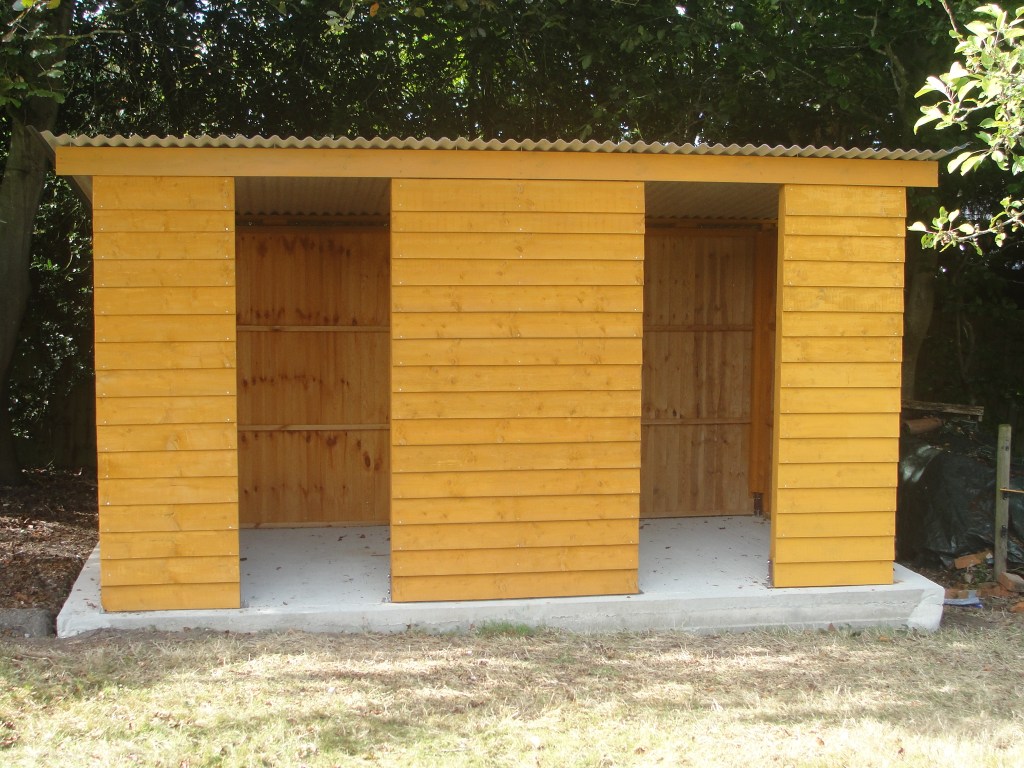
After all the designing and re-designing and searching for the materials and cussing and working… we have a woodshed. Anyone who thinks it’s too large needs to think that we have to have a roof over it, and a roof high enough off the floor that we don’t have to crouch when we go inside – and the roof does have to slope, to let the rain roll off.

The wood from previous years is waiting under cover – old tarpaulin, bits of plastic, scraps of pond liner – to be moved in. We’ll be painting the outside of the shed tomorrow, as we have rain forecast and we want to take the chance of decent weather to get the wood weather-proofed. We’ve had a cold, damp, miserable August and the few good days recently have been a late reprieve before the weather can justifiably turn to cold and wet again. A cloudburst dumping six weeks’ worth of rain in two hours earlier this week was a fair warning of what’s to come.

The logs cut in 2020, not to be burnt until at least 2023

Ironic, really, that we’ve been working on storing dead trees while I’ve been writing flash fiction on the subject of trees for the Planet Shaftesbury Tree Festival. I didn’t realise there was such a festival, but it looks like fun – we could even have planned to go to it if we’d known.

We got another job done today as well. Finally, we have finished filling the raised beds with compost and today we planted the last of the roses in it. These are the surviving rose cuttings from my late father’s garden, and it’s an interesting mix. From about 180 cuttings, we have 50 survivors, and about a third are from the spindly Margaret Merrill rose he had; the sturdy Papa Meilland yielded two rose bushes from the twenty or so cuttings I took from it. The Peace rose cuttings all died. My eldest brother has one of the Papa Meillands – my other brother wanted a Peace rose, but I’m pretty sure he’ll be disappointed. A neighbour who helped Dad with his hedge was given a white rose bush grown from a cutting, from the rose that he’d admired, and no-one else wanted any. So I have two raised beds full of roses in various colours to remind me of my dad.

We took cuttings all summer and into autumn of both years of trying to sell my father’s house, seeing that the Blue Moon and Margaret Merrill roses rooted like chickweed and turned into small rose bushes but the Papa Meillands and Peace cuttings died every time. By the time we found a buyer who was willing to make an offer and honour it right to the last minute, we realised that any buyer would uproot all the roses in the back garden to extend the tiny kitchen and uproot all the roses in the front garden to pave it over for car parking spaces. The Papa Meilland Dad was so proud of was nearly forty years old, nine feet tall and had thorns as big as cats’ claws, so I didn’t try to dig it up for my own safety – plus, I didn’t think it would survive. I did manage to uproot six others, smaller and less ferocious. Two died; my younger brother has two of the survivors (a Harry Wheatcroft and an unidentified pink rose) and I have the last two (an orange rose that I think is a Whiskey Mac, and a younger Papa Meilland). Seeing them stretch their branches, I wish I had asked the new owner if he intended to remove the others, and would he mind if I dug them up before he took over the place. Moral of the story is – if you have plants that have meaning for you beyond their financial worth, be cheeky and ask if you can keep them. The roses we have now were worth the effort, and I’m looking forward to seeing them bloom next summer.

Photo by Lapping, Pixabay

Walking with Llamas

Choosing a llama

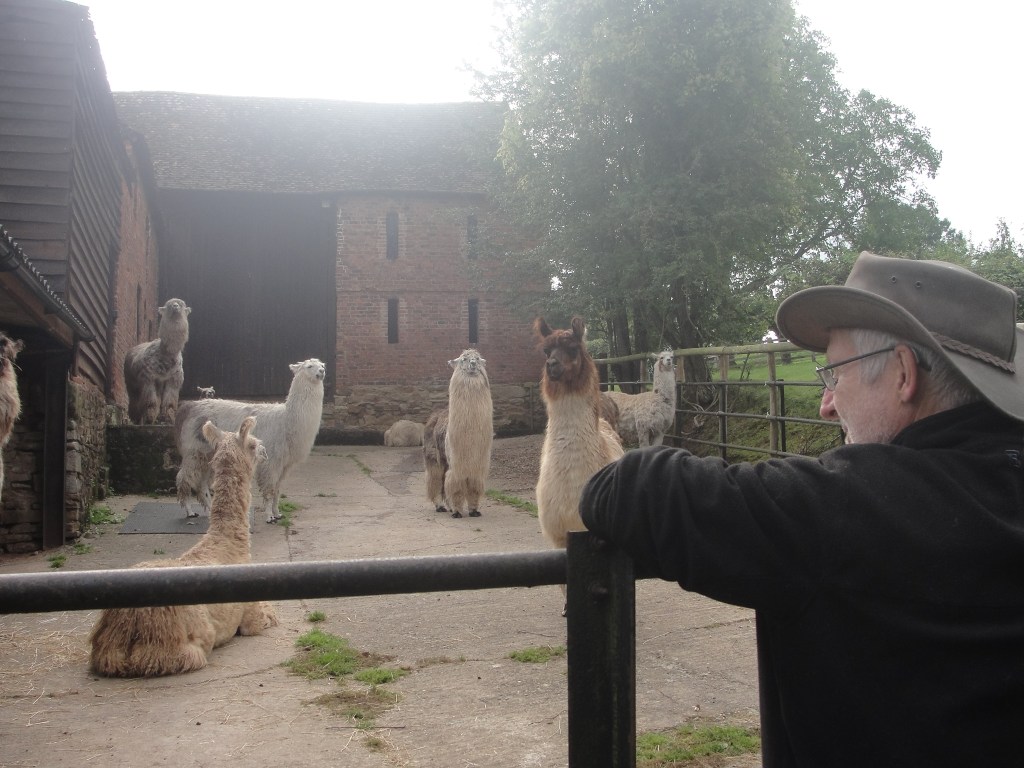
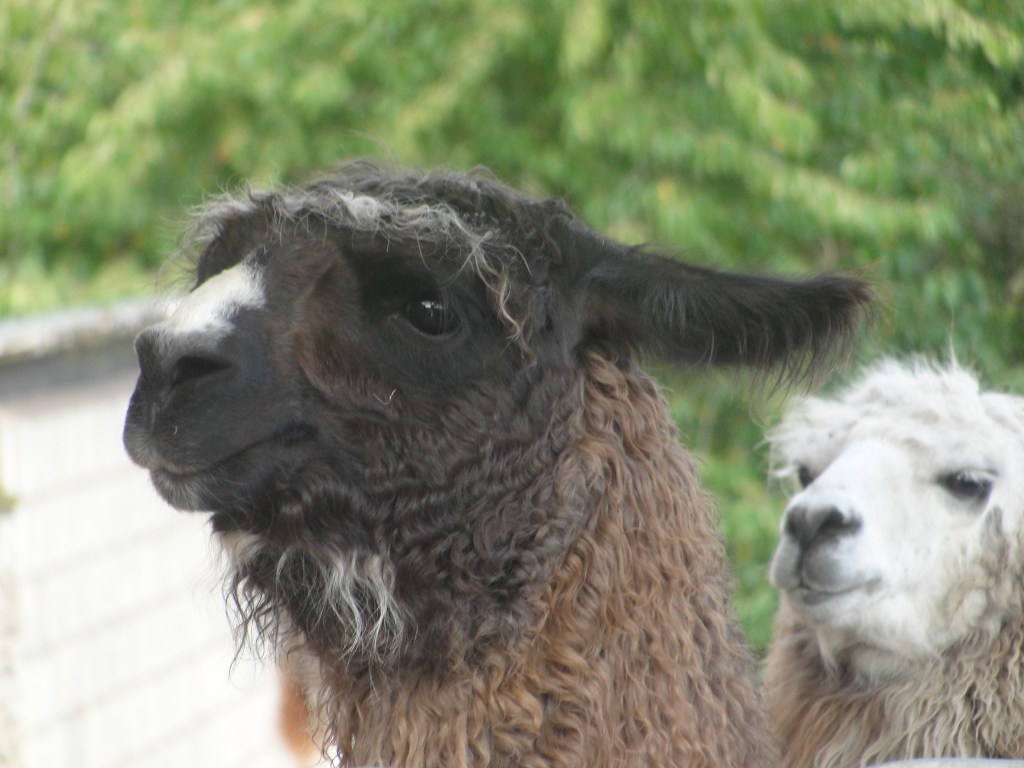
Well. After three cancellations due to Covid and really wet weather, we finally got the chance to walk with llamas at Briery Hill Farm Llamas. It was – surreal. We were taken to the male llamas’ pen and every hairy head turned our way. We were introduced to each llama and their main personality – Freddie was tripping over his feet to say Hi, and Pick me! while Machiatto was plotting to tow the unwary up the hill and Rossi was wondering why these unworthy little bipeds were invading His Territory,

It was my (delayed) birthday treat, so I was given Rossi, and I’m not sure whether he was named after the MotoGP legend or the Italian gelato magnate, but he was regal. He disdained any attempt to groom him or pet him as if I were some tiresome fan, and if he wanted to stop and eat clover… he would stop and eat clover. And leaves. And grass. But like any king, he owned the superior look, and he was just gorgeous to walk with.

My husband got Troy, a sweet little white llama that leaned into the grooming brush and allowed a human arm around his neck. We were introduced to the llamas, offered a choice of which to walk with and given advice on the best way to walk with them that wouldn’t upset them (not in front of their eyeline, and on their left side). Lisa put a halter on each, gently and respectfully, let us brush them to get used to them and then led us all across the lawn (stopping to eat grass), through the orchard (stopping to eat leaves) and up the hill (stopping to eat clover, grass, and yes, to pee at great length). Can I say that the humans just walked – it was the llamas grabbing green mouthfuls and peeing for a whole five minutes while the rest of us waited, sniggering.

Our friends had walked llamas before and knew the drill. With Lisa’s advice, we understood how to control them and when to let them grab a snack or trot a little slower. Llamas are open-grassland creatures, always alert for predators, and don’t like walking in the woods. We had a brief trot through the woods and Rossi was definitely subdued until he spotted the grasslands ahead – then I was trotting to keep up with him.

The highlight was the little hill. One at a time, we led our llamas to the foot-high hump in the ground and they trotted to the top and stopped to pose for a photo. Troy almost leaned into my husband’s head for a ‘matey’ shot. Rossi marched to the top of the hill and POSED. I was left to stand with my head almost a metre below his, looking up and admiring his sheer magnificence. His ears arched inwards like horns, he turned his head and looked aloof. And handsome.

I gave him a pat on the neck as we walked back to the pen, and Rossi turned his neck away as if he was just so dreadfully tired of all this worship. Despite his professional weariness, it was a great experience – no, because he wasn’t a fawning Labrador of a creature, just a wild mammal with opinions of his own, it was a truly great experience. I was sorry to leave him to his pen. He was just politely horrified that he wasn’t given his treats immediately on returning from his walk.

I was a little apprehensive about the walk, but it was just great. The llamas were their own beasts, they would stop to eat when they liked and we could lump it, matey… but they were smart and handsome and full of character and it was a pleasure to see them snatching their clover treats. They were strong but gentle and compliant to a gentle tug on the halter when they were too far behind the pack and needed to be encouraged to walk on.

We sat at our cream teas afterwards, looking down to the lake and hearing the next clients choose their llamas. The cream tea was wonderful – soft scones with crusty tops, loads of cream and jam and strawberries, I was tempted to sneak over and tell the next clients to ask for Rossi, the King of the Hill, but I thought I’d let them choose for themselves.

Rossi – the llama, that is.

Not quite Chicklit

Photo by Christel Sagniez, Pixabay

I almost didn’t finish the story for the Globe Soup competition, but I don’t like being defeated by a writing challenge. The request was for a story with the theme “Knowledge is Power”, word limit 2,000 words, and I was put into the group asked to write in the genre Chicklit. I hate the term, and the most famous chicklit novel (Bridget Jones’ Diary) was centred around a woman who was silly and yet somehow a successful journalist. Probably not so far-fetched an idea, given some of the half-researched pieces of journalism I’ve read over the last three or four years.

Well, I did finish it, five hours before the deadline, and sent it in. Not brilliant, not going to be winning the prize, but it was in the definition of chicklit, and the storyline was along the theme of Knowledge is Power. Some people enjoy crosswords, some knit scarves and jumpers… I write stories. It keeps me out of trouble. I even managed to make the heroine very ordinary, sensible and dull.

We have also made progress with the woodshed. Most of the walling is up (okay, we cheated, we used fencing panels for the rear and side walls – the quickest and cheapest option), and it’s had its first test – it rained hard here on Tuesday, meaning that we couldn’t finish it, but we did go back to check on how well it stood up to the rain. We shouldn’t have been surprised, but it was dry inside. Two or three hours’ work will finish off the front walling, then we can put the wood from the last three years in it and call it done.

It looks huge, but trust me, one of our dead trees will almost fill one of those bays completely. Waiting for the next free day to finish it up and start lugging wood.