The Hay Wain, 200 years on

We went to Colchester Castle on Saturday to see a play based around Constable’s painting ‘The Hay Wain’, which is 200 years old this year. The play imagined the lives of the farmworkers who would have been depicted in Constable’s painting as the people sitting on the wain, and as little white dots in the fields in the distance.

The play was delayed for fifteen minutes, so that the festival playing Oasis hits a hundred yards away could roll to a stop and let the actors be heard. I kid you not, I have found that the festival was organised by the Colchester Anti-Loo Roll Brigade. Look them up, they’re Good People – a group of volunteers working to help anyone in and around Colchester impacted by the shortages caused by panic-buying in the first weeks of the first lock-down.

We were all sitting in the open air, facing the floodlit castle, as the actors played out the possible lives those farm-workers led in 1821 – just recovered from the impact of the Napoleonic Wars and the Enclosure Act, and being encouraged to revolt against the new regime of being paid a wage rather than working their own field-strip. The audience was equally entertaining; the family near us had a camp chair collapse under the teenage son, and he spent the perfomance sprawled on the grass behind his elder relatives cracking cans of drink and peering between their legs at the action.

The night was warm, the actors put their backs into it and we had a good time. It is just great to be back in the theatre, whether that’s in a marquee, on camp chairs in the open air or (o luxury) in a brick-built theatre. If you get the chance to see The Hay Wain in Castle Park, Colchester, take it. Even if it rains, it’s a good play.

Jelly Roll Julia

Last year, I managed to get 1.5 kilogrammes of fruit from our John Downie crabapple tree, and made one jar of crabapple jelly from it. It looked like molten rubies and tasted sharp and sweet together. I said then that I would make sure of gathering the fruit from that tree earlier next year, of making a proper batch of crabapple jelly and having some to give to friends.

Roll around, September, and there’s me tottering at the top of a stepladder to collect the crabapples before they fall and rot. I picked all the fruit from the lowest branches, shook the tree, shook individual branches with a boathook and leaned ladders everywhere I could get them to lean. Today I have washed the fruit, cut it in half and dropped it into a jam pan. And a stock pot. Because this year I have nearly 15 kilogrammes of crabapples. I have one muslin bag of boiled fruit hanging up right now, dripping juice into a pan ready for the next stage tomorrow. Plus all the fruit that I couldn’t fit into the large pan, sitting in the next size pan down ready to be boiled up and bagged up.

It’s a long process, and it’s probably cheaper to buy a jar of crabapple jelly from Sainsbury’s – maybe even from Waitrose – than spending my time and electricity boiling the fruit, boiling the juice, sterilising the jars. But what you cannot buy is the impact of handing a jar of your own jam or jelly to friends (sometimes, a jar still warm from the cooking) as a gift. Especially if the fruit is from your own trees and can’t be bought anywhere. Our quince trees are sulking this year, but the John Downie is taking up the slack.

Any jelly needs you to be patient, and to not squeeze the bag to get the last fluid ounce of juice – if you do, you’ll have maybe an extra spoonful of jelly and a murky haze to the end product, Better to let it drip to its own pace and have a jar of jelly that lets the light shine through it like light through a pane of a stained glass window. Dark red for blackcurrant or blackberry and apple; rose red for crabapple; bonfire orange for quince. Hold them up to the light as you pass them to friends for extra effect. No money on earth can buy that.

Tonight I will be boiling the last few kilos of crabapples and leaving them to drip overnight. Tomorrow I will be measuring how much juice I have – maybe two pints, much less than I thought – and boiling it up with sugar to make the jelly. Pouring it into sterilised jars. Screwing on the tops (hot tops, hot jars, even thick gloves doesn’t keep it from burning your palms). Then waiting to hear the Pop. The jar lids have those inbuilt buttons you find on commercial jam jar lids, and if you’ve ever wondered how they make them suck down so that they pop up if they haven’t been interfered with? The lids screwed down on a volume of very hot air over the surface of very hot jelly are screwed to airtight – then the jelly and the air above it cools and contracts, and the flexible section in the centre of the lid is sucked down by the vacuum. It pops back up when the lid is taken off for the first time. My mother-in-law was impressed that we’d managed to trick the jar lids, and didn’t listen to the explanation.

Tonight, I’m trying to mend a not-so-brilliant story for the Globe Soup competition. They give a theme and a genre and a word limit, and you have seven days to send it in. I got chick lit. That’s like asking Barbara Cartland to write cyber-punk. I admit I’m struggling, but it’s a great exercise. Makes me think about what a typical reader of the genre would expect to read, and how to make a good story for that reader. It’s good practice for writing for my own chosen genres, making a story that keeps the reader going. If you can write a story that keeps a reader going long past the time when they know they should stop to start dinner, to go to sleep, to set off for work – that’s when you can call yourself a writer. I’m not there yet, but I’m still trying.

“Chicklit? Like, I ride a 1200cc motorbike and can kick the shit outta ninjas and they want I should write CHICKLIT? Dude, please.”

Putting the tin lid on it

Photo by Pexels, Pixabay

We’ve been spending time over the last year designing and constructing a woodshed for ourselves. We started by looking at other people’s woodsheds, but they didn’t answer what we needed – all were fairly small, designed to keep out of the way against a wall or fence and house a shipment of seasoned wood dropped off by a lorry. We were after something different.

We have several trees on the land behind our house, some of them dead and needing to be brought down before they fall down. We had a century-old walnut tree die in 2002 and fall over in 2005, luckily causing no damage – the last surviving walnut tree on our land from the Great War won’t be so kind. It might fall across our drive and our neighbours’ drive, or the busy road we live on, or on our house. A hundred foot tall walnut tree would demolish a good part of our house, solid as it is. We do need to keep felling trees – the walnut, the old crack willow at the far end, the dead ash and the constant elms, sprouting like weeds and dead of disease within a decade.

From felling to burning in the stove is three years minimum – four is better for resinous woods like cedar and pine. We have a large cull of branches from our big cedar (cut in 2018), a very dead fir tree we cut down for my father in 2018, a mature silver birch that fell over after flooding rotted its roots in 2019 and a greengage and a dead pear tree from 2020. We’ve been too busy to cut dead wood this year, but we have a huge ash and the crack willow to fell when we have time. Honey rot fungus has a lot to answer for.

All this wood needs to be stored before it can be safely burned. We’ve been putting our cut wood onto pallets laid under the beech hedge to keep it off the damp floor, covering it with plastic. Not ideal for drying out wood. We needed four large, secure, dry storage areas for four consecutive years – this year’s cut, last year’s, the year before’s, and the three / four year old wood that we’ll be burning in the house stoves this winter. It’s unpleasant, pulling the wet plastic off the wood to grab some for tonight’s warmth in a cold winter evening, and we wanted something better. Plus, the pallets full of covered wood reminded me of Russian sleds, graves, lurking creatures.

We’d laid the concrete base, put up the walls, tied them together into a solid structure and today we put the tin lid on it. A corrugated iron roof, a reminder of the tin roofs we’d found on every brilliant cafe in New Zealand. It was hard lifting them up, but screwing them down was a doddle. The shed is now a shed; walls, floor, roof, all secure and ready to store wood. By Christmas, we’ll be able to walk into the 2018 bay and collect wood to keep us warm for an evening.

Anyone that feels that burning wood is eco-unfriendly might consider that wood releases all the carbon it stores after its death in some way, whether that’s through rotting or burning. We plant trees to replace the trees that have died, trying to choose species that are honey-rot resistant and have no diseases (Dutch elm beetle, sudden oak death, ash dieback, chestnut blight), though the list of diseases grows all the time. And every time we have a power cut, we are very, very grateful for our alternative source of heat.

Dot Dot Dot

The set of ‘Jane Eyre’ at the Sudbury Quay Theatre (outside!)

The treat we chose for the last day of August was a day at Sudbury Quay theatre for Dot Production’s adaptation of ‘Jane Eyre’. We saw their version of ‘Sense and Sensibility’ in 2019, and we’re still raving about it to friends. With only five actors, we assumed they’d cut the part of Margaret the youngest of the three Dashwood daughters, but they had a brilliant solution – characters occasionally asking where Margaret was and getting a witty off-stage reply. Casting one of the female actors as Robert Ferrars the fop and a male actor as Nancy Steele the strident, extrovert younger sister of Lucy Steele was genius.

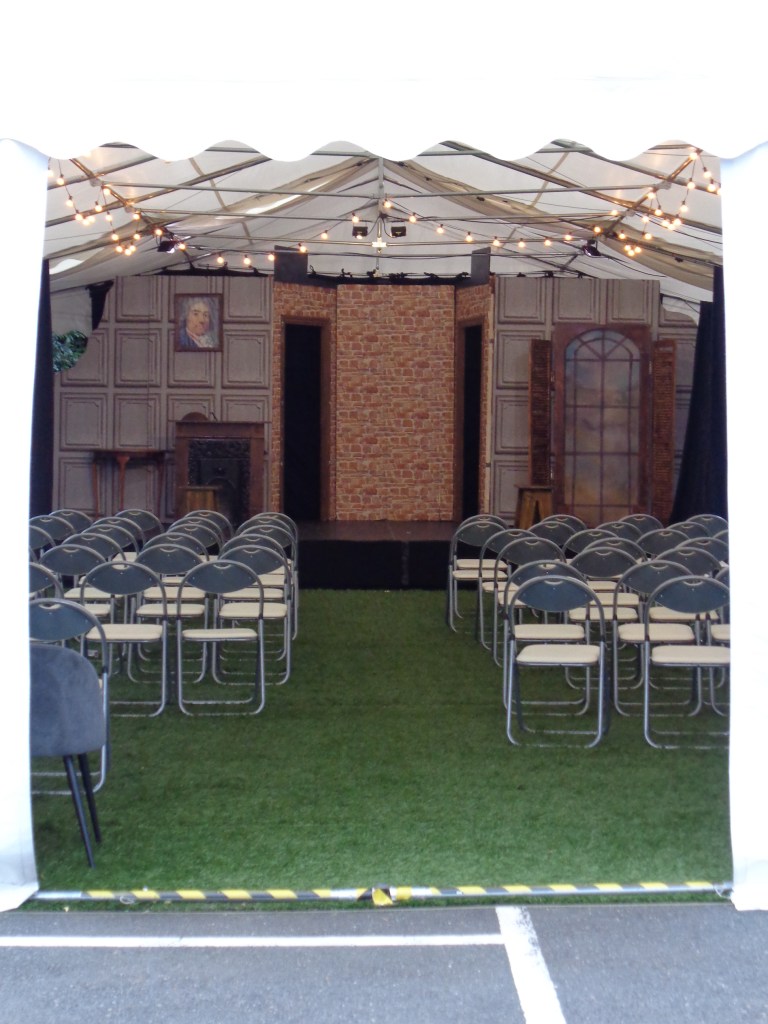
We were looking forward to Jane Eyre. We’d not read the novel, but we knew the story in the same way as everyone knows the outline of ‘Hamlet’ and ‘Romeo and Juliet’ even if they’ve never read it. We arrived early, dressed for winter. The play was in the marquee outside the theatre itself, and it was forecast to be a windy night, but the volunteers were on hand with fleece blankets and directions to the bar. Next to our seats was a tall laurel hedge with sunflowers poking through and cars idling in the car park beyond. The wind blew through the open sides of the tent all night, and we were grateful for the blanket.

It was worth being cold. It was a great production. It had all the drama of the Brontes’ work and some modern takes too – I don’t know whether Charlotte Bronte made reference to the brutal treatment that Mrs Mason-Rochester might have experienced in a Victorian asylum for the insane as an alternative to her incarceration in the attics of Thornfield Hall, but it was a good point – possibly one that Victorian readers would have understood, or one that they may not have wanted to have explained to them.

I admit I ducked at one point. Pat Bush as the supervisor of Lowewood School treated the audience as the additional pupils and pointed at me saying “Julia has too much hair! Why is Julia allowed so much curly red hair? It must be cut off!” It’s been a few years since I had curly hair, but I was biting my lip not to reply – then she pointed at the other side of the audience and insisted that all those topknots must be cut off. Phew. Start with them, please.

Pat Bush missed an open goal in her adaptation by missing the famous line of “Reader, I married him”, but by the end of it we got what Jane Eyre’s character was – independent, unbending and returning whatever favour she was dealt, be it punches, insults or love. It’s sent us home keen to read the book, looking for Dot’s next production and above all, cheered up by getting back to the theatre after all this time.

All the way to the end

Photo by congerdesign, via Pixabay

This year’s Essex Book Festival was partly online, partly on site, and wholly excellent. I was in the Zoom for the first event on June 3rd, and again for the Festival ‘opener’ on June 6th (‘We Need To Talk About Essex Girls’), and today I was at the grand closing event at Cressing Temple Barns. I’d booked a place at the talk on scriptwriting at 12.30 and arrived early – to find the car park completely full, with cars directed to park on the grass. The tea-room was almost full and there were people everywhere, enjoying stalls selling books or toys, stalls displaying magic tricks, and a story-telling tent. A tent, containing a series of people telling stories to whoever wanted to stop by (including a dog who had opinions on the story I heard).

Less than an hour after it opened, the Festival was playing to packed crowds.

The script-writing talk was interesting. Neil D’Arcy-Jones focussed on the impact of place on a story, asking us to write a few lines about a place we knew and loved and imagine two characters playing out a scene in that place. One of the others came up with an idea so simple and so full of room for mischief that I’m surprised no-one else has written it.

I came out of the session to find out what the music was all about. BrazilArte (to judge from their team T-shirts) were playing drums to accompany one of their team who was performing acrobatics among the crowd on the lawn. By the time I left, BrazilArte was trying to teach the crowd to dance along with them and everyone was laughing.

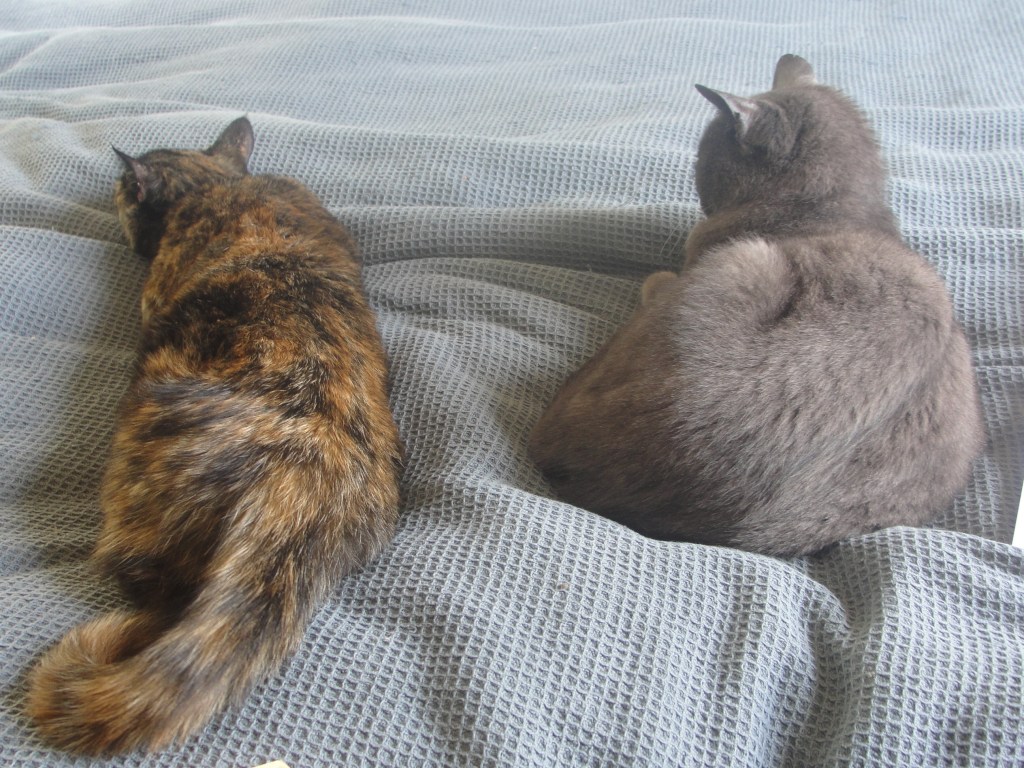
The Essex Book Festival has been fun, serious, varied, and really easy to attend. I hope they’ll keep up the same format next year, giving me the choice of sitting in a tent or wood or theatre for an event or sitting in my living room with my cat intent on displaying her furry butt to the entire Zoom audience.

Tomorrow, back to reality… but with ideas for a short script.

A Grand Day Out

Photo by Manfred Richter, Pixabay

Return to Cressing Temple Barns today, taking my husband with me for a more leisurely visit, rather than the guided tour with the Essex Book Festival. It was good to wander around with no group, no purpose, though the guide last time was a real asset.

This time, we had a long walk through both the wheat and barley barns, the walled garden, the well-house and the courtyard. We spent almost as long in the tea-room. History, great stuff. Toastie sandwich? Yes please.

Interesting to see that I am still drawn to the plants – for dyeing, herbs, scent, eating and pleasure – while he is fascinated by the jointing in the pergolas, the brickwork in the paths and the structure of the barns themselves. Some are gardeners, and some are engineers. If we were all the same, we’d been all dull.

And yes, I came home with more plants. Couldn’t resist.

Rain, at last

Last week, we had a prediction of hot and sunny over the weekend followed by cooler, cloudier weather from Monday. What actually happened was hot and sunny Saturday, really hot Sunday (for Britain, that is – Australians would laugh their socks off at me calling 29 degrees C ‘hot’) and then a hot and clammy Monday. On Monday night, the Met Office issued its first ever warning of extreme weather, and everywhere I look there’s advice on how to cope with the heat.

Tuesday morning was hot and humid, and I lurked indoors in the cool writing my Nano project for a while before going outside to attack the weeds in the veg plot. The breeze was getting up by 1pm, and by 2.30 there was thunder and a dark haze to the north. We sat under cover and watched. First the cumulus clouds built up, the dark murk came in from the north and the thunder went on rumbling, more often now. Around 4pm, the rain came down suddenly and heavily. We missed out on the huge hailstones that fell a few miles away, and we had one very feeble flick of lightning and that was that. We love watching big thunderstorms and were hoping for a better show than that.

Seeing high temperatures and a months’ worth of rain falling in two hours described as ‘extreme’, I’m not sure what the weather in northern Europe can be described as. I was caught in an exceptionally heavy rainstorm in Germany once while driving my motorcycle to the Czech Republic and it was pretty spectacular. The road disappeared under water, the road markings were invisible in the splosh of rain on the water’s surface and the afternoon turned about as dark as twilight. In the middle of all that, the warning came up on my dash to let me know that my headlamp had failed. Right then, I wished to be back on my old Triumph. The headlamp blew every time I kept up a speed over seventy for any length of time and the indicators turned themselves to point downwards, but it never let me know that I was driving without lights on a road with heavy traffic and no speed limit. In the dark. And through what looked like a shallow river. By the time we reached the smart hotel we’d booked for the night, my excellent wet weather riding gear had failed. ‘Soaked to the skin’ was no exaggeration. I did apologise for dripping on their marble floor and offered to go back outside till I’d wrung out the worst of it, but the staff told me it was no problem. It took us all evening and all night to dry our clothes.

Seeing the havoc caused by flooding in Germany and Luxembourg and Belgium and the Netherlands, I’m grateful that I’ve never had to deal with a storm that turned my road into a river of sludge, destroyed my house and swept away my neighbours, my pets and my possessions. I hope I never have to.

Metal

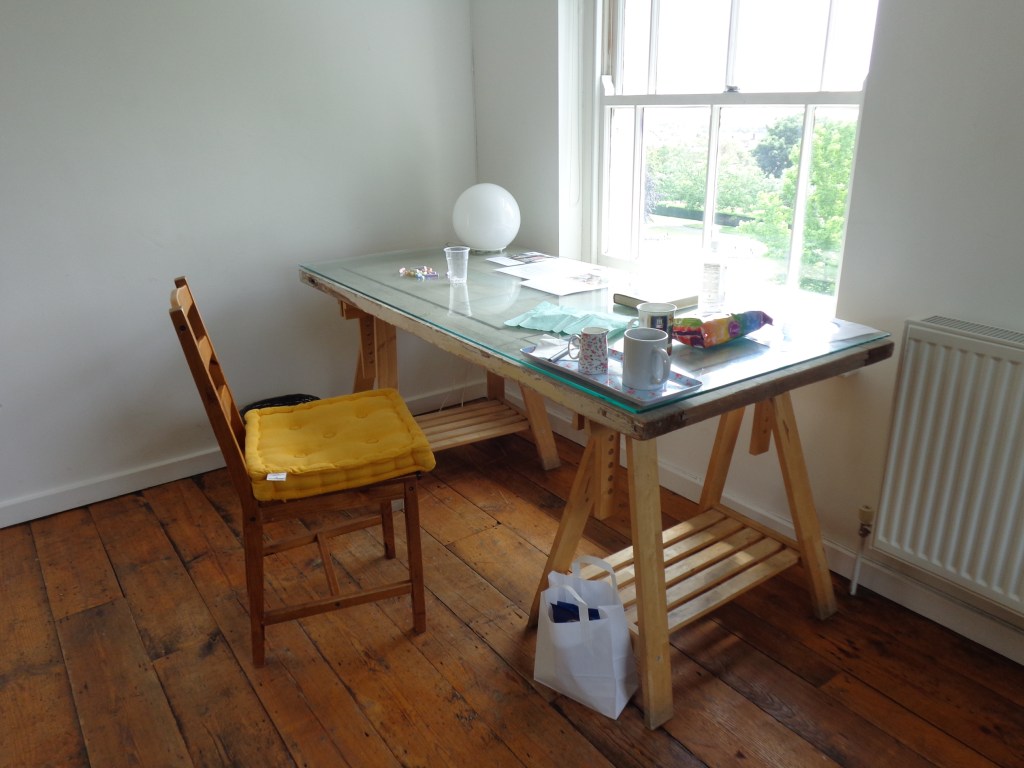
The Beth Chatto desk at Metalculture Writers’ House, Chalkwell Park

Another good day with the Essex Book Festival. Today, a hotdesk at Chalkwell Hall, the Essex site of Metal – they describe themselves as setting up cultural community hubs. Sneer and jeer until you get here, it is a fabulous place in a lovely setting.

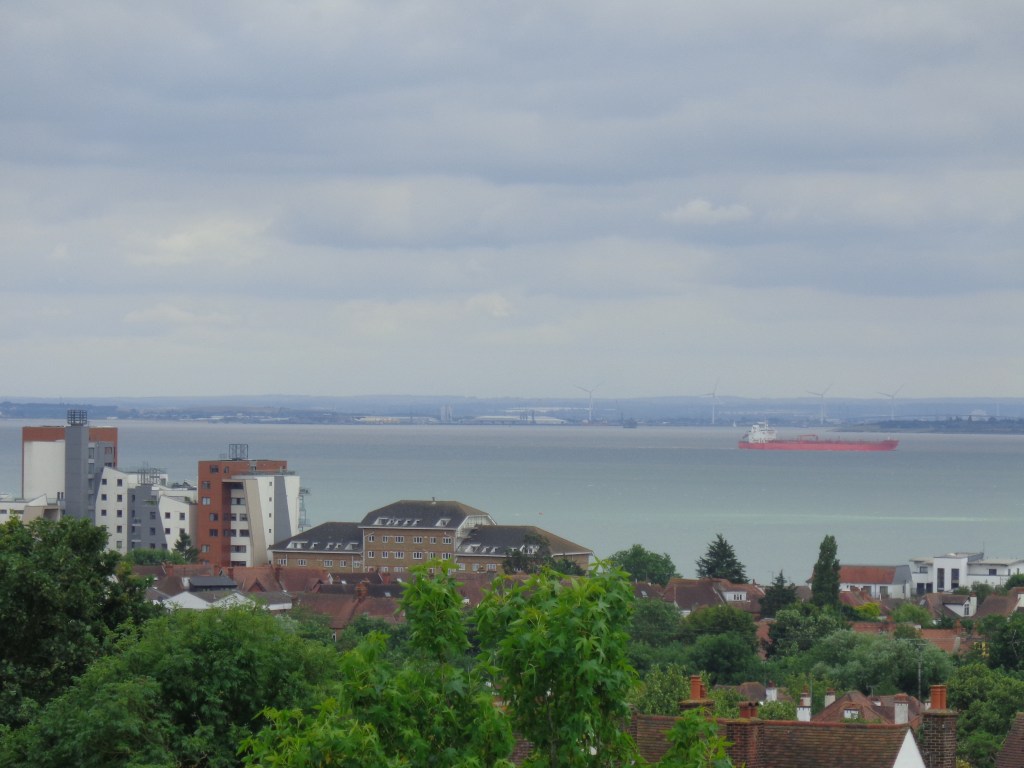
Anybody can book a hotdesk – there are two, right at the top of the building (there’s a lift if you aren’t able to climb two sets of narrow stairs). I’d seen the picture on the EBF website, but when I was led into the Beth Chatto room and saw the view across the estuary – wow. It wasn’t a great day, weather-wise, but I could see Southend Pier away to the east, and the tide rose and began to fall while I was there.

The view from the window with the tide in… all this was mud a few hours earlier

I didn’t spend my whole time watching the view. I got stuck into a project I’ve been putting off for months, and made good progress on it. But in between writing and sketching out a decent structure to the piece, I read the copy of Beth Chatto’s Garden Notebook (left on the desk), took photos and looked out of the window.

Down in Chalkwell Park, there was an outdoor fitness session, a small wedding with a lot of cheering and laughing and people just walking around the park. It’s a great place, and I wish I lived closer – close enough to walk there would be favourite, given the traffic.

I did also get some serious writing down, honest I did.

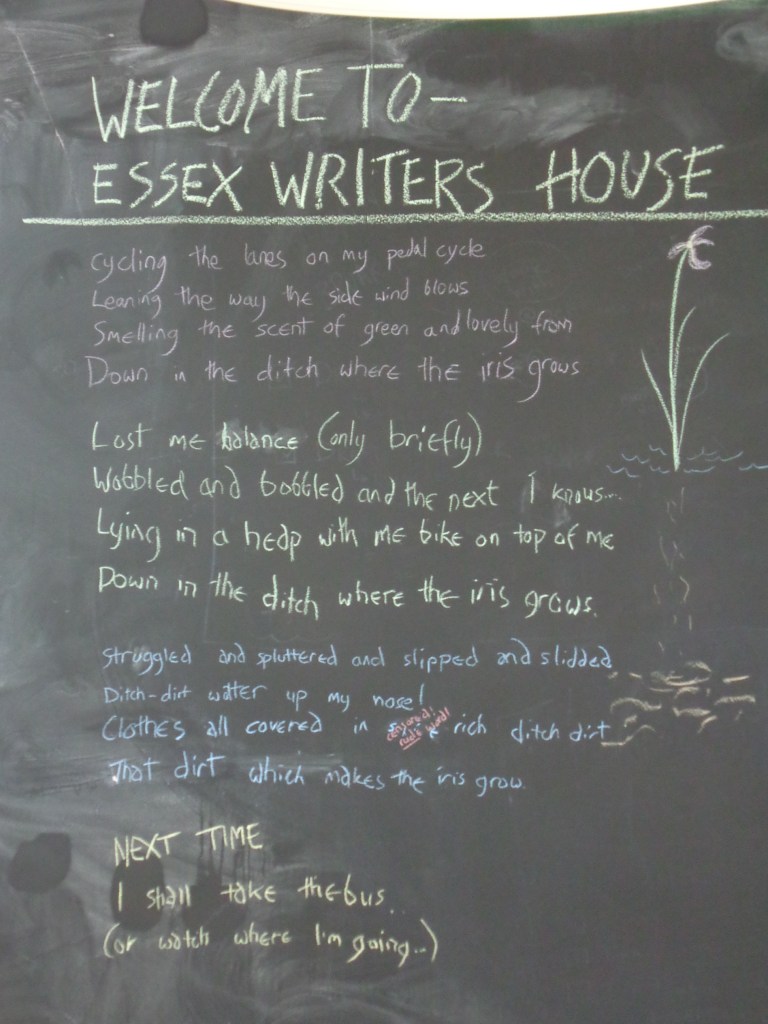
One whole wall was painted as a blackboard and Metal had left each room a small pot of chalks in different colours with a note that we should scrawl on the wall – notes to drive the work forward, diagrams, a snippet of the work. I couldn’t resist. I gave them a poem on a person falling off their pushbike and into a ditch (and finding what the irises there were growing in), a short poem on how I had given the cafe and the view plenty of attention but hadn’t done any writing and a poem on how I was thinking of setting up a blackboard wall like this at home. By the time I left, the whole wall was covered. I hope they have a laugh while they’re cleaning it all off.

I had also set down about 4,000 words and got a much clearer idea of where the project was going. I left early to beat the traffic rush (didn’t quite succeed) and count the day as a real success.

If you want to book a hotdesk… there is one day left in July. Be quick. And try the chalkwall.

Be more Cat

Max

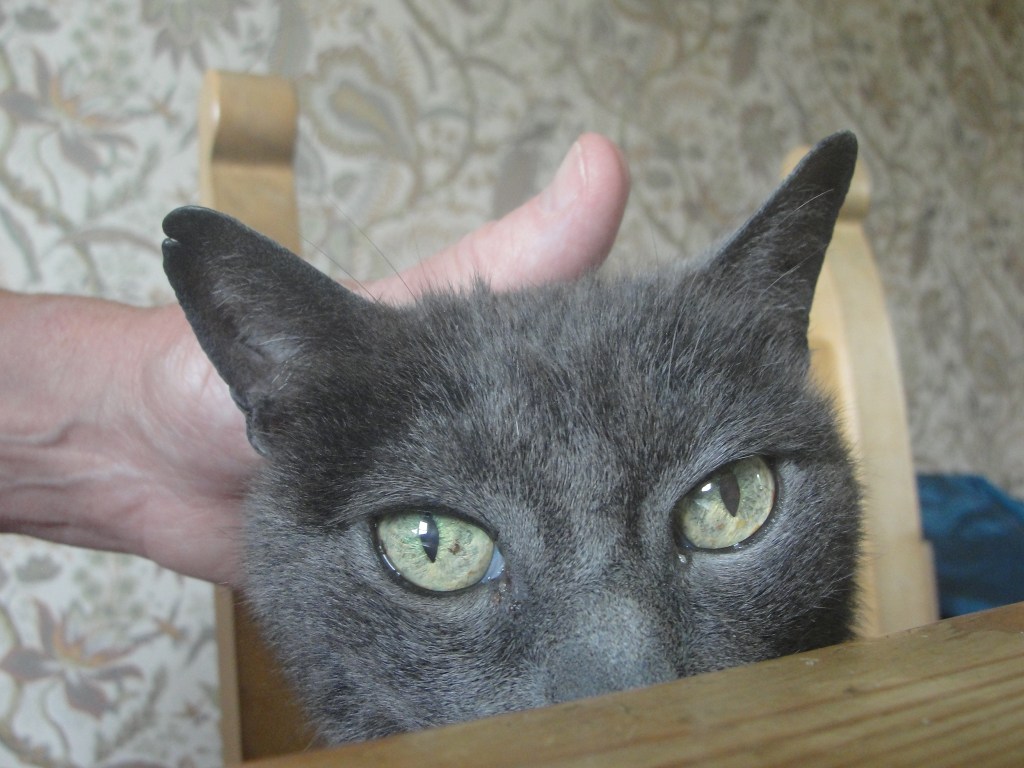
So, we had a pair of catloving friends over to stay recently. They were looking forward to meeting Max, and we wanted Max to become used to having new people in the house.

They arrived and greeted him. He took to them. Boy did he take to them… We lost him there, for a while. Max slept on their bed, settled on the sofa between them and tried to get into their bag when they went home. He came running when they called him – literally, running. Bear in mind this cat is 16 – a human-equivalent age of 82 – and to see him running across the garden like a young cat was just great. If I can get a picture of him running I will post it above, but he caught us all by surprise.

After our friends went home, Max waited hopefully outside the spare bedroom door for a while, then came to us. We’ll do, apparently, but we just aren’t up to his (new) standards.

He’s getting much more relaxed. He’s doing cat-like things like licking his coat, purring, and… well, yes, ignoring his owners if there’s more interesting people around. Well done, Max. Be more cat.

Genie and Max

Cressing Temple Barns

Photo by Nazish Saba, Pixabay

A good day out, and an amazing place.

Cressing Temple Barns dates back to 1137, with the barns themselves built in the 13th century. The Tudor Knot garden is a reconstruction of a typical Tudor pleasure garden, and a real joy to walk in. We were given the tour by a volunteer guide and spent longer than we should taking in the walled garden, the barns themselves and the undulating floor of the granary.

I’m ashamed. I have lived less than twenty miles from this place for nearly two decades and have visited twice before. Always too busy. My husband has never visited. Call it a July resolution – we’re both keen to go back before the year is out.

The writing workshop was fun, too. I’m looking forward to the other two flash fiction workshops I signed up for, and I have a good idea for a story set in the grounds of Cressing Temple Barns. Result.

Don’t ask about the Camp Nano challenge – I set myself a target of 30,000 words for July and so far… just over a thousand. Focus, girl, focus.