Cressing Temple Barns dates back to 1137, with the barns themselves built in the 13th century. The Tudor Knot garden is a reconstruction of a typical Tudor pleasure garden, and a real joy to walk in. We were given the tour by a volunteer guide and spent longer than we should taking in the walled garden, the barns themselves and the undulating floor of the granary.
I’m ashamed. I have lived less than twenty miles from this place for nearly two decades and have visited twice before. Always too busy. My husband has never visited. Call it a July resolution – we’re both keen to go back before the year is out.
The writing workshop was fun, too. I’m looking forward to the other two flash fiction workshops I signed up for, and I have a good idea for a story set in the grounds of Cressing Temple Barns. Result.
Don’t ask about the Camp Nano challenge – I set myself a target of 30,000 words for July and so far… just over a thousand. Focus, girl, focus.
In all the excitement, I haven’t said much about what’s taking up my time at the moment. It’s the Essex Book Festival. This doesn’t feature much in the list of literary festivals, and I suspect there’s an element of snobbery involved. I mean, Essex – not exactly Hay on Wye, is it?
Luckily, no, it isn’t. It’s a varied, fun affair with a long reach. In most years, the Essex Book Festival ran all through March and appeared in towns throughout the county – a literary walk in Harwich, an author talk in Basildon, a book-binding session in Colchester. Last year, it was caught out by the increasing fear of catching Covid, and then by the lockdown. This year? Back with a bang, running throughout June, July and August, partly online and partly in person – walks, swims, cycle rides. Tomorrow I am going to Cressing Temple Barns for a story writing session with Agnieszka Dale, a Polish author who chose to live in England and write in English, and really looking forward to it.
The online sessions have been fun, too. One participant joined late, apologising and saying that she’d had to see the kids off to school first. “It’s 7.32 am out here,” she explained. She was logging on from Maine in America. We’ve had participants from all over the world. But one of the highlights so far has been Syd Moore, author of the Essex Witch museum books, leading a session on writing about artifacts from the Thurrock Museum archives. Halfway through her talk, she suddenly said… “Hang on, gotta answer the door… ” Oh, the joys of working from home. Even happens to authors.
If you get the chance, check the Essex Girls Liberation Front. Syd Moore and Sarah Perry (The Essex Serpent) started it, and I’m right behind it. Essex girls have more fun.
He was a street cat, rescued as a kitten on his insistence and cared for all of his life. He was sixteen when his owner died, and unlikely to be at the top of the list in any rescue centre. People want kittens. I don’t blame them. Kittens are cute.
Then again, Max is pretty cute. He’s knock-kneed, apt to go off in a dream world and his breath is eau de rotten whale carcass, but he is a loving cat. He is calm, placid, accepted our residents cats’ frankly unladylike greetings with a blink and loves nothing better than to rest on a human shoulder and snuggle.
When we first met him, he was in a cage awaiting adoption. A big cage, with outside access, an igloo and fresh food and water, but – a cage. He purred and snuggled into any human shoulder he could reach and we said yes, but we had to make arrangements for collection. When he was returned to his cage and we left, he wailed and honked, and cried. When he did come home with us and had the traditional separate quarters in one room while our cats got used to the notion of sharing their house with this foreigner, he turned it up to eleven, seriously, howled and wailed and choked and whimpered like he was drowning. I have never heard a cat make noises that desperate. But there’s a system to be observed in introducing cats, and woe upon ye who stick two strange cats together and expect intellectual debate rather than DefCon 5.
Our resident cats are decent females, and he wasn’t a fighter. Or a lover, for that matter, having had his vital parts removed very early in the century. So he was wandering the house within a week and snoozing on the same bed with them within a fortnight. They tolerate him, just as aristocratic women allow the butler to touch the front door handle and serve them afternoon tea. He’d like to play kiss-chase with them sometimes, but they’ve been brought up nicely and know not to talk to strange lads. Give them another month and they’ll be family.
He’s the oldest cat we’ve ever adopted, though we did take on a 14 year old as part of the house purchase, and a 13 year old rescue cat some years later. He’s good. Really good. He’s placid, rarely makes a fuss and doesn’t pick fights. He’s done nothing wrong (unless you’re a rodent or a bird) and he deserves a good retirement home. If your local rescue centre doesn’t have any kittens when you visit, ask to see the old folks. Kittens grow out of kittenism in months, but an old cat – you get what you see, and it’s a good deal.
Before this pandemic hit, we made a habit of getting out of the house and going somewhere once a week, just to give ourselves a change of scenery. That all stopped when the first lockdown order came through, obviously, and we haven’t been out much since – we don’t go out to beaches or museums or cafes during school holidays, as we have never been too fond of crowds – or badly-behaved children. The classic case was sitting at a cafe table on a crowded ferry, and having two shrieking children run across our backs and step on the table – just missing our plates.
We’re taking our chance to get out now, before the school holidays and the Epsilon, Zeta, Eta and Theta variants hit the UK. Bad move, by the way, naming virus strains according to the Greek alphabet. Which newspaper will be the first to carry the headline “The Omega Strain!”? Stock up your loo rolls now.
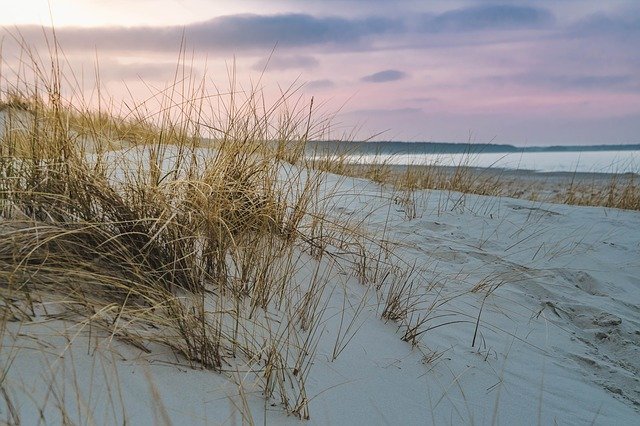
Last week’s trip out was to Brancaster Beach, on a hot and muggy day. We were led here some years ago, on a cold and windy February day. The beach is miles long, with fine sand, a car park, a beach shop (that serves bacon baps, to my carnivore man’s delight) and toilets. Brilliant walk, though the tides can catch you out – even flooding the car park and approach road sometimes.
The car park was almost full when we arrived, and the beach closest to the entrance was full of people setting out their games of cricket, picnics, towels and sandcastles. I was told not to challenge the castle builders, as apparently sand-castles are exempt from the need for planning permission. There were some very inventive ones, and the adults were the major builders, with the toddlers more interested in the sea. People were respectful and we were never pushed into close contact.
We walked about a mile down the beach and slowly back. We’d bought just two hours’ parking rather than all day (the only choices – and I didn’t have eight pound coins for all day), so we had to walk back, but honestly – a mile from the entrance, the beach was almost deserted and very tempting. If we aren’t locked down again this autumn, I’m keen to come back when the weather turns cold and only the hardy want to visit the beach.
I should warn you – watch the tides, unless you are curious about what happens when the car park floods (hint – an average car will float in water just over knee height, and salt is not that friendly to car bodies). People have been cut off by the tide while paddling. Be respectful, too, as the car park is large but not infinite, and parking in the narrow streets of Brancaster Staithe is rude – and can earn you a scratched car from drivers trying to get past.
Brancaster, recommended, especially in autumn. Blows the cobwebs away.
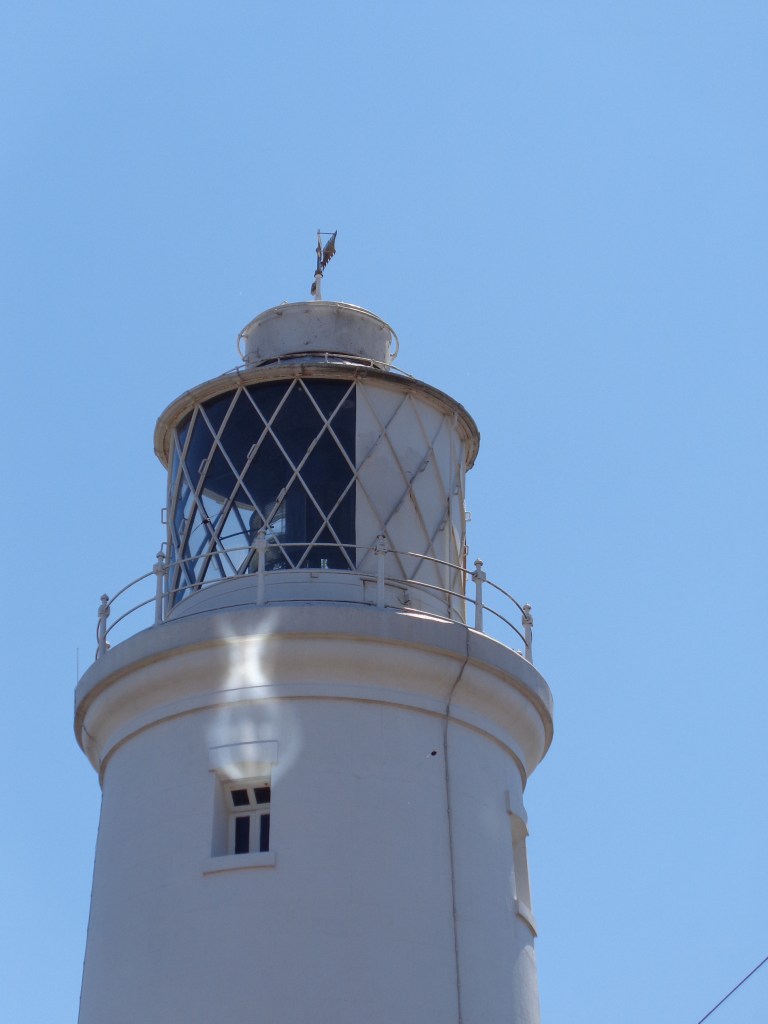
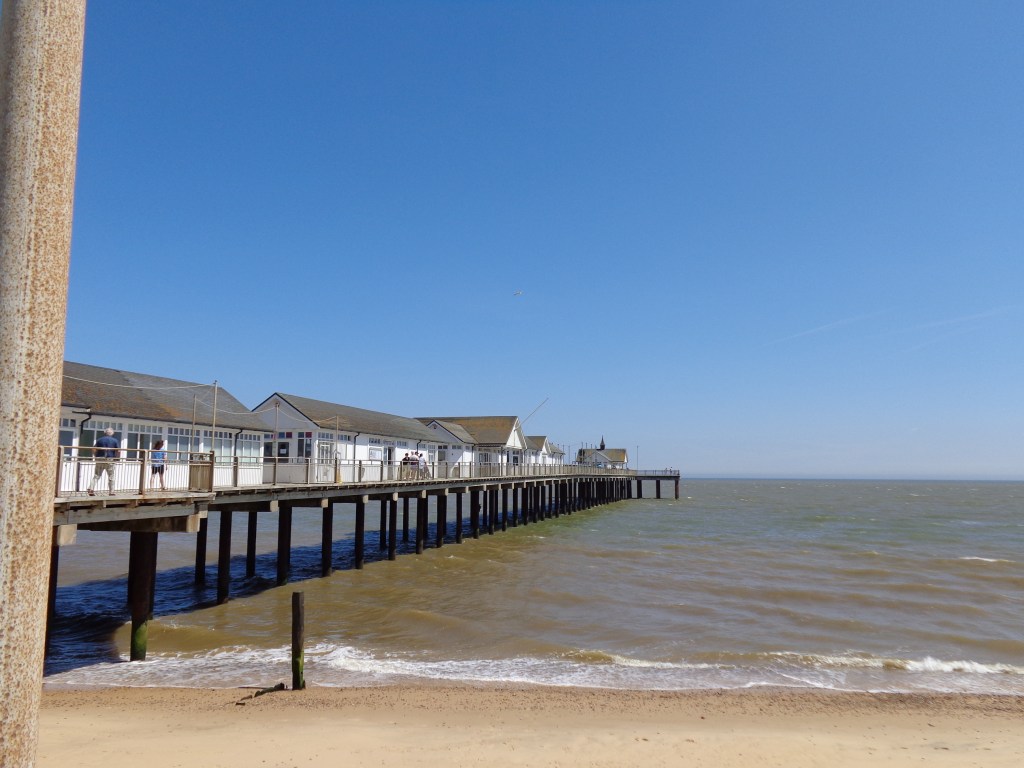
Today we went to Southwold. It’s a long journey from our home, so it would have been forbidden territory during lockdown, and like all forbidden things I couldn’t stop dreaming of it. For us, a trip to Southwold would be a sign of getting somewhere back to normal.
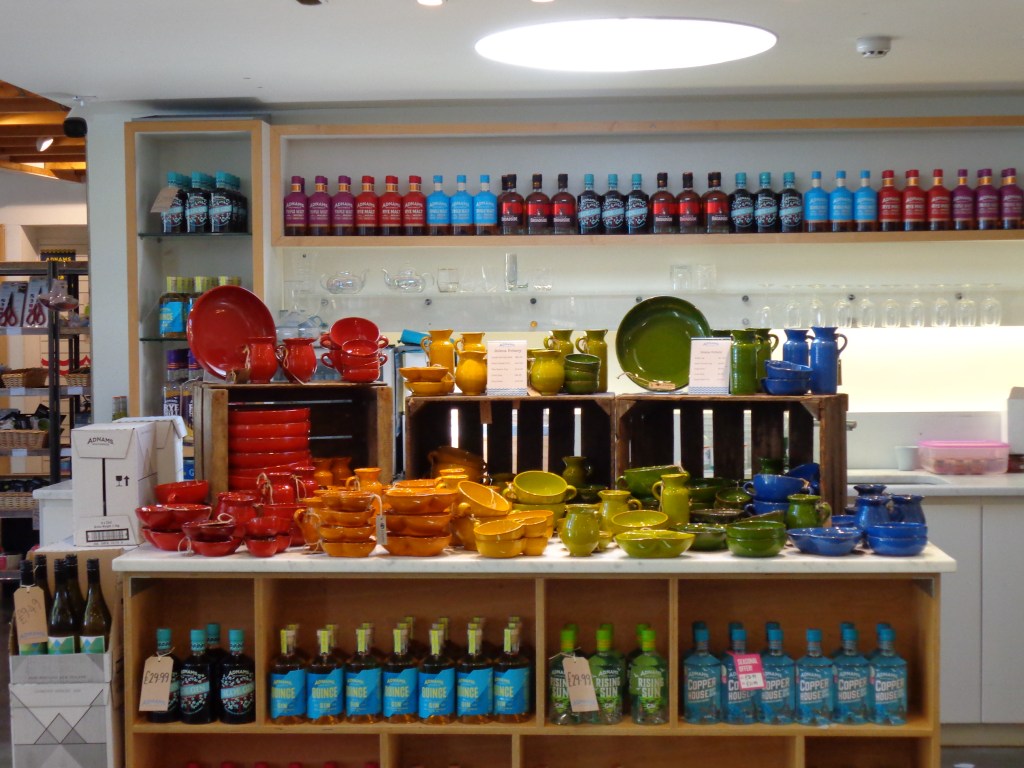
Adnams shop in Southwold – if I were a rich girl…
Everyone else had the same idea… if it’s busier than that during the school holidays, the place will be swamped. Social distancing was out of the window. I think everyone’s fed up with this endless restriction, and the arbitrary decisions that are being made – Portugal went from Green to Amber status in the space of a few days over worries about rising case numbers, while India’s fast-spreading variant causing a huge health crisis in India’s cities (and, less well reported, outside the cities) was met with an er, er, er reaction from Government, allowing an estimated 20,000 people to disembark from flights from India to the UK with minimal checks before any action was taken. Councils have been told firmly that they are not allowed to continue Zoom meetings rather than actual meetings, but GPs have been encouraged to continue online consultations. I’d rather a small huff over a council meeting gone off the rails than a patient’s cancer being missed because the GP didn’t get a good photo of an early tumour. Our GP is all but unreachable now, a state of affairs that has existed since at least 2015 – when I tried to get an appointment for four months and was told each month by irritated Reception staff that all appointments were fully booked for the next four weeks, ring back next month.
Right now, we’ve had our fun, a walk along the beach at Southwold, an ice cream each and the sight of sun on sea. Hope to get lockdown lifted and let us all go free this month.
Trust me – the streets and the pier were both crowded.
We arrived home from our visit to friends on Monday and unloaded the plants I’d bought on our nursery tour. There were – a lot of plants. I wanted to plant them all this week, but the weather’s playing jokes. From cold and dry in April to wet and mild in May to warm and dry for the last couple of days. The weeds and the grass have grown fast.
Stuff No Mow May. We have what used to be a field behind our house, grass dotted with mature trees, and when the grass grows too long it’s a ten day job with a scythe or strimmer to cut it down to manageable levels. I know what I’m talking about. We left it once for five weeks and it took us almost a month of working every evening and six hours a day at weekends to get it into shape again. We leave the edges and an area at the top corner to go wild, and we planted a hedge of native trees and shrubs to provide food and shelter for wildlife. Let us have our short grass in the middle.
So today he mowed the lawn, cutting down the forget me nots and daisies and ribwort plantain, while I ripped up the weeds that had taken over the veg plot. Having done that, I could plant the carrot seedlings I’d sown in modules last month and the leeks and marigolds I bought. The bean frames are set up and waiting; the aubretia is settled in the wall at the front of the house, there are geraniums in pots at the door. The thyme and parsley were put into the herb patch, the dianthus in a pot and a huge devil’s ivy is looming over the bath indoors. We’ve been busy, and there is more yet to do. Starting again tomorrow with yet more weeding, and planting some beans by the frames.
With all that work to be done outside, and the weather finally looking like late May’s weather should, I was daft to take up a challenge to enter a short story competition by 15 June. Still, my hands are still feeling the effects of ripping up nettles, brambles and sneaky weeds that grow close to the thorny stems of the roses, so the idea of sitting back for an hour or two and writing does sound good.
I spent today doing a plant crawl. SImilar to a pub crawl, it was a tour of plant nurseries in the company of a friend. I say friend, but her plants thrive and grow while mine totter and fail. I’ve had enough success growing plants from seed the last few years, but last year and this (when I really need them) some have failed in whole squads. This year, like last year, the peppers, aubergines, chillis and melons have all failed at one point; I have maybe one surviving melon plant and a very weedy set of tomato plants left. The kale and cabbage seedlings are doing well.
I was held back by a peculiar April. Living in a very dry region (lower rainfall than Malta, on average), having a dry month means an extreme level of low rainfall. Add to that the frost twenty nights out of thirty, higher than average daytime temperatures and a soggy May to follow and you can see that I can’t plonk surviving tender seedlings in the polytunnel. The temperatures in both greenhouse and polytunnel were often below zero at night and above 30 C in the day. The potatoes and onions went in at Easter and were under fleece till a fortnight ago; the soil was too cold to plant carrot seed and everything else is crowded into the greenhouse for what minor protection it affords.
It was a relief to be released to the next stage of lockdown and to join a friend in a crawl of five plant nurseries. Not all the same. One was lush, a sprawling set of terraces of roses, herbs, alpines, fruit bushes, and an entire half-acre of Japanese maples. One was an offshoot of a famous local vineyard that sold everything from candles to chocolates to tools to quirky gifts and some plants. Others were smaller, sparser, less well-off but with plants that were reasonably priced and employees clearly deeply involved in the business. They were pleased to see customers, ready to chat and had genuine smiles. I loved walking in amongst the deep ranges of plantlife in the bigger nurseries. I loved the friendly reception we got in the smaller nurseries. The smallest nurseries got the most of our money.
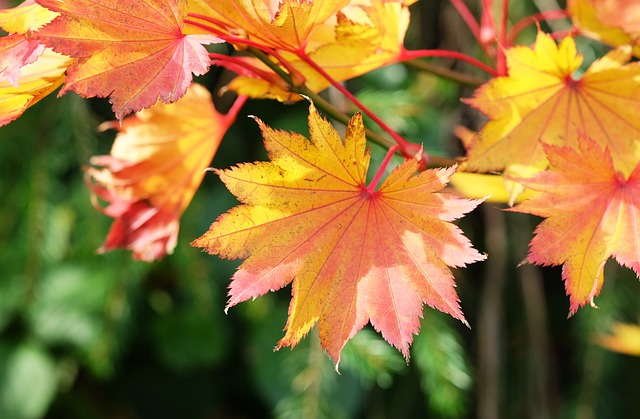
I came home with a range of plants – the kind of vegetable plants I couldn’t get in my local nurseries, an acer my husband liked, a pale blue scabious I remembered from my childhood visits to Cornwall and a deep blue lithadora. Someday soon the weather will settle, and I’ll be out there planting.
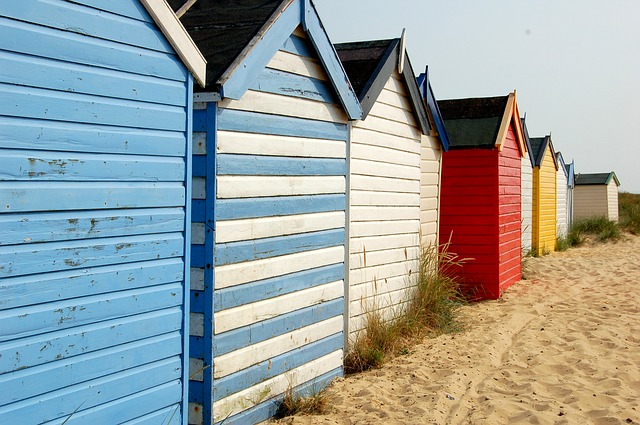
After I posted my thoughts on beach huts being an expensive and out-dated luxury, I had a response from a friend. She has hired beach huts before while on holiday with her family. I know the place she was telling me about; there’s a very steep climb from the beach to the town. So if one of her children needed her to go back for anything they’d forgotten, it was a long climb up and a jog back down – or they could store all the beach stuff in the beach hut all week and nip up the beach for whatever they wanted.
Fair point. I didn’t realise beach huts were offered for hire, and I’ve never taken children to the beach to experience the “Oh No I Forgot My…” moment, when you can either trek all the way back to the accommodation for the forgotten object or risk having the day marred. My main experience of beach huts was hearing of the one that caused so much debate and upset in my husband’s family, and from discussions I have seen and heard it seemed to me to be the privilege of those lucky enough to inherit (the hut, and enough to pay the rates and insurance on it) or those wealthy enough to buy an expensive hut that sat unused for most of the year. The thought of a series of holidaymakers each enjoying a week’s use of a hut cheers me up immensely. Next time I see a row of huts, I will think more kindly of the people drinking tea on their decks.
Another week, another day out. We know how to live. Today’s visit was to Orford, mainly for a visit to Pinney’s Smokery. I’m vegetarian, he’s carnivore to the bone (but happy to join me in a veggie meal). Pinney’s smoke whatever they can get hold of – ham, bacon, cheese, garlic, butter. Yes, I do know that smoked and processed food is generally linked to poor health outcomes. Frankly, if you avoid every EVERY tempting (badforyou) food and drink, you might not live for ever but it will feel like it (and not in a good way).
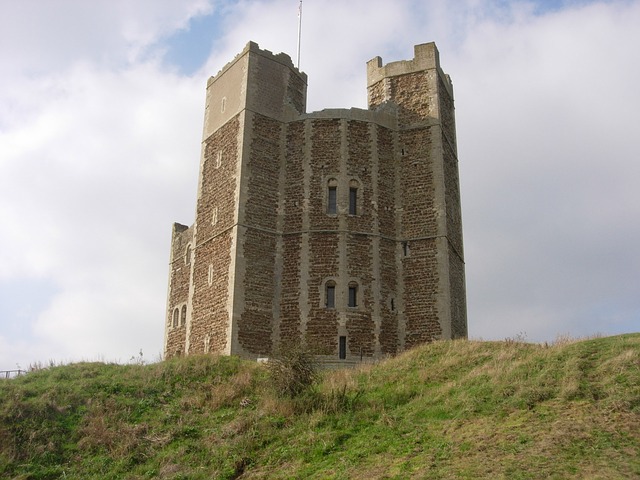
Last time we visited Orford was last summer, again for smoked ham – the time before that, was in 2019, to visit the castle. It’s fascinating. Built in the middle of the 12th century by Henry II of England, it’s surprisingly modern in that it has primitive indoor lavatories for selected honored guests. As I lived in a house up to 1976 that had its only lavatory outside in the garden and the bath hung up on a hook on the garden wall, I’m impressed. Not that my family would be allowed to let our lavatorial produce dribble out through gaps in the brickwork and down our ‘castle’ walls and be washed off in the rain.
The castle is closed till next Monday. We can wait. We had a panini at the Black Shed and enjoyed a breezy, cool and slightly dribbly day, chatted to the locals and went home.
Last week, we had another small return to normality. We planned a day out at a local beach. There’s been a lot of debate during lockdown over the definition of ‘local’, and there were stories of people being fined for travelling seven miles from their homes for a walk in woods, of London residents caught 100 miles from home and insisting that they had a second home a short distance away… The rules were so vague that you could be left unchallenged or fined, depending on which police officer spotted you.
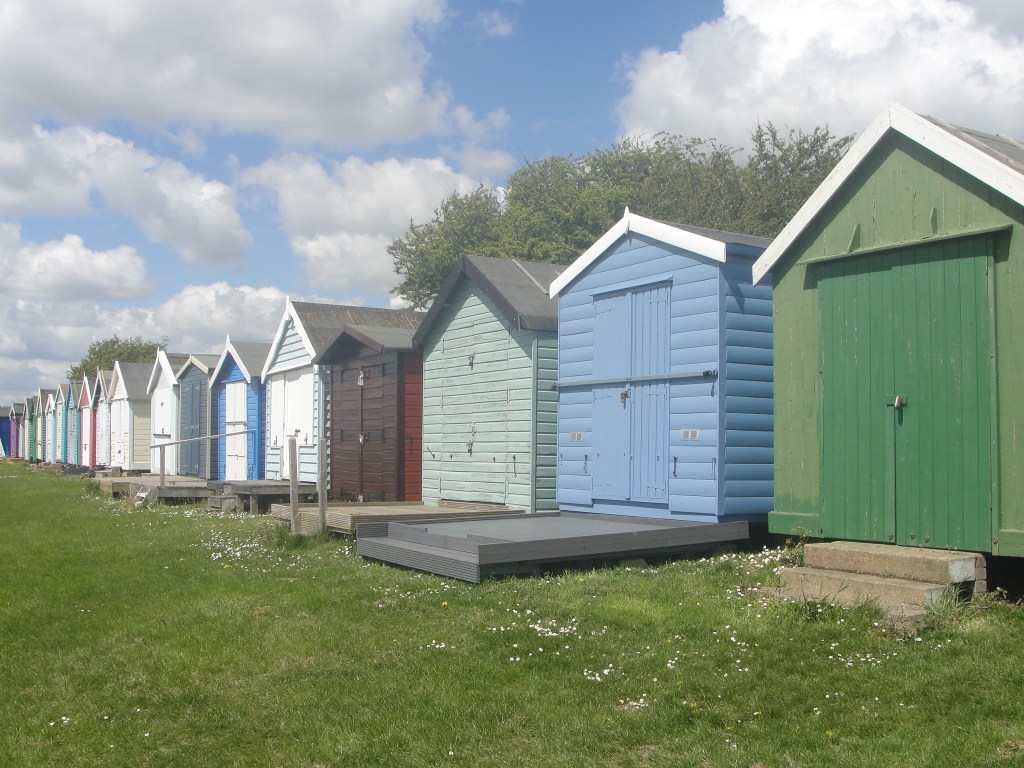
Our nearest beach is about 35 miles away, but we could be there and home within two hours. It was a place my husband and his family visited often, as his grandfather owned a beach hut along the front. Mersea wasn’t posh then and I doubt it’s secretly posh these days, either, but I’m willing to bet that the huts here still sell for thousands. Can’t help wondering why?
I looked into a beach hut as a cheap(ish) option when I was working a long way from home, and was told that they are rarely up for sale, they go for the price of a small flat in our local town and you aren’t allowed to sleep in them. Plus, they are heavily taxed, and some places will send the council in if you don’t maintain it to “pretty tourist attraction” standard. Being made of wood, very old and unguarded at night, they can also be burnt to stubs before anyone notices. I wouldn’t like to guess how much good insurance cover costs.
On our visit to Mersea, the food shops and newsagents were open and happy to take our money; the toilets were open (not a classy place to change into or out of swimming gear, but hey, they are called ‘conveniences’) and we carried everything we needed in one small backpack. The idea of buying a not-very-secure wooden hut to leave towels and tea-making gear to gather dust in frankly baffles me.
Then again, I don’t understand the advantages of buying your knick-knacks or groceries at five times the price of a supermarket, but the doors of Harrods and Fortnum & Mason are still open – unlike those of Debenhams. The rich really are different.