Our living room floor was a mess when we moved in. It’s a project that’s been waiting its time behind all the others – the leaky roof, the flaky render, the bowed studding, the drunken sailor of a fenceline, the complete lack of flues and chimney pots in the chimneys and the windows that were so rotted we could squeeze water out of the woodwork. This year, it’s the most urgent job, and it is close to being finished.
The carpenter running the job is a man in love with wood and everything that can be done with wood. He’s serious, practical, pointing out what can and what should be done and listening to what we want. The floorboards that were there originally were oak, ripped up, cracked, stained, cut across in stupid places and replaced with cheap painted pine where they’d been badly damaged by some previous owner, and we thought it was right to have oak there again.
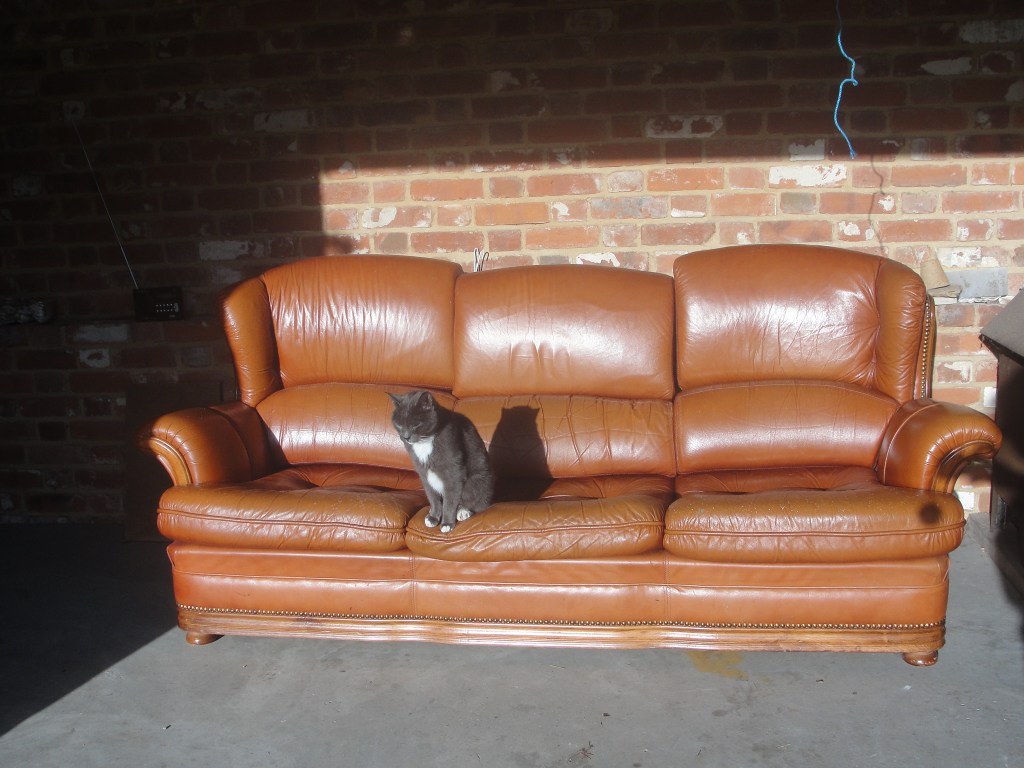
The sofa got evicted to the outside, and Max found a soft spot in the sun to sit on
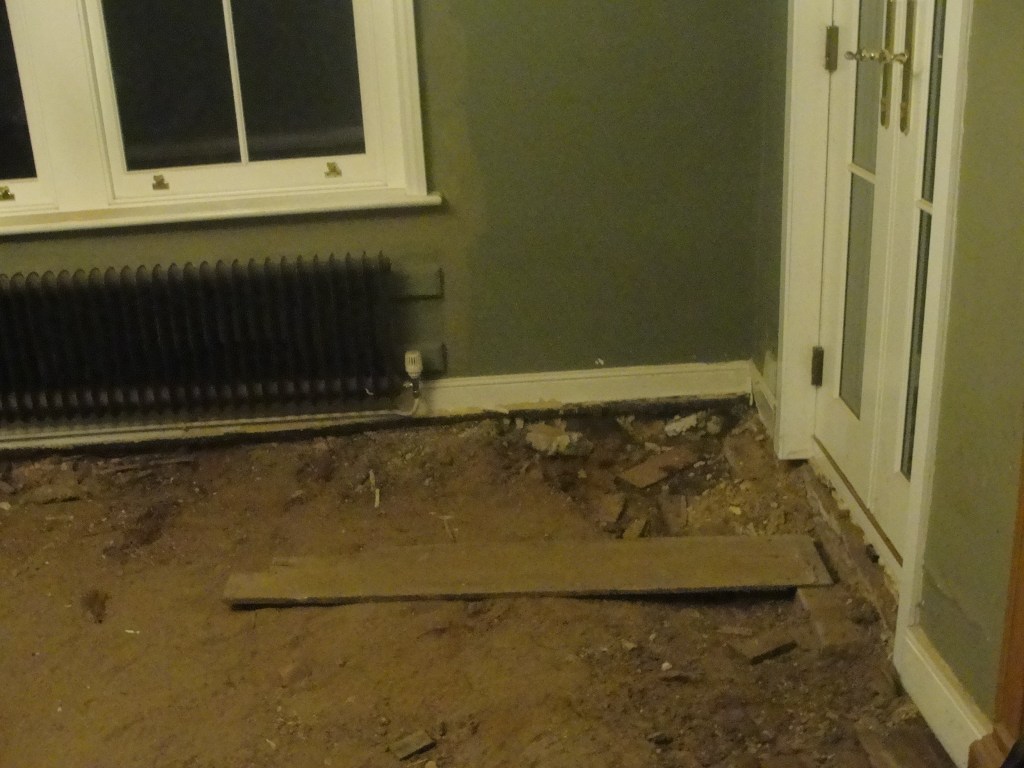
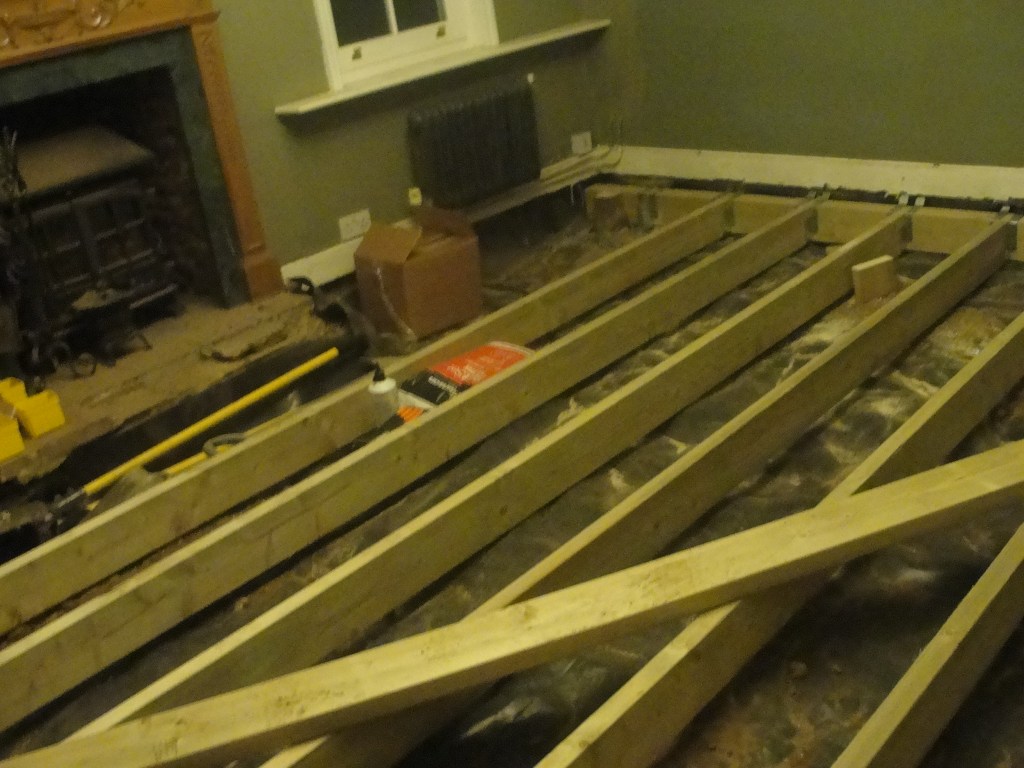
Harry and his partner have taken up the floorboards, removed the old joists (basically, tree branches with a flattened edge cut on them), dug out the soil underneath, put in a damp-proof membrane and a wooden ‘trestle’ structure and nailed a solid deck on the trestle. Then he went off for a few days to prepare the boards themselves.
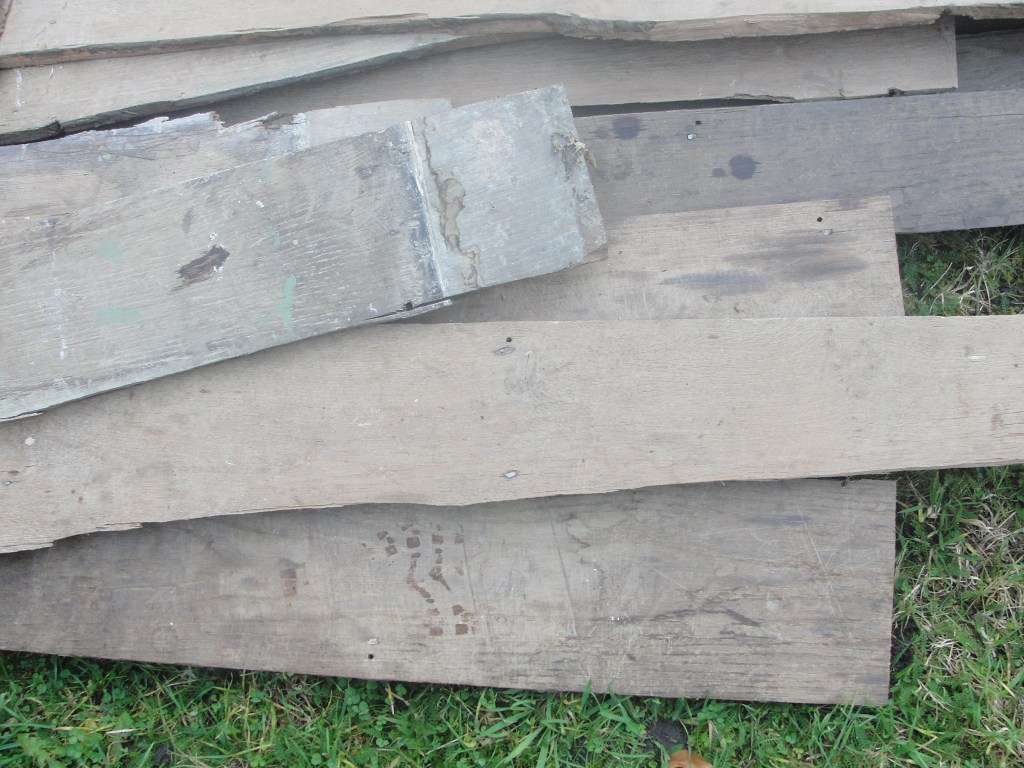
The old boards – recycled as shelving where possibleThe trestle structure, partly completed
Our lovely neighbours dropped in to say hi and were politely unimpressed by the new floor. It wasn’t until he returned on Monday and spotted the new boards being stacked in the room, ready to go on top of the basic deck, that he realised that the deck was just the underfloor – there’d be new boards on top of that, replacing what had been there before.
The doors have been open all day today and yesterday, and the house was freezing – the pond has a thick layer of ice on it and the cats’ outside water-bowl is frozen solid. The cold has got into the walls and floor and iron radiators and the heating struggles to bring the house up to temperature. The woodshed proved its worth – we had the dining room stove running within minutes of Harry and Ethan packing up and leaving, and we thawed out within an hour. Max settled himself in front of the fire and soaked himself in warmth.
They’ve worked hard all day, with a lot of sawing, planing, fitting into place and nailing and they left it all finished at half five. All the boards are down, and they look incredible. We’ve been shuffling around in there in socks, tracing grain lines and imagining what it will look like when the boards are sanded down and oiled.
The walls need to be repainted, but – we have Floorboards.
I had the chance to attend a woodland workshop last week, learning how to light bonfires and whittle spoons. It was fun, taking a small axe to a chunk of birch branch to take off the largest excess parts, then taking a small whittling knife to the wood to carve a more delicate outline, and then a hook knife to carve out the inside of the spoon bowl. The image above is after fifteen minutes with the axe and straight whittling knife.
I got hooked. I bought a crook knife online and had to prove my age before they’d send it on. I thought I’d grown out of proving my age when I was seventeen and applying for a pint of cider with a straight face, but no, into my sixties and sending a copy of my driving licence to prove I was responsible to have a sharp edge.
The spoon has been sitting in my fridge for the last week and has been whittled into a pretty respectable spoon shape by now, a couple of millimetres at a time. The real wood work has been going on in our living room today, with the carpenter returning to plane and stack the oak boards to finish our floor.
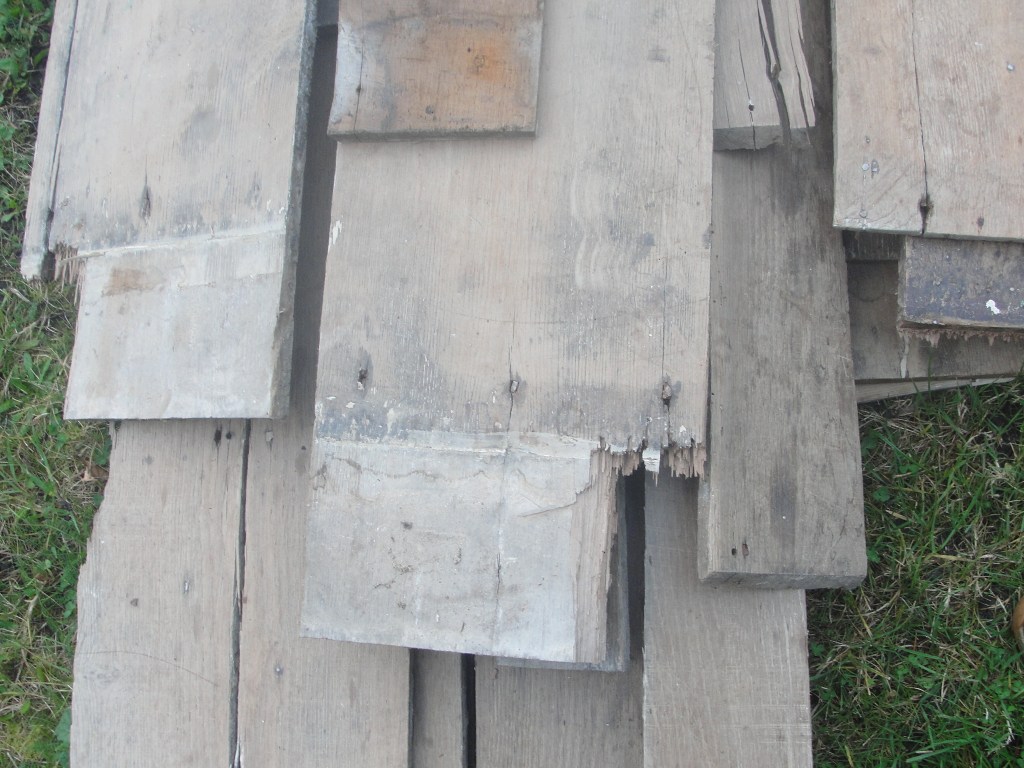
The grain is beautiful, distinctive, the story of the tree it was clearly written. The dark patch with a black heart to it was where someone nailed a bird box or notice to the living tree and used an iron nail, tannalising the wood. The knotholes appear where branches were. The lines of grain are the years it spent growing. All this will be our living room floor. I can’t wait.
I was encouraged to return to the community wood this morning to talk to our local water board. The committee want to find the water source to set up a water-pipe, and despite finding the water taps and the rough direction, finding the pipes themselves is proving a challenge. The water board arrived with its computers; I brought my dowsing rods. Snipped off bits of coat hangers, I ought to say, but they do work. I’m no expert, but I did trace the outlines of a buried well and underground spring with them, and had two solid twitches for the water pipe in the wood.
The water board man didn’t laugh. He was encouraging. He said he’d seen dowsing rods used with real success in the past and advised me to hold them looser to let them indicate without my interference. Again, two solid twitches – now marked with blue paint – and when the other committee member there tried her luck, she got twitches in exactly the same places. We’re digging for the water pipe in the right place, just not yet deep enough – probably four feet or more down. And maybe digging in earth frozen solid in minus temperatures is not ideal.
This is the end, I promise, the very end of the Essex Book Festival 2021. Today was the big reveal on the Story Hunters project, the invitation to visit one of twenty nominated sites in Essex, take a photo of yourself to prove you were there and write a story of between 50 and 250 words inspired by the site. The organisers put back the closing date from July to October to let more people take part, and the choice of the winning entries was made in November.
Storm Arwen had its say. We arrived at Cressing Temple Barns in a squally burst of cold rain and strong winds, though from what my friends have told me we got off lightly. Lost roof tiles, power cuts, hefty objects blown around. People have died when debris and branches have hit their vehicles. Still, we weren’t tempted to wander around the grounds, and the lively closing event to the main festival in August seemed like a different world.
I didn’t get a mention, neither runner-up nor winner – but the people who did get runner-up were chuffed, and they should be. There are some very talented writers in Essex. The girl who won the under-16 prize was very shy, hiding her face and running back to her seat with her prize, but the director made the point that she was now a published author at eight years old. I hope she remembers that tomorrow.
All of the stories are on the Essex Book Festival website under the space for ‘The Story Hunters – Flash Fiction Competition Entries’. I’d like to visit the places next year, virus allowing, to see what they’ve seen.
And I hope the Essex Book Festival keeps up its momentum and comes back with a bang next year. I will be there.
I had a strange encounter last Saturday, and it’s taken me until now to decide whether to write about it. I doubt the man involved will ever read this blog, but I do worry about upsetting people by what I make public.
I went to our community wood on Saturday to help plant the bulbs they were gifted by a charity, only to find that the session had been cancelled as the keenest volunteers had been driving to the site when a deer crossed the road without looking and put its hooves through their windscreen. They were unhurt but very shaken, and with a badly damaged car to sort out. The deer ran off unharmed. Val (the committee member who brought the bulbs up to store in the cabin) told me the news, and I said I’d stay and plant a few.
Then a man arrived from the direction of the wood. He was dressed in an old woolly jumper and a home-knit woolly scarf, though he spoke like a member of minor nobility. Val greeted him as Malcolm and took it as a matter of course that he had pitched his tent in the wood and was intending to stay the night there.
After Val left, I was alone with him. If she hadn’t been there to introduce him, I would have greeted him politely, made an excuse and left. As it was, I stood chatting to him in the chilly late afternoon. He knew the birds flying swirls above the wood, where they’d migrated from and what they fed on and spent as much time watching them through binoculars as he spent talking to me. I asked if he’d be cold in the tent and he said he was looking forward to it, waking to the early morning damp and the wildlife chuntering through the leaves. I told him where we were – four hundred yards away – and invited him to knock on the door if he needed anything, up to and including a hot meal and a bed for the night.
It was said in a moment of impulse and compassion for an elderly man in thin clothing on a cold night, followed by a moment of sheer O Shit as I wondered how to explain to Himself that he needed to make the pizza stretch to three people rather than two. Malcolm was startled, asked if I was sure, and after that it would have been rude to say “Actually, no, my husband will run round the kitchen quacking like a duck when I tell him”, so I said “Oh, of course, we’ll eat at seven – turn up any time.”
We stood chatting for another thirty minutes, then I went home to explain myself. By then, I had found out who I had invited to dinner. Malcolm was the son of the man who had donated ten acres of Essex woodland to his local community in his late wife’s memory, to be used for recreation and as a nature reserve. Malcolm had missed out on inheriting a share in a valuable piece of land, and he thoroughly approved of his father’s decision
He arrived just after seven with a bottle of very nice red wine as a guest-gift. His car had got stuck in the mud at the lower end of the wood, so he was doubly grateful for the offer of a meal – there was no chance of reaching the nearest pub or restaurant for a hot meal there. He’d walked to the Co-op for the wine and walked back to ours, a couple of miles in the freezing cold. He had mistaken next door’s mansion for our shabbier house, and ended up being accosted quite aggressively by our wealthier neighbour to the west (our lovely Glaswegian neighbours to the east of us would have sat him on their porch with a glass of whiskey and called us over to join them all). He settled at the table, thanked us both for the meal and we were away.
It’s the best evening we’ve had for a long time. He was well read, had thought out his opinions and was ready to discuss ours and his without hinting that he was right. Above all, he listened. It’s a rarer skill than you might realise. I have been interrupted, talked over and ignored for most of my adult life and to have someone sit quietly, listen and respond to what I have just said was a rare treat. He also talked. He dissed the Roman Empire, discussed the legends of which trees were supposedly inhabited by evil spirits and told us of the strong reaction to the pidgin version of Romeo and Juliet performed by his Cameroonian students (their parents stormed at him for teaching their kids to disobey their parents). We spent a long time listening to him. His life had never been conventional.
He enjoyed the plain veggie pizza and the warm mince pies but he wouldn’t be persuaded to sleep in our spare room. At the end of the evening he wound his scarf around his neck, slipped into his battered shoes and disappeared off into the night, thanking us again.
The following day he was there in the wood, surrounded by people who were happy to see him and keen to talk to him. He reminded me of his father, a man I had met just once. His father was sociable, cheerful, optimistic and driven to help others, and Malcolm is definitely his father’s son.
Malcolm has a standing invitation to drop by whenever he’s in the area, and I hope he takes us up on it. And the next time I’m in the community wood I will be thanking the whole family who have wanted this wood to belong to us all.
Preparing the front room for the builders’ return with the new floorboards is a bigger task than we’d bargained for. The cement base for the tiled plinth around the fireplace seemed to have been built in several small chunks, and the old floorboards ran through the middle of one side, like an oak sandwich with cement instead of bread above and below the boards.
On Monday we shuttered the missing corner and built it up with concrete and cement. On Tuesday, we discovered that part of the shuttering came out easily, and part of it had wedged itself so tightly that it took three hours of patient work and effort to get it free. The only job after that was to knock off a bulge of old cement to give space for the new boards to go under the edge of the tiles. Ten gentle taps and the kind of catastrophic collapsing sound you hear on Tom and Jerry cartoons, and a slab of cement the size of a large turkey fell off the bottom of the tiles and into the floorspace below. We’d found the other missing corner, apparently. One bucket of concrete and a lot of ingenious work later, and we’d filled the large gap it had left behind and blocked it in to make a sharp edge.
Today we thought we were on the last leg. We repaired the broken plaster and filled in all the cracks in the plaster that had opened up since we last painted. The room looks like a group of toddlers have been throwing white splodge at it but we are ready to paint the walls when we know what colour we want. The room is going to look great. Better yet, we’ve blocked up the holes outside that were letting mice get in and live under the floorboards and in the walls, and the room feels warmer. The draughts running under the floorboards and up through the gaps have gone.
The very last stage will be to set up the nails on the walls where we always hang our Christmas decorations. The walls are thin render over wattle and daub, and the nails get looser every year, threatening to drop boughs of holly on our noddles. With the Christmas decs secure, fresh paint, no draughts and good floorboards, it’ll be a different house. I hope I’ll still love it as much as before.
We’d been so focussed on arriving on time for my aunt’s funeral that I’d put to one side the fact that I’d volunteered for the committee for my local woodland trust, with the first meeting due for this Sunday. While I was on holiday, the call for all hands went out, as the committee had applied for and received a huge stash of bulbs to be planted in the wood. The planting was scheduled for Saturday, filling up my weekend completely.
All of this clashed with home life. Over the last week the builders had ripped up the floorboards, dug out the excess earth and installed a damp-proof membrane and a basic deck of wood. We have a big empty echoing space fpr a living room right now, waiting for the floorboards to be sanded and oiled and nailed down on the deck; the dining room is crammed full of furniture from both rooms. In the style of Dodie Smith, I write these words sitting on the garden chair, brought into the living room to replace the sofa and chairs that have been evicted to the covered shelter in the garden to await the return of Floorboards. When the builders come back, the garden chairs can be folded up in a minute and carried outside to clear the room for further work.
Before the builders return, we have to repair the bodge previous owners have made of the house in terms of badly attached electrical sockets, dented wall plaster, broken skirting boards and a cement fireplace plinth built over the old floorboards. I’m not even going to mention that the downstairs power sockets are wired up as part of the upstairs lighting circuit – now the deck is nailed down, there’s no chance of re-wiring it correctly, as all of the wiring runs under this deck. We didn’t realise until we had to switch off the downstairs sockets at the mains to repair the damaged one, and found that we had to switch off the circuit breakers one by one until the power went off.
He’s been dealing with that on his own, as I’ve been off doing the tasks I agreed to take on as a committee member. Planting bulbs on Saturday, and attending a woodcraft workshop on Sunday. The first task was to build a bonfire, which I could have done without training; I’m the family arsonist. If the bonfire needs setting off, be it soaking wet or (on one famous occasion) topped with snow, it’s a job for me. Using a Kelly kettle was new, and I would not have whittled a spoon from a section of greenwood – me and sharp knives really do not get on, and they tend to win. But it was fun.
Hate to say it, but far more fun was Monday’s work in the house; rebuilding the cement plinth around the fireplace through the small gap in the deck. We have an adequate basic plinth in place now, and tomorrow we intend to finish the rest of the plinth to a good standard. By the time the builders return, they will have a squared off fireplace plinth to butt the floorboards up against, and we can replace the tiles above that level after they’ve left.
It’s brought home to us that we do not have Real Cats. A Real Cat would have waited till the cement was almost dry and ‘signed’ it. Our cats have spent this cold day fast asleep on the bed. Sounds like a plan for us on Wednesday.
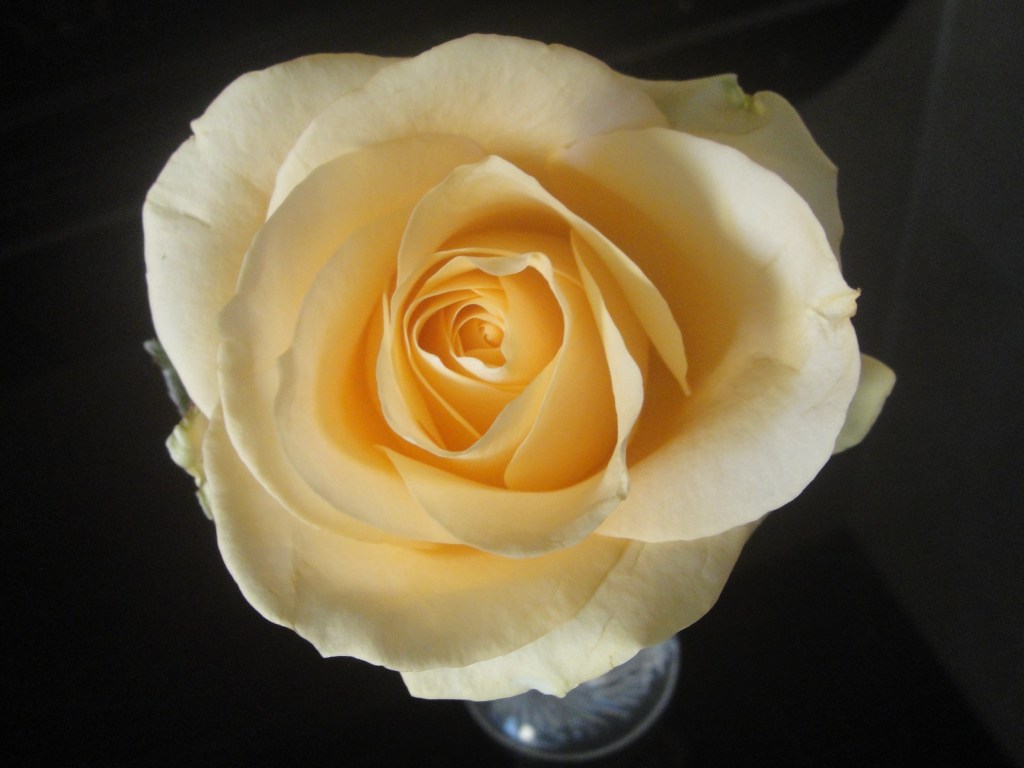
We were invited to take a rose from my aunt’s funeral wreath.
We returned from our holiday in Northumberland and Scotland and prepared for my aunt’s funeral. She’d reached the age of 100 and had her sons and their families close by for the last forty years, ending her life with a fall and a brief illness. Not the worst way to die.
Her sons, daughters in law, grandchildren and great-grandchildren all mourned her with varying degrees of intensity. My family were sad but practical – she was 100, she’s had a good life and we will miss her.
I didn’t say much, but I know I will miss her for the rest of my life. She was the woman I turned to for advice on everything, openly as a child and then privately when I understood how much that upset my mother. My aunt seemed to take life far less seriously than my mother did. Whenever I made a mistake, my mother would be cross and smug; “I told you, but you wouldn’t listen” and my aunt would say “That’ll teach you!”, with a roar of laughter and somehow sympathising rather than gloating that I’d messed up.
I’m in that odd state where I haven’t cried for her yet, knowing deep down that at 100 years old a person is counting down a very short time to a life’s end. One day, someone will say something that reminds me that my aunt is beyond giving advice, not at the other end of the phone any more when things get tough, and I will cry over the loss of that funny, sassy, practical lady who was my favourite aunt. It was great to meet up with my extended family again – including my father’s relatives on his mother’s side, whom we have rarely met – but you could see in their faces that the older adults knew they had all moved up one in the queue for death. Not an easy thing to face, even in your mid-seventies.
Everyone born, will eventually die. It’s what you do between the two events that matters, and boy, did my aunt pack in the life between her birth and death. The last bit of good advice from her comes from the way she lived; make the most of what life you have, be kind and encouraging as often as you can – leave everyone sad to have lost you and glad to have known you.
After a quiet year, chaos. I was due to meet friends in Scotland in mid-November, and we decided to drive up together with a stop in Northumberland for stargazing and a visit to Hadrian’s Wall. We took his Landrover and my very elderly car, so that he could return home before the friends’ reunion to let in the builders (long story… this old house is getting a new floor at long last) while I had a long weekend with the friends.
The Northumbrian trip went really well. The final day was rainy, and we didn’t find Sycamore Gap (and wouldn’t have been so keen to get out if we had), but we did visit The Sill, a landscape exhibition near Vindolanda. Worth a visit.
On Wednesday, we left the hotel and began the drive together to Melrose, me in the lead. As soon as we left the villages behind there was a problem. The turbo in the Landrover broke. Again. That’s the fourth time. This is a vehicle that was sent back in disgrace after 500 miles, and proceeded to eat its turbo, clutch and oil-cooler over a suspiciously short time. As the previous Landrover managed to survive my driving with no more than routine maintenance for almost 100,000 miles, this level of breakdown spoke of a Friday afternoon job.
It couldn’t be fixed at the roadside. The RAC tow-truck would take hours to arrive, and we knew from a friend’s experience that they wouldn’t take the driver home in the cab as they used to – that they would call a local taxi for him, if one could be found to take someone 250 miles. Worse, the Landrover risked being taken to an RAC regional border and dumped off for another tow-truck to pick up later, with my telescope and tripod locked in the back. No thanks. Instead, I escorted him home. Top speed around 45mph all the way and the acceleration of a pushbike.
Thursday morning, I set out again for Scotland from home in my Peugeot. It’s now 17 years old, third-hand and with 156,000 miles on the clock, bought to get me through the last few years at work and still plodding along. Nippy, reliable and battered enough not to attract unwelcome attention in a car park, I’m fond of it.
It was fine all the way up there, but the moment I pulled out of the parking space on the way home the brakes felt – wrong. Softer. I got it as far as the A1M, intending to pull in to the first set of services and call the RAC. If they dropped it off at their regional border and the car got stolen I would write off the loss of my dirty clothing and the car with a shrug and put the insurance money towards another old car.
What happens in a Peugeot when the brakes fail completely is that there’s a loud beeping sound and the dashboard lights up with a red STOP sign and the handbrake symbol. Luckily, just as I approached the turn for Newcastle. I sat in a layby on the road sweeping down into Newcastle for three hours in pouring rain, waiting for the RAC to find me and judging how dangerous it might be to still be sitting here after dark.
The RAC no longer operate a priority system for women stranded alone in their cars. I discovered also that the get you home policy has been amended to finding me a hire car somehow. The chances of me getting an unfamiliar car out of a busy city centre without a scratch is not great. I drive a battered old car for a reason. Even when I’m stationary, some berk is likely to play dodgems and take a stripe off the paint.
By the end of the three hours, with the cheery updates from the RAC telling me every half hour that they were still “incredibly busy” (understaffed), I was considering what we’d do next July when our membership expired. Not renew, after forty years of membership, and take our chances with calling a local garage if we broke down again.
What I got at the end of three hours was Ian, a cheery, competent man who pinpointed the problem in three minutes flat and towed me to the nearest garage with a chance of fixing the problem. He stayed to make sure I was okay there and nipped into the workshop to see them take the brake apart, then shot off to his next stranded motorist. The garage, Team Valley Services, did a fantastic job. It took three hours, but I left there with both sets of rear brake shoes and pistons replaced and a clear explanation of what had gone wrong. The piston arm had missed the brake shoe, shot out to its fullest extent and hosed the brake shoe with brake fluid – slippery and corrosive, it had removed all braking from one side.
I got home at 10pm, but with a fully operational car. The Landrover goes in on Monday to have its parts spanked yet again. How long it will run for is anyone’s guess. He shoulda bought a Peugeot.
The view from Housesteads Fort, northern wall – photo by Glynis Shannon
The night-time half of our holiday in Northumberland has been spent at Battlesteads Observatory, seeing the light emitted from stars and nebulae thousands or millions of years in the past. The days have been spent looking for the more recent past along Hadrian’s Wall, and it’s been just as amazing.
We went to Housesteads Fort on Sunday morning -a threatening-drizzle day with sunny patches and a stiff breeze, ideal for walking up the steep bank to the museum and the fort. The museum is tiny, but contains a lot of finds, information and a short film, along with a coffee machine and a range of books and postcards and souvenirs. And themed alcohol. Why not.
It was two hours full of wandering among the foundations, reading the information boards and imagining the life of the soldiers standing guard on the Wall nearly two thousand years ago. It did make me think of George Martin’s ‘Song of Ice and Fire’ (Game of Thrones, if you prefer TV to books) and it was no surprise that his great ice wall and the soldiers who guarded against the beasts to the north was said to have been inspired by a visit to Hadrian’s Wall.
We were free all day on Monday, so we spent the time in Vindolanda, the archaeological dig around the area of the barracks / village that supplied soldiers to garrison duty at Housesteads. Finds were noted as having been dug up around the area in the 19th century, and from 1972 Robin Birley (picking up after his father’s deep interest) began a long-term excavation that is still going on today. Each year, volunteers spend time in summer digging deeper and further afield to find out more about the buildings, the water supply, the lives of the people who lived there. Volunteer slots opened online last week and were all filled within an hour.
The foundations show where the buildings were; the village outside the fort walls and the barracks, commander’s house and bath-house – and the toilets. The toilet at Housesteads claims to be the oldest toilet in Britain, though I bet there’s hedges and ditches that could tell a few tales of pre-Roman history. The illustration of three Romans sitting in the communal loo with their little wiping sticks in hand is going to stay with me for some time.
Having seen the explanation of the whole site in the entrance hall, walked around most of the site and heard the lectures at the listening posts, we headed downhill to the cafe and museum. Nice cafe, with good lunchtime food and a mural of Romans enjoying a party. Great museum.
There’s a display cabinet of shoes, and it brings home that these were people. Delicate sandals that cost a fortune, soldiers’ boots, child’s shoes. All with the imprint of the feet that wore them. There’s a cabinet of tools, of horse gear, of weapons. There’s a cabinet of coins, some of them bright and distinct as modern coins – and I remembered Lara Maiklem’s comment on coins, that she found Roman and mediaeval coins with the words and images still distinct, and modern ‘copper’ coins rusting into nothing after a couple of years.
The best part was finding out about the Vindolanda tablets. The film about them shows Robin Birley explaining that they dug down at the end of a year’s session and found a hole full of muddy remains of something. They marked the spot, covered the hole and returned to it the following year. And found a cache of writing on wood tablets, burned but not well enough to obscure most of the writing. It’s believed that the commander burned the correspondence and records in the second century AD, before the legion marched off to fight in Dacia, but that the Northumbrian drizzle put the flames out and the next legion just shovelled mud and clay over it, sealing the documents off from further decay. The letters are details of troop numbers, an invitation to a birthday party, an application for leave of absence and an appeal for friends from a soldier just arrived in the area, among hundreds of others. They’re people far from home putting ink to wood about their daily lives.
Our legs and backs gave up before we came to the end of it, and next summer there’ll be an army of volunteers digging up more finds, more buildings, more evidence of Roman life. Two metres down under our feet, the people who were here 1,800 years ago. We have to come back.
The man behind the ticket stall saw us leave and came out to ask whether we’d enjoyed our visit. He seemed genuinely interested. We chatted with him for another ten minutes about the lovely countryside, the history, the interest, the Wall, and reassured him we’d be back for the rest. We didn’t tell him how good it was to have so many people who really did hope you’d had a good day, and weren’t just saying the words because it was in the script, but I think that’s been the best part of visiting Northumberland.
I should start by admitting that the photo above is not taken by me, but is from one of the contributors to Pixabay – which is where I get so many appropriate images while I hunt down the camera download equipment to download and display my own photos. But it is almost identical to the shot taken by a fellow astronomer on Sunday with what he described as ‘the cheapest bottom of the range DSLR I could get from Argos’.
We’ve been enjoying two nights of stargazing in Northumberland National Park, Britain’s first International Dark Sky Park. We’re staying at Battlesteads, which is – depending on who you talk to – a luxury hotel with an observatory in the grounds, or a dark-sky observatory with an award-winning hotel attached. I’d go with the latter. We booked the observatory first and took pot-luck on getting into the hotel. Though if you want a luxury stay in Northumberland, I would recommend Battlesteads Hotel. We will be back.
Saturday night was settling in, finding the observatory – a wooden hut about the size of a long double garage, two hundred metres from the hotel entrance, its purpose unmistakeable from the group of people on the deck being shown around the night sky. The hotel has red lights in its parking areas to the rear, to preserve night vision, and the path to the observatory is lit by a line of red lights.
We had booked places on the astrophotography course on Sunday. The course description said to bring your own equipment or just turn up and use theirs – we lugged the telescope and tripod up there, and our standard digital camera (we weren’t thinking of buying a specialist camera until we’d heard what the experts had to say). Of the six people on the course, one described himself as an expert photographer and expert amateur astronomer (he took the photos of the Andromeda Galaxy that built up to make an image just as detailed as the one at the top of the post, so I wouldn’t challenge that description) and the rest of us were keen photographers and enthusiastic stargazers.
Chris Duffy and his volunteer assistant Harry took us through how to find the best places to take good photos of the night sky, and how to get a better photo in areas suffering light pollution. He described the kinds of camera we could use, from DSLRs with detachable lenses to tiny CCD units whose only purpose in life was to be the intermediary between the telescope and the laptop. After all the inital theory was done, we went outside to try our luck.
We treated the course as a ‘watch, listen and learn’ course, though we did fetch our telescope up to the observing area to set up and do some viewing. Chris and Harry helped us to get the telescope set up, giving us some good pointers on how to star-align accurately. ‘Star alignment’ is getting the telescope’s ‘go-to’ unit to confirm where it is – once it has been told that Vega is in exactly this direction at this height, and Algol is in that direction at that height, it can point to any star, planet or object you ask with accuracy.
We tested it by asking for Jupiter, and got a clear vision of Jupiter, with its bands faintly visible and three of its closest moons shining pin-bright. Harry suggested I took a photo by putting my camera to the eyepiece, and I laughed, then tried it. The photo won’t win any awards, but it is going to be one of my favourites from this holiday. It’s a clear image of tiny Jupiter and three moons.
Another revelation was Tony, a quiet man who set up his tripod and camera next to ours. Our EQ-5 tripod is heavy and awkward but very stable – his astrophotography tripod was light enough to be carried in one hand, with the minature telescope/camera unit in the other hand. He takes his photos up mountains, so going back down for the counterweight and the telescope and the battery is not an option. And yes, he got brilliant photos too.
At the end of the night, Chris gave us a summary of good cameras, where to go for the software, what to be wary of in processing the photos and we left with a sense that we could do this, and without paying astronomical sums.
Yesterday’s session was a tour of the night sky. Ladies and gentlemen… cloud over here, cloud over there… and the lights of Newcastle illuminating the low clouds way over there. But Martin (assisted again by Harry, who gets home around midnight and gets up for his day job at 8am…) gave us a thorough theory session on stars and nebulae and meteor showers and where to see them before taking us out to the deck for a hopeful peek at the sky.
If you love astronomy, you have got to go to Battlesteads. The telescope is a Schmidt-Cassegrain with a refractor piggybacked onto it, a pair of dumpy cylinders that bring the universe down to the viewfinder in detail. It’s housed on a wooden deck outside the teaching room that is covered by a wooden roof. At a press of a button, the roof slides back over the teaching room roof and lets the telescope see the stars. I want one of those.
The clouds were breaking up enough that Martin was able to set the telescope to a few beauties and let everyone take a turn in seeing them – the Pleiades, Albireo, the Andromeda Galaxy 2.5 million light years away, and the Ring Nebula. In between, he was spotting stars and constellations breaking out of the clouds and taking his chance to point them out and tell us their age, distance and the tales behind them. The session came to an end around eleven pm, although Martin was willing to answer questions until we ran out of them. We walked back to the hotel with the Milky Way clearly visible, Cygnus dropping tail-first into the western horizon and the Pleiades blazing high in the east.





 Julia Chalkley